Scoring genre clarity...

String Theory capsule

String Theory

This is a music game where players can practice rhythm skills. Players will practice some basic music structures, and the music will be transformed into attack skills to defeat different enemies.

$13.996 user reviews
ActionMusic-Based Procedural GenerationCasual
ZHANGHAILONGAug 16, 2025

String Theory scores 63/100 — better than 5% of Action capsules (n=8,534).

6 user reviews · $13.99 · Released Aug 16, 2025 · By ZHANGHAILONG

Quick text summary

String Theory scored 63/100 on Steam Analyzer — Solid for a Action capsule. Top priority fix: [genre_clarity] Incorporate visible music elements—musical notes, waveforms, or a stylized instrument silhouette—into the composition to signal rhythm game mechanic at TINY size.

Capsule scores by dimension

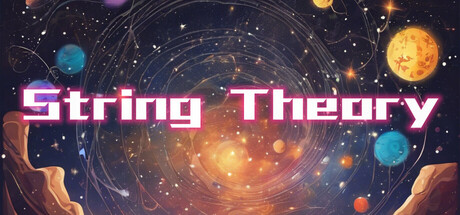
  • Genre Clarity: 5/10 — Unclear gameplay type communicated. The cosmic/space theme with swirling particles and celestial bodies suggests a sci-fi or space strategy game, not a rhythm-based music game. At TINY size, the visual language completely misleads—viewers see planets and star systems, not musical notes, instruments, or rhythm game iconography. The core mechanic (music practice transforming into combat skills) is entirely invisible in the artwork.
  • Title Readability: 8/10 — Title legible across all sizes. The 'String Theory' title uses bright magenta/pink neon-style lettering with solid spacing and clean letterforms that maintain readability from full size down to TINY. The outline and contrast against the dark background preserve legibility even at thumbnail scale. However, the neon effect adds slight visual weight that slightly reduces crispness compared to a solid sans-serif alternative.
  • Contrast & Color: 7/10 — Strong value separation with warm tones. The golden/orange central spiral and glowing celestial bodies create strong luminance contrast against the dark navy background (#1b2838). The bright magenta title text pops distinctly in the foreground. At SMALL and TINY sizes, the central sun and title remain clearly readable, though the mid-tone blues and purples in the outer star field lose some definition in grayscale squint tests.
  • Uniqueness & Polish: 6/10 — Competent space aesthetic lacks game identity. The cosmic spiral with orbiting celestial bodies is polished and visually appealing but follows a common sci-fi template seen across many space games and apps. The neon title typography adds slight personality, but the overall composition feels like a generic space background rather than communicating anything unique about a music-based rhythm combat mechanic. There is no visual hook that distinguishes this as a music game.
  • Brand Consistency: 5/10 — Generic space theme with no signature motif. The capsule presents a standard cosmic aesthetic with no recognizable brand identity cues or memorable visual signature. Without reference to the 5 store screenshots, there are no distinctive color palettes, character designs, or symbolic elements that would make this capsule immediately recognizable as 'String Theory' versus any other space-themed indie game. The neon magenta title is the only potential brand marker, but it is too minimal to build consistent identity.
  • Composition: 7/10 — Clear focal point with balanced depth. The composition uses a strong radial structure with the golden spiral sun at center drawing the eye, supported by orbiting planets and stars that guide attention inward. The title sits at top-center in a clean, controlled region above the noise. At SMALL size, the hierarchy remains clear with title and central sun as primary focus. The layering (foreground particles, midground planets, background spiral) creates useful depth that survives scaling.

What works

  • Bright neon title with clean readability. The magenta 'String Theory' text maintains legibility from full to TINY size thanks to strong contrast, consistent spacing, and straightforward letterforms.
  • Strong central focal point and depth layering. The golden spiral sun commands attention at center while orbiting elements and particle field create a clear foreground-to-background hierarchy that reads well at small scales.
  • Luminance contrast against dark background. Warm golden and orange tones in the central sun and bright magenta title pop distinctly against the dark navy Steam background, ensuring visibility in quick scroll.

What hurts the capsule

  • Genre identity completely misaligned. The space/cosmos visuals imply a sci-fi strategy or space exploration game, with zero visual communication that this is a music-based rhythm game where musical structures become combat attacks.
  • No unique brand or game identity signals. The capsule uses a generic cosmic template with no distinctive character, motif, symbol, or visual hook that would make it memorable or recognizable as a music rhythm game specifically.
  • Missing core mechanic visualization. There are no musical notes, instruments, waveforms, or rhythm game UI elements visible; the core selling point (music-to-combat transformation) is entirely absent from the artwork.

Priority fixes

  1. [genre_clarity] Incorporate visible music elements—musical notes, waveforms, or a stylized instrument silhouette—into the composition to signal rhythm game mechanic at TINY size.
  2. [uniqueness_polish] Add a distinctive brand signature such as an iconic character, glowing resonance pattern, or unique color accent that visually communicates 'String Theory' and music-combat gameplay rather than generic space sci-fi.
  3. [brand_consistency] Reference the 5 store screenshots to extract recurring character designs, color motifs, or UI patterns and weave them into the capsule to build internal visual cohesion and early recognition.
  4. [composition] Introduce a layered visual bridge between music and space—for example, a silhouette of a character playing an instrument overlaid on the cosmic backdrop, or strings of light forming both a musical staff and the spiral structure.

Store copy priority fixes

  1. [hook_strength] Rewrite the short description to lead with the core player action: 'Play rhythm patterns to transform music into devastating combat attacks—a fusion of rhythm mastery and visceral fighting.' This immediately communicates genre and excitement.
  2. [feature_communication] Add a 2–3 sentence paragraph explaining one complete gameplay loop: 'Import or play MIDI music. Hit rhythm beats in time with the track. Each successful hit triggers an attack on your enemy. Master complex patterns like swing and triplets to unlock devastating combo skills.'
  3. [tone_match] Remove the developer origin story and QQ group contact info from the main description; replace with confident, player-focused copy that treats the game as a finished product worth recommending.
  4. [audience_targeting] Add one sentence identifying the core audience: 'For musicians seeking a fresh challenge and rhythm game fans who want real fighting consequences' (or similar). This helps the right player recognize the game is for them.

Related guides

Steam app ID: 1129760 · Tags: Action, Music-Based Procedural Generation, Casual, Rhythm, Simulation