Scoring genre clarity...

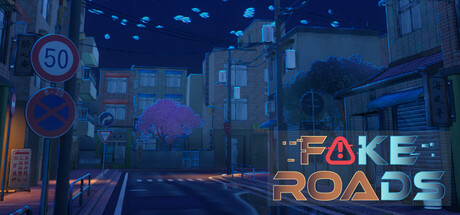
FAKE ROADS capsule

FAKE ROADS

Reach the end of the street. Find door number 10. Watch carefully… something keeps changing.

$2.99No user reviews
Early AccessPsychological HorrorAtmospheric
IO InteractivesMay 6, 2026

FAKE ROADS scores 60/100 — better than 0% of Early Access capsules (n=3,067).

No user reviews · $2.99 · Released May 6, 2026 · By IO Interactives

Quick text summary

FAKE ROADS scored 60/100 on Steam Analyzer — Solid for a Early Access capsule. Top priority fix: [composition] Move title to upper-left or center-left on a semi-transparent background panel to ensure it anchors primary visual hierarchy and survives scaling to TINY without competing against street clutter.

Capsule scores by dimension

  • Genre Clarity: 5/10 — Puzzle intent unclear at tiny. The capsule shows a stylized urban street scene with neon signage and an eerie atmosphere, but the genre reads more as exploration or walking simulator than puzzle. At TINY size, the street scene becomes an undifferentiated blur of blue and orange without clear mechanical hints like grid overlays, manipulable objects, or puzzle-specific iconography. The premise 'find door number 10' is text-only and invisible at small sizes.
  • Title Readability: 7/10 — Title readable at small, tagline lost. FAKE ROADS in orange-yellow with cyan accent text is legible at SMALL size due to warm color separation and geometric letterforms. However, the subtitle text below is unreadable at TINY size, and the overall composition places text in the lower half where it competes with street detail clutter. At FULL size the text is clear, but scaling stress reveals fine serifs and overlapping effects that degrade below small thresholds.
  • Contrast & Color: 7/10 — Strong warm-cold separation works well. The orange-yellow title text pops clearly against the cool blue-dominated street scene and the dark Steam background (#1b2838). The neon aesthetic creates intentional high-value contrast between street lights and architecture. In grayscale, the upper buildings and sky read as mid-dark while the street's yellow markings and title maintain clear separation, though some mid-tone building detail loses definition.
  • Uniqueness & Polish: 6/10 — Polished aesthetic, generic scene hook. The 3D-rendered street with stylized neon lighting shows solid technical execution and atmospheric care, but the composition is a fairly standard cyberpunk/urban exploration visual template. The surreal 'something keeps changing' premise is intriguing but not visually communicated—no visual glitch effects, impossible geometry, or reality-bending elements appear on the capsule to hint at the core mechanic. Craft is competent but the scene could apply to dozens of similar indie titles.
  • Brand Consistency: 5/10 — Consistent style, no signature identity. The warm-cool neon palette and 3D urban rendering style appear cohesive internally and likely match the game's in-engine aesthetic based on store screenshots. However, there are no memorable character silhouettes, iconic symbols, recurring motifs, or visual hooks that would make FAKE ROADS instantly recognizable in a lineup. The identity is 'atmospheric street'—serviceable but not distinctive.
  • Composition: 6/10 — Balanced depth, title placement secondary. The street recedes well into depth with clear foreground road markings, midground buildings, and background sky—solid layering. The focal point is the vanishing street perspective, which works at all sizes. However, the title sits in the lower third on top of street detail, competing for attention rather than anchoring a clear visual hierarchy. The composition is functional but not optimized for scanning at TINY size; the eye drifts to the street rather than immediately landing on the game's identity.

What works

  • Warm-cold neon contrast. Orange-yellow title and street lights create strong visual separation from cool blue architecture and dark background, ensuring readability at small sizes.
  • Depth layering. Clear foreground, midground, and background create spatial interest and a natural focal point along the street perspective.
  • Polished rendering. The 3D environment shows clean technical execution with intentional lighting design and atmospheric mood.

What hurts the capsule

  • No mechanical clarity. The capsule does not visually communicate the puzzle/observation premise; the street looks like a walking simulator or exploration game without hints at 'finding' or 'watching for changes'.
  • Title fights for prominence. Text placement in the lower third overlaps busy street detail, causing it to compete with background rather than command immediate hierarchy.
  • Generic urban template. The neon-lit cyberpunk street is a familiar stock aesthetic that does not signal a distinctive or memorable game identity at a glance.
  • Subtitle illegible at scale. Any supporting text below the main title disappears at TINY size, losing context for players who need a quick read.

Priority fixes

  1. [composition] Move title to upper-left or center-left on a semi-transparent background panel to ensure it anchors primary visual hierarchy and survives scaling to TINY without competing against street clutter.
  2. [genre_clarity] Add a subtle visual anomaly or reality-distortion effect (texture glitch, impossible angle, doubled doorway) in the street scene to hint at the 'something keeps changing' core mechanic.
  3. [uniqueness_polish] Introduce a signature color accent or symbolic door/number 10 element visible at SMALL size to create a memorable brand hook and differentiate from generic cyberpunk scenes.
  4. [title_readability] Apply a stronger text outline or background glow to the title letterforms to preserve legibility when the image is scaled below 150px width.

Store copy priority fixes

  1. [feature_communication] Add a structured feature list: 'Spot environmental anomalies as they subtly shift / Navigate branching paths based on your observations / Experience multiple endings determined by your choices / Replay to catch details you missed' to clarify core gameplay loop and scope.
  2. [uniqueness] Clarify the anomaly system with a concrete example: 'Objects move, disappear, or alter color in ways that feel natural—you must distinguish real environmental change from visual tricks' to differentiate from generic observation games.
  3. [audience_targeting] Add a sentence explicitly addressing player type: 'Built for players who relish slow-paced puzzle solving and don't need combat or time pressure' to help self-selection.

Related guides

Steam app ID: 1512630 · Tags: Early Access, Psychological Horror, Atmospheric, Mystery, Walking Simulator