Scoring genre clarity...

Retro Gadgets capsule

Retro Gadgets

Retro Gadgets is a sandbox where you build, code, and customize gadgets inspired by old-school electronics.

$19.99Very Positive(480)
Early AccessEducationAutomation
Licorice ehf, Studio EvilNov 30, 2022

Retro Gadgets scores 87/100 — better than 99% of Early Access capsules (n=3,632).

Very Positive (480 reviews) · $19.99 · Released Nov 30, 2022 · By Licorice ehf

Quick text summary

Retro Gadgets scored 87/100 on Steam Analyzer — Excellent for a Early Access capsule. Top priority fix: [uniqueness_polish] Integrate a subtle visual cue of the core mechanic—e.g., a hand placing a component, a code snippet overlay, or a customized gadget result—to hint at the building and coding loop without cluttering the composition.

Capsule scores by dimension

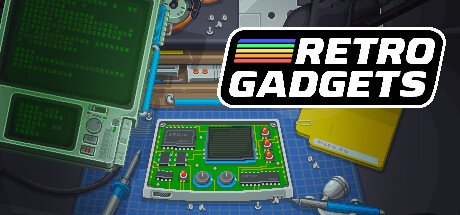
  • Genre Clarity: 9/10 — Electronics sandbox clearly communicated. The capsule immediately conveys a retro electronics building sim through the overhead view of a green PCB board with integrated circuits, resistors, and a prominent screen—classic simulation iconography. At TINY size, the circuit board silhouette and bright green-on-blue color scheme remain unmistakably recognizable as a tech/electronics game, with no genre confusion.
  • Title Readability: 9/10 — Bold, high-contrast title dominates. The 'RETRO GADGETS' title uses thick, italicized white letterforms with a black outline and yellow striped accent bar, positioned in the safe upper-center area with clear separation from the background. At TINY size, the title remains fully legible due to the strong outline treatment and high value contrast against the dark sky; the striped bar is a memorable branding flourish that reinforces retro aesthetic without sacrificing readability.
  • Contrast & Color: 9/10 — Vibrant palette pops on dark background. Bright lime green PCB, electric blue frame, warm yellow and red component details, and bold white title create strong value separation and saturation against the #1b2838 Steam background. In grayscale, the green-to-blue transition maintains good tonal separation, and the white title with black outline achieves excellent silhouette clarity; the warm yellows and reds add dimensionality without muddying the read.
  • Uniqueness & Polish: 8/10 — Distinctive retro electronics aesthetic. The capsule nails a specific visual identity—not a generic sandbox, but a 'retro gadgets workshop'—through authentic circuit board details, period-appropriate component imagery, and cohesive 80s/90s color language. While the top-down PCB view is relatively straightforward, the execution feels intentional and branded rather than template-like; minor deduction because the scene, while clear, does not hint at unique mechanics like coding or customization.
  • Brand Consistency: 8/10 — Strong retro electronics identity. The lime green PCB, blue frame, yellow-striped title bar, and iconic electronic components form a cohesive visual language that would be recognizable across store screenshots and marketing. The color palette and component detail level are internally consistent and distinct from generic tech sims; however, no iconic character or mascot is present to further reinforce brand memory across future touchpoints.
  • Composition: 9/10 — Well-balanced focal point with depth. The circuit board dominates the center with clear foreground (screen and dials), midground (PCB layout), and background (tools, cables, workspace), creating strong visual hierarchy and depth. At SMALL and TINY sizes, the centered green board remains the primary focal point while the title sits clearly above; safe margins are respected, and no critical elements crowd the edges or risk Steam crop loss.

What works

  • Instant genre recognition. The overhead electronics workbench view and authentic PCB details immediately signal a retro simulation sandbox, with no ambiguity at any size.
  • Excellent title legibility and branding. The white outline-stroked title with yellow striped accent bar is readable at TINY size and establishes a memorable, on-brand visual signature.
  • Strong color contrast and pop. Vibrant green, blue, yellow, and red palette separates clearly from the dark Steam background and maintains silhouette clarity in grayscale.
  • Cohesive craft and visual polish. The circuit board, components, tools, and workspace all feel intentionally composed and authentically rendered, avoiding template or cheap asset vibes.

What hurts the capsule

  • Limited mechanical storytelling. While the retro aesthetic is clear, the capsule does not visually hint at the core loop of building, coding, or customization—it reads as a workshop scene rather than a game mechanic showcase.
  • No iconic character or mascot. The capsule relies entirely on the PCB and workspace environment; a recurring character or symbol would strengthen brand memory and differentiation across multiple touchpoints.

Priority fixes

  1. [uniqueness_polish] Integrate a subtle visual cue of the core mechanic—e.g., a hand placing a component, a code snippet overlay, or a customized gadget result—to hint at the building and coding loop without cluttering the composition.
  2. [brand_consistency] Introduce a small, iconic mascot, character, or recurring symbol (e.g., a retro bot, branded screwdriver, or unique component design) to anchor long-term brand recognition across store screenshots and marketing.

Store copy priority fixes

  1. [feature_communication] Add a one-sentence explanation of the desktop untethering feature immediately after 'Untether Your Gadget' to clarify its purpose and player benefit.
  2. [audience_targeting] Insert a line in the 'Be a Software Superstar' section specifying whether Lua coding is required, optional, or beginner-friendly, and what prior knowledge is assumed.
  3. [hook_strength] Lead the short description with the most visceral verb (e.g., 'Solder, code, and paint your own retro gadgets') to hook players faster before introducing the sandbox premise.
  4. [uniqueness] Add a sentence distinguishing this game from other building/crafting games, such as highlighting the combination of tactile circuit-building with Lua programming and desktop export capability.

Related guides

Steam app ID: 1730260 · Tags: Early Access, Education, Automation, 2D, Puzzle