Scoring genre clarity...

Lone Planet capsule

Lone Planet

A sci-fi cosmic adventure with puzzle platform elements

Free to PlayPositive(20)
Sci-fiSpaceExploration
Francesco Mistri (BallMan)Jul 14, 2025

Lone Planet scores 70/100 — better than 27% of Sci-fi capsules (n=2,434).

Positive (20 reviews) · Free to Play · Released Jul 14, 2025 · By Francesco Mistri (BallMan)

Quick text summary

Lone Planet scored 70/100 on Steam Analyzer — Good for a Sci-fi capsule. Top priority fix: [uniqueness_polish] Add a distinctive visual hook or mechanic cue—such as a signature puzzle element, gravity mechanic indicator, or unique character design—that differentiates this from generic space platformers.

Capsule scores by dimension

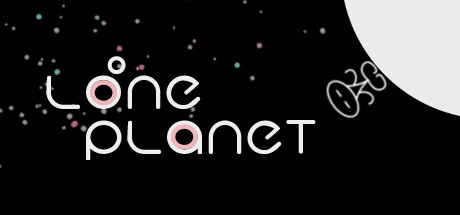
  • Genre Clarity: 7/10 — Cosmic adventure with platformer hints. The minimalist stick figure character against a large planet silhouette and starfield background clearly signals a sci-fi space setting and indie aesthetic. At tiny size, the small character figure and planetary arc remain readable enough to suggest exploration or platforming, though the puzzle element is not visually apparent. The visual language aligns with indie adventure games but lacks specific mechanics iconography.
  • Title Readability: 8/10 — Clean, legible sans-serif typography. The 'Lone Planet' title uses a modern sans-serif with good letter spacing and sits cleanly in the upper left against the black background with no competing visual noise. The text remains readable at small size, though at tiny size the letter forms compress slightly. Strategic positioning away from the character and planet elements ensures the title does not get lost in the composition.
  • Contrast & Color: 8/10 — Strong light-dark separation with clarity. The white text, white planet arc, and white stick figure create excellent value contrast against the pure black background, ensuring silhouettes remain distinct even at tiny size. The scattered white star particles add visual interest without muddying the overall contrast. A grayscale squint test shows clean edge definition throughout; no elements blend into the background.
  • Uniqueness & Polish: 6/10 — Minimalist style with generic execution. The minimalist line-art approach and monochromatic palette feel intentional and clean, but the stick figure and starfield treatment are relatively common in indie game marketing. While the execution is competent, the visual does not communicate a distinctive mechanic or unique selling point beyond 'space platformer,' leaving it in the functional but unremarkable range. The design does not stand out notably against benchmark titles like COCOON or The Invincible.
  • Brand Consistency: 6/10 — Simple style, minimal identity cues. The minimalist line-art aesthetic appears consistent with a clean indie brand, but there are no iconic characters, symbols, or signature motifs that would make this design memorable or uniquely recognizable as 'Lone Planet' beyond the title. The visual approach is coherent but generic enough that similar games could adopt the same treatment without standing out. Internal rendering is clean and consistent, but lacks distinctive brand identity hooks.
  • Composition: 7/10 — Clear focal hierarchy with clean layout. The large planet arc on the right creates a strong visual anchor, the small stick figure in the upper right draws attention to the character, and the title occupies the left-center region, creating a balanced left-to-right flow. At small and tiny sizes, the composition reads clearly without cluttering; negative space is used effectively. The design is crop-resilient and maintains hierarchy across all viewing sizes without critical elements sitting dangerously near edges.

What works

  • Excellent contrast against dark background. White linework and planet arc stand out sharply against pure black, ensuring clarity at all sizes including tiny thumbnails.
  • Strong typographic legibility. The 'Lone Planet' title is clean, well-spaced, and remains readable even at compressed sizes without decorative flourishes.
  • Clear focal hierarchy. The planet arc and character figure create a balanced composition that guides the eye without scattered or competing attention points.

What hurts the capsule

  • Generic minimalist approach. Stick figure and starfield treatment lack distinctive personality or mechanics clarity; the style feels common across indie space games.
  • Weak brand identity signals. No iconic character, symbol, or signature element makes this capsule uniquely recognizable as 'Lone Planet' beyond the title text.
  • Limited visual storytelling. The capsule does not clearly communicate what makes this puzzle-platformer unique compared to other cosmic indie adventures in the genre.

Priority fixes

  1. [uniqueness_polish] Add a distinctive visual hook or mechanic cue—such as a signature puzzle element, gravity mechanic indicator, or unique character design—that differentiates this from generic space platformers.
  2. [brand_consistency] Introduce an iconic character design, color accent, or visual motif that will be recognizable across marketing materials and store screenshots for stronger brand recall.
  3. [genre_clarity] Incorporate a subtle visual cue that hints at the puzzle-platform mechanic, such as platform geometry, portals, or interactive elements near the character figure.

Store copy priority fixes

  1. [hook_strength] Rewrite the short description to lead with a specific gameplay hook or emotional tension—e.g., 'Solve physics-defying puzzles on a mysterious planet to uncover what destroyed its civilization' instead of generic 'cosmic adventure.'
  2. [feature_communication] Replace abstract bullet points with concrete gameplay descriptions—e.g., 'Use gravity manipulation to solve environmental puzzles' or 'Navigate platforms that shift based on your momentum' rather than 'Unusual physics' and 'Easy platform sections.'
  3. [uniqueness] Add a specific differentiator in the detailed description—e.g., 'the only puzzle platformer where gravity inverts based on your emotional state' or 'combines mind-bending physics with existential storytelling,' to explain what makes this game distinct.
  4. [audience_targeting] Clarify the intended player in the opening: 'For players who loved [similar game], but want a more contemplative, story-driven experience' or 'For speedrunners seeking intricate physics-based challenges,' rather than implying both.

Related guides

Steam app ID: 1933170 · Tags: Sci-fi, Space, Exploration, Platformer, Puzzle