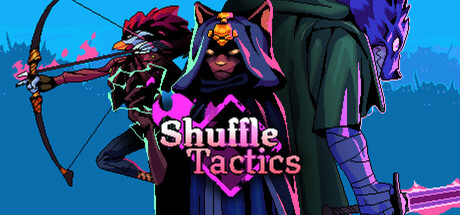
Shuffle Tactics scores 72/100 — better than 44% of Singleplayer capsules (n=16,133).

Quick text summary

Shuffle Tactics scored 72/100 on Steam Analyzer — Good for a Singleplayer capsule. Top priority fix: [genre_clarity] Incorporate subtle card or deck visual elements into the composition (card-edged border, floating cards, or rune patterns) to communicate the deckbuilding core mechanic at TINY size.

Capsule scores by dimension

  • Genre Clarity: 7/10 — Strategy RPG clearly signaled. The three character silhouettes with distinct tactical equipment (bow, magical staff, heavy armor) immediately communicate a strategy RPG with team-based mechanics. At TINY size, the character poses and fantasy aesthetic read as tactical gameplay, though the specific 'deckbuilding roguelike' hook is not visually obvious from imagery alone. The bright magenta and purple color palette supports the indie strategy game aesthetic effectively.
  • Title Readability: 8/10 — Bold magenta title reads well small. The 'Shuffle Tactics' title in large, bold magenta capital letters with clean white/black outline sits centered on a safe background region away from the character artwork. At SMALL and TINY sizes, the title remains legible and maintains strong contrast against the blue sky backdrop. The font weight and outline strategy ensures the logo does not collapse at reduced scales.
  • Contrast & Color: 8/10 — Vibrant palette pops on dark Steam. The electric blue sky background combined with neon magenta title and richly saturated character colors (red armor, purple robes, orange accents) creates excellent value separation and saturation against the Steam dark theme #1b2838. At TINY size, the silhouettes remain distinct and the magenta title creates clear focal point contrast. Grayscale squint test shows strong light-to-dark separation between characters and sky.
  • Uniqueness & Polish: 7/10 — Polished indie aesthetic, slightly generic. The artwork demonstrates clean craft with well-rendered character designs, intentional color grading, and a cohesive cyberpunk-fantasy hybrid visual style that fits the indie strategy space. However, the composition of three heroes posed against a gradient background is a common pattern in tactical RPG marketing (comparable to Persona 3 Reload, Metaphor: ReFantazio visual language). The execution is premium but the concept lacks a distinctive mechanical or narrative hook visible in the capsule alone.
  • Brand Consistency: 6/10 — Consistent style, limited identity markers. The three-character ensemble and neon magenta accent color appear intentionally chosen for brand recognition, and the art direction is internally coherent with polished character rendering and clean UI treatment of the title. However, there are no iconic character symbols, signature motifs, or distinctive visual language that would make this capsule immediately recognizable as Shuffle Tactics in isolation. The design feels well-executed but relies on genre convention rather than unique identity cues.
  • Composition: 7/10 — Strong focal hierarchy with safe margins. The three characters are positioned with clear depth layering: left archer, center mage (strongest focal point), right armored character, creating natural visual flow from left to right. The title sits comfortably centered below without edge-hugging, and safe margins are maintained around the frame edges. At SMALL and TINY sizes, the character silhouettes remain readable and the composition does not collapse, though the supporting characters become visual noise at extreme reduction.

What works

  • Title legibility and contrast. Magenta 'Shuffle Tactics' with outline remains crisp and readable even at TINY size due to weight, color saturation, and isolation from busy background elements.
  • Color palette vibrancy. Electric blue and neon magenta combination creates strong visual pop against Steam's dark background while maintaining internal consistency with character render quality.
  • Character silhouette clarity. Three distinct character poses with clear visual differentiation (archer, mage, tank) read instantly at small sizes and communicate tactical team gameplay without confusion.

What hurts the capsule

  • Generic composition layout. Three-heroes-against-gradient pattern is a common tactical RPG trope that limits distinctiveness compared to benchmarks like Balatro or DREDGE with more unique visual hooks.
  • Deckbuilding mechanic not communicated. The roguelike deckbuilding core mechanic is completely absent from visual language; imagery implies tactical team combat but not card synergy strategy, missing key differentiation.
  • Limited brand identity symbols. No memorable icon, character emblem, or signature visual motif that would allow recognition of Shuffle Tactics in future marketing or among similar indie strategy games.

Priority fixes

  1. [genre_clarity] Incorporate subtle card or deck visual elements into the composition (card-edged border, floating cards, or rune patterns) to communicate the deckbuilding core mechanic at TINY size.
  2. [uniqueness_polish] Add a distinctive branded visual motif (signature emblem, pattern, or character accessory detail) that creates memorable identity separate from standard tactical RPG conventions.
  3. [brand_consistency] Ensure the three character archetypes appear consistently across all marketing materials with the same pose language and color palette as primary brand recognition anchors.

Store copy priority fixes

  1. [feature_communication] Explain the curse system explicitly: 'Curses accumulate throughout each run, [specific mechanical consequence], forcing you to adapt your deckbuilding strategy' to clarify a core difficulty driver.
  2. [uniqueness] Replace generic power descriptions with concrete mechanical examples: 'Combine the Glimmer's [specific card effect] with the Ranger's [specific sidekick ability] to deal [outcome]' to showcase actual synergy depth.
  3. [hook_strength] Strengthen the closing hook by replacing the kingdom question with a specific challenge statement: 'But each run introduces new curses and enemy synergies—can you adapt faster than your enemies?' to emphasize dynamic difficulty.
  4. [audience_targeting] Clarify difficulty expectations earlier by adding a sentence after the short description: 'This is a challenging roguelike for tactical players who embrace failure as learning; expect dozens of runs before victory.' to set correct audience expectations.

Related guides

Steam app ID: 2186580 · Tags: Singleplayer, Roguelike, Tactical RPG, Turn-Based Tactics, Isometric