Scoring genre clarity...
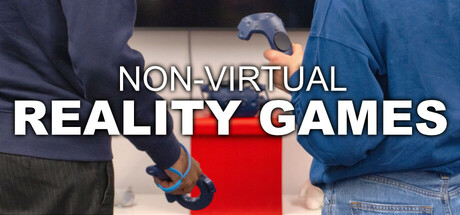
Non-Virtual Reality Games capsule

Non-Virtual Reality Games

VR without the headset. Games without visuals. Each player gets one of the VR controllers, no headset needed. All included games only use vibrations and sound to convey the game, while you play in the real world.

Free to PlayPositive(17)
CasualArcadeeSports
Non-VR GamesAug 27, 2025

Non-Virtual Reality Games scores 72/100 — better than 43% of Casual capsules (n=10,153).

Positive (17 reviews) · Free to Play · Released Aug 27, 2025 · By Non-VR Games

Quick text summary

Non-Virtual Reality Games scored 72/100 on Steam Analyzer — Good for a Casual capsule. Top priority fix: [brand_consistency] Establish a signature color palette or visual motif (e.g., vibrant accent color, geometric shape, or icon) that appears consistently across capsules, screenshots, and key art to build recognizable brand identity.

Capsule scores by dimension

  • Genre Clarity: 7/10 — Clear novelty concept, mild genre ambiguity. The image immediately communicates a unique premise: VR controllers without headsets in a real-world social setting. Two players with controllers and a red pedestal clearly show the hardware-focused, physical gameplay hook. At tiny size, the controller silhouettes and two-person interaction still read as 'party/social game,' though the specific 'non-virtual reality' angle requires the text to fully land; the visuals alone could suggest standard VR party games.
  • Title Readability: 8/10 — Strong hierarchy, excellent contrast at all sizes. The white text 'REALITY GAMES' is large, bold, and sits in the upper half with high contrast against the blurred background. 'NON-VIRTUAL' in smaller type above reads clearly even at tiny size due to the clean sans-serif weight and white-on-dark placement. The title does not collapse at small or tiny sizes and benefits from the blurred background that keeps it visually isolated from competing detail.
  • Contrast & Color: 8/10 — Strong value separation, excellent silhouette clarity. White title text pops decisively against the mid-tone background of hands and blurred interior. The red pedestal creates a secondary focal point with warm saturation that separates from the cool blue and purple clothing. In grayscale, the hand silhouettes, controller shapes, and red pedestal maintain clear definition and edge separation; no muddy mid-tone collapse. The image reads well at tiny size due to the strong light-dark contrast between the title and subject matter.
  • Uniqueness & Polish: 7/10 — Authentic real-world execution, clear differentiation. The capsule shows genuine gameplay photography rather than generic asset compositing, which communicates authenticity and trust. The red pedestal, controller hardware, and two-player interaction compose a memorable and specific visual that distinguishes this from standard VR or party game covers. However, the overall execution, while clean, lacks the polished art direction or signature visual style that would elevate it to premium tier; it reads more as 'honest product shot' than 'distinctive brand asset.'
  • Brand Consistency: 6/10 — Functional but generic brand identity markers. The capsule relies on product photography and textual clarity rather than an iconic symbol, character, or signature palette that would aid recognition across marketing materials. The red pedestal is visually interesting but not branded or memorable enough to become a recognizable motif. Without reference to the 19 store screenshots, this capsule does not establish a distinctive visual identity that would stand out in a user's library or memory; it functions as descriptive rather than iconic.
  • Composition: 7/10 — Clear focal hierarchy, safe margins, no crop risk. The two players and controllers form a natural triangular focal point in the center-left and right, drawing the eye inward. The red pedestal acts as a clear secondary anchor below. Title placement in the top-third does not crowd the primary subject, and the blurred background provides breathing room. At small and tiny sizes, the hand-controller interaction remains the dominant read; no important elements approach edges that would be cropped by Steam's display. The composition is balanced and resilient.

What works

  • High-contrast white title text. Bold, clean typography sits on a controlled background and maintains full legibility at tiny size without any outline or decoration needed.
  • Authentic product photography. Real-world gameplay image with genuine hardware and players conveys trust and differentiates from generic asset-based covers in the casual games space.
  • Strong focal point with depth. Two-player interaction and red pedestal create clear hierarchy that reads instantly at all sizes and guides attention without clutter.

What hurts the capsule

  • Generic visual identity and branding. No iconic character, symbol, or signature palette exists to make the game recognizable or memorable across storefronts and user libraries.
  • Limited uniqueness signaling in visuals alone. Without the text, the image could suggest standard VR party games or motion-control titles; the 'non-virtual' hook requires reading the title to fully understand.
  • Blurred background reduces production perception. While effective for contrast, the shallow depth-of-field and soft background elements make the image feel like a candid snapshot rather than a polished, intentional asset.

Priority fixes

  1. [brand_consistency] Establish a signature color palette or visual motif (e.g., vibrant accent color, geometric shape, or icon) that appears consistently across capsules, screenshots, and key art to build recognizable brand identity.
  2. [uniqueness_polish] Consider adding a secondary element—such as subtle UI affordances, glowing controller details, or a branded border—that signals the 'no-headset' innovation more visually without relying entirely on text.
  3. [genre_clarity] Reinforce the 'sound and vibration only' mechanic with a small icon or visual indicator (e.g., sound waves, haptic symbol) to clarify the unique selling point at tiny size where text reads small.

Store copy priority fixes

  1. [hook_strength] Rewrite the opening line of the detailed description to emphasize the gameplay novelty and physical interaction: 'Feel the game, not see it—use controller vibrations and sound to locate and capture spooky creatures or remember invisible planets in your room.' This reinforces the hook with a specific gameplay verb.
  2. [feature_communication] Expand the game descriptions to include round length, player count flexibility, and what happens after each win/loss, e.g., 'I Packed my Universe plays in 5–10 minute rounds and becomes harder as your memory fills with more planets.'
  3. [audience_targeting] Move the hardware requirements prominently into the short description or add a bolded callout near the top: 'Requires Valve Index or HTC Vive with external base stations'—this filters mismatched buyers early and builds trust.
  4. [uniqueness] Add 2–3 sentences in the 'Background' section explaining why the university project framework resulted in a novel design philosophy, e.g., 'Created as a thesis exploring how haptic feedback and spatial audio can replace visual gameplay, this collection proves VR is as much about feeling and listening as seeing.'

Related guides

Steam app ID: 2449320 · Tags: Casual, Arcade, eSports, VR, Local Multiplayer