Scoring genre clarity...
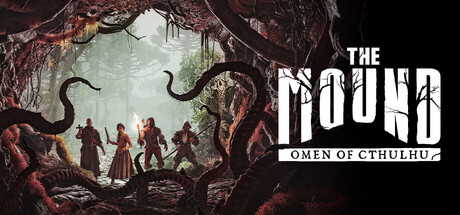
The Mound: Omen of Cthulhu capsule

The Mound: Omen of Cthulhu

In up to four player co-op, form a group of explorers searching for treasure. In this cursed jungle, danger is everywhere and monstrous creatures alter reality. Stay clear-headed and tame the jungle before it devours you…

Co-opActionAdventure
ACE TeamJul 15, 2026

The Mound: Omen of Cthulhu scores 75/100 — better than 60% of Co-op capsules (n=1,661).

Released Jul 15, 2026 · By ACE Team

Quick text summary

The Mound: Omen of Cthulhu scored 75/100 on Steam Analyzer — Good for a Co-op capsule. Top priority fix: [uniqueness_polish] Add a distinctive visual hook or signature element—such as a unique explorer character, artifact, or environmental detail—that differentiates this from generic cosmic horror and creates brand recall.

Capsule scores by dimension

  • Genre Clarity: 7/10 — Horror adventure with cooperative gameplay. The capsule clearly communicates a dark horror-adventure tone through the eerie jungle cave setting, writhing tentacles, and group of explorers in distress. At tiny size, the silhouettes of multiple characters and the Lovecraftian creature elements remain readable, though the specific co-op mechanic is not explicitly visually indicated. The Cthulhu aesthetic is immediately recognizable and supports the horror-adventure genre identity.
  • Title Readability: 8/10 — Strong legible title placement and hierarchy. THE MOUND and OMEN OF CTHULHU are positioned on a clean black background to the right, ensuring high contrast and readability at all sizes. The bold, impactful letterforms maintain clarity at tiny size without decoration collapse. The white text with subtle geometric styling creates a memorable logo lock-up that doesn't fight the background illustration.
  • Contrast & Color: 8/10 — Excellent separation against dark background. The pale greenish-grey cave lighting and the human figures in light garments create strong value contrast against both the dark background and the deep reddish-brown cave walls and tentacles. Key elements—the tentacles, character silhouettes, and title text—all maintain clear edges and separation in grayscale. At tiny size, the light figures pop distinctly from the murky environment.
  • Uniqueness & Polish: 7/10 — Polished Lovecraftian visual with solid craft. The illustration demonstrates strong professional rendering with layered cave detail, atmospheric lighting, and grotesque creature design that signals quality and intentional art direction. The Cthulhu-inspired theme is executed with care and visual sophistication, though the trope of explorers-in-cave-with-tentacles is familiar in horror media. The capsule feels premium and well-produced rather than generic asset work.
  • Brand Consistency: 7/10 — Coherent Lovecraftian horror identity. The warm ochre-rust palette, tentacle motifs, cave setting, and exploration party composition create a recognizable internal style consistent with cosmic horror storytelling. The typography and color treatment suggest a premium horror brand without relying on specific character iconography. This identity would be reinforceable across marketing materials and screenshots, though no singular mascot or symbol dominates.
  • Composition: 8/10 — Well-balanced focal depth with clear hierarchy. The composition uses strong layering: cave mouth and tentacles in the foreground, explorer group in midground, and atmospheric cave depth behind them. The title sits cleanly in the right third without competing with the central dramatic scene, and the eye naturally reads the group of humans first, then the horror context. At small and tiny sizes, the silhouettes remain distinct and the layout does not collapse into visual confusion.

What works

  • Title contrast and legibility. White text on black background ensures the title remains razor-sharp and readable at all sizes without any decoration collapse.
  • Atmospheric depth and layering. Foreground tentacles, midground explorers, and receding cave atmosphere create a clear visual hierarchy that guides attention and reads well at tiny size.
  • Genre-specific visual language. Lovecraftian tentacles, exploration party, and cave setting immediately communicate dark adventure horror without ambiguity.
  • Professional illustration quality. Rendering quality, lighting control, and creature design feel premium and polished compared to cheaper asset-based capsules.

What hurts the capsule

  • Familiar horror-adventure trope. The explorers-in-cave-with-tentacles concept, while well-executed, relies on recognizable genre clichés rather than a distinctive hook that sets it apart.
  • No character iconography. The capsule uses an ensemble scene rather than a memorable protagonist or signature symbol, reducing brand recall potential.
  • Co-op gameplay not visually signaled. While the group of explorers suggests multiplayer, the cooperative mechanic is not explicitly communicated through visual design or UI cues.

Priority fixes

  1. [uniqueness_polish] Add a distinctive visual hook or signature element—such as a unique explorer character, artifact, or environmental detail—that differentiates this from generic cosmic horror and creates brand recall.
  2. [genre_clarity] Consider subtle UI or mechanic hints (e.g., tethered rope between players, sanity meter iconography, or cursed jungle visual motif) to emphasize the co-op and sanity/reality-warping core mechanics.
  3. [composition] Evaluate whether any elements approach the extreme edges; ensure the explorer group and tentacles remain safely within the frame at all Steam crop ratios to protect visual impact on smaller cards.

Store copy priority fixes

  1. [feature_communication] Add a sentence explaining the core combat loop: 'Face horrific creatures in real-time combat using [weapon types/abilities], coordinating with teammates via voice chat to survive.' This directly answers 'what will I do when I encounter enemies?'
  2. [feature_communication] Expand the madness system description with one concrete example: 'As madness increases, teammates may see different versions of the environment, encounter phantom enemies, or hear voices guiding them astray—forcing constant communication to discern reality.' This transforms vague atmosphere into understandable mechanic.
  3. [audience_targeting] Add a sentence about solo play viability: 'Playable solo or co-op with dynamic difficulty scaling' or 'Designed for co-op teamwork but fully playable single-player,' depending on truth. This removes ambiguity for solo buyers.
  4. [uniqueness] Rewrite the madness system paragraph to include a differentiating claim: 'Unlike typical horror games, the madness system doesn't just scare the player—it actively divides your team by warping each member's perception differently, forcing you to rely on trust and communication to survive.' This explains what makes it unique.

Related guides

Steam app ID: 2569760 · Tags: Co-op, Action, Lovecraftian, Adventure, Psychological Horror