Scoring genre clarity...
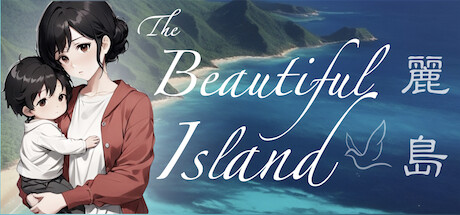
The Beautiful Island capsule

The Beautiful Island

A short visual novel about war, peace and hope. Explore a city after a devastating war. Talk to people, try to understand, try to help. The heroes of war are dead, but you can be a hero of peace!

Free to PlayMostly Positive(39)
Alternate HistoryVisual NovelPolitical
TBF, Ma KeFeb 27, 2025

The Beautiful Island scores 75/100 — better than 82% of Alternate History capsules (n=283).

Mostly Positive (39 reviews) · Free to Play · Released Feb 27, 2025 · By TBF

Quick text summary

The Beautiful Island scored 75/100 on Steam Analyzer — Good for a Alternate History capsule. Top priority fix: [genre_clarity] Subtly introduce visual context clues hinting at the post-war recovery theme—such as weathered building details, subtle ruins in background, or a visual metaphor of reconstruction—while maintaining the emotional intimacy.

Capsule scores by dimension

  • Genre Clarity: 7/10 — Visual novel with emotional narrative. The anime art style, character focus, and mountainous setting clearly signal a narrative-driven visual novel or story game. At tiny size, the two characters in an intimate pose still read as character-driven storytelling, though the specific 'post-war peace' theme is not visually apparent without text. The tranquil landscape supports a contemplative tone but doesn't strongly differentiate from other narrative indies.
  • Title Readability: 8/10 — Elegant script readable at all sizes. The title 'The Beautiful Island' uses a graceful serif script font in white with subtle drop shadow, positioned in the right two-thirds of the composition against a sky background with minimal texture competition. At small and tiny sizes, the text remains legible due to high contrast and consistent letter spacing, though the decorative script loses some elegance in compression. The English title reads clearly; the Japanese characters below (麗島) add cultural flavor but are secondary.
  • Contrast & Color: 8/10 — Strong light-dark separation with warm tones. The white script title pops distinctly against both the sky and the darker character silhouettes, creating clear value separation against the Steam dark background. The warm terracotta cardigan worn by the adult character provides mid-tone warmth that distinguishes the figures from the cool blue mountains. The grayscale test holds strong; the character silhouettes and title remain clearly defined even when saturation is mentally removed.
  • Uniqueness & Polish: 7/10 — Polished anime aesthetic, emotionally focused. The art direction is clean and intentional, with professional character rendering and a cohesive watercolor landscape treatment that feels premium and hand-crafted rather than stock. The intimate pose of caregiver and child communicates emotional core and relationship-focused storytelling, which aligns with the game's peace and hope theme. However, the visual presentation is within anime visual novel conventions and doesn't introduce a striking unique hook that distinguishes it from other narrative indies in the space.
  • Brand Consistency: 7/10 — Consistent soft anime style, recognizable palette. The capsule establishes a clear soft-focus anime aesthetic with pastel and warm tones (creams, terracottas, cool blues) that creates a recognizable internal identity. The character design with defined facial features and expressive eyes is consistent with visual novel conventions and should carry across store screenshots. The brand signals care, intimacy, and serenity, though without a singular iconic motif or symbol unique to this game, the identity remains solidly competent rather than instantly memorable.
  • Composition: 8/10 — Clear focal point, effective depth layering. The composition uses strong foreground (characters), midground (landscape), and background (distant mountains) to create clear depth and guide the viewer's eye naturally to the embrace. The character group sits in the left-center area, balanced by the title in the right upper quadrant, creating dynamic asymmetry without clutter. At tiny size the focal point remains the two figures, and the title doesn't compete; safe margins are observed, with no critical elements approaching crop danger zones.

What works

  • Professional character rendering. The two characters are beautifully drawn with soft shading, expressive faces, and intimate body language that immediately communicates emotional stakes and relationship focus.
  • High-contrast readable title. White serif script against sky background with shadow creates excellent legibility across full, small, and tiny sizes without losing elegance.
  • Effective depth and layering. Clear foreground-midground-background separation with characters, landscape, and mountains creates visual interest and dimensionality that prevents flatness.
  • Cohesive warm and cool palette. Terracotta, cream, and blue tones work harmoniously and create a calming, hopeful mood aligned with the game's thematic content.

What hurts the capsule

  • Generic visual novel aesthetic. While professionally executed, the anime character art and mountain backdrop follow familiar visual novel conventions without a distinctive signature element or unexpected visual hook.
  • Theme not visually explicit. The 'post-war peace-building' narrative core is not communicated through visuals alone—it requires text knowledge; the image reads as a gentle slice-of-life rather than a game about recovery and hope.
  • Limited iconography for future recognition. No singular symbol, character motif, or visual marker that would make this capsule instantly recognizable in a crowded store or sequel context.

Priority fixes

  1. [genre_clarity] Subtly introduce visual context clues hinting at the post-war recovery theme—such as weathered building details, subtle ruins in background, or a visual metaphor of reconstruction—while maintaining the emotional intimacy.
  2. [uniqueness_polish] Develop a distinctive visual signature such as a unique UI element, color accent, or symbolic motif (e.g., a peace symbol, dove, or iconic object) that differentiates this game's identity from other anime visual novels.
  3. [brand_consistency] Ensure the two characters and warm-cool palette appear consistently across all store screenshots to reinforce recognition and cohesion.

Store copy priority fixes

  1. [feature_communication] Replace the three philosophical questions with a single concrete sentence: 'Your choices determine who Jan helps, which faction gains influence, and which of 6+ endings you unlock.' This directly answers 'what do my decisions change?'
  2. [uniqueness] After the dual-path setup, add a sentence like 'Experience a war story that refuses easy answers—the same characters have radically different fates depending on which timeline you explore.' This deepens the narrative differentiation.
  3. [audience_targeting] Add runtime and tone clarity: 'Expect 3-5 hours of branching dialogue and exploration. This is not a feel-good war story—it's a thoughtful examination of how conflict reshapes people and politics.'
  4. [feature_communication] Briefly explain the 'share opinion' mechanic: 'After completing the game, vote on the question Jan wrestles with and see how other players answered' or similar, to clarify this unique element.

Related guides

Steam app ID: 2828660 · Tags: Alternate History, Visual Novel, Political, Choose Your Own Adventure, Exploration