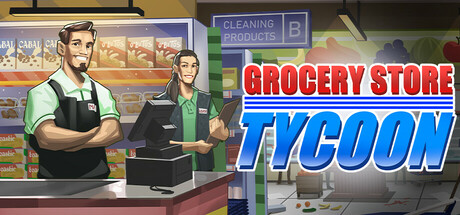
Grocery Store Tycoon scores 80/100 — better than 87% of Simulation capsules (n=5,188).

Quick text summary

Grocery Store Tycoon scored 80/100 on Steam Analyzer — Good for a Simulation capsule. Top priority fix: [uniqueness_polish] Introduce a distinctive visual signature—either an iconic character mascot, unique art style departure, or signature color/lighting treatment that differentiates from standard retail sim templates

Capsule scores by dimension

  • Genre Clarity: 9/10 — Clear tycoon sim gameplay. The capsule immediately communicates a business management simulation through iconic tycoon elements: a retail counter with two employees in branded uniforms, a stocked grocery shelving backdrop, a shopping cart in the foreground, and the bold 'TYCOON' text. At tiny size, the counter scene and store environment remain unmistakably recognizable as a grocery/retail management game, with the uniform colors and counter setup providing instant genre confirmation.
  • Title Readability: 9/10 — Excellent bold typography. The title 'GROCERY STORE TYCOON' uses large, high-contrast red and blue block lettering with strong white outlines that remain fully legible at all sizes including tiny thumbnail. Strategic placement in the right half of the image avoids competition with the character scene on the left, and the clean sans-serif construction maintains clarity even under squint testing or mental blur.
  • Contrast & Color: 8/10 — Strong value separation overall. The capsule employs warm store lighting (oranges and yellows in shelving and ceiling) against cooler tones (blue signage, green uniforms) that create clear silhouettes against the dark Steam background. Characters and counter stand out with distinct value separation; the red/blue title pops decisively. Minor weakness: some mid-tone shelving details and background clutter compress slightly in grayscale, though primary elements remain readable.
  • Uniqueness & Polish: 7/10 — Polished art with slight template feel. The illustration quality is clean and professional with good character design, proper perspective, and coherent lighting suggesting intentional craft rather than asset assembly. However, the scene composition—store counter + shelves + signage—follows a familiar retail simulator visual template seen in Supermarket Simulator and similar titles, making it feel competent but not distinctly memorable without deeper visual hooks or a unique art style signature.
  • Brand Consistency: 7/10 — Consistent store identity, limited distinctiveness. The green and black employee uniforms, consistent interior lighting style, and professional retail branding create internal cohesion that would likely carry across store screenshots. However, no iconic character motif, signature symbol, or unique art direction emerges that would create instant brand recall separate from the genre category—it reads as a well-executed but generic grocery tycoon presentation rather than a visually distinctive property.
  • Composition: 8/10 — Strong focal hierarchy and balance. The left-side character scene (two employees at counter) provides a clear human-scale focal point that immediately draws attention, while the right-side title and store environment anchor the composition without competing. Depth layering (foreground cart → counter → shelves → ceiling) creates visual dimensionality. Safe margins protect key elements, and the division of space between character vignette and environment feels intentional and well-balanced even at small sizes.

What works

  • Readable title at all sizes. Bold red and blue lettering with white outlines maintains full clarity from full header down to tiny thumbnail without degradation or optical compression.
  • Immediate genre recognition. Counter setup, uniformed employees, stocked shelves, and shopping cart combine to unmistakably signal a grocery/retail management tycoon game within 1 second of viewing.
  • Professional character rendering. The two employees are well-illustrated with distinct poses, proper anatomy, and clear uniform branding that adds credibility and personality to the scene.
  • Balanced composition hierarchy. Character vignette on left and environmental context on right create clear focal point without clutter, with effective depth layering from cart through shelves.

What hurts the capsule

  • Generic visual presentation. The scene follows a familiar retail simulator template with no distinctive art style, signature motif, or unique visual hook that separates it from competitor capsules like Supermarket Simulator or TCG Card Shop Simulator.
  • Limited brand identity signal. No iconic character, unique palette, or memorable visual element emerges that would create instant brand recall or be recognizable in isolation from the genre label.
  • Background detail compression at tiny size. Shelving details and wall elements lose definition when squinted or viewed at thumbnail scale, though primary elements remain readable.

Priority fixes

  1. [uniqueness_polish] Introduce a distinctive visual signature—either an iconic character mascot, unique art style departure, or signature color/lighting treatment that differentiates from standard retail sim templates
  2. [brand_consistency] Create a recognizable brand motif or icon (store logo, character emblem, or palette signature) that could stand alone and reinforce identity across marketing materials
  3. [contrast_color] Increase saturation or value contrast on background shelving elements to ensure wall/shelf details remain readable in grayscale and at thumbnail sizes without losing clarity

Store copy priority fixes

  1. [hook_strength] Rewrite the opening emoji line to lead with a specific satisfying feedback loop—e.g., '🛒 Watch your small market grow into a bustling retail empire as satisfied customers return and profits climb.' This gives players an emotional target to work toward.
  2. [uniqueness] Add one sentence explaining why the first-person perspective matters: 'Experience the hustle of retail firsthand—jump behind the counter to ring customers up, or step back to oversee your growing operation.' This differentiates from traditional top-down management sims.
  3. [feature_communication] Reorganize the bullet list into three gameplay pillars: (1) Day-to-Day Operations (stock, register, scanner), (2) Staff Management (hire, assign roles, balance happiness), (3) Growth & Optimization (pricing, storage, efficiency). This creates a clearer mental model of progression.
  4. [tone_match] Add one sentence emphasizing the relaxing, low-pressure nature of the game to deepen audience connection: e.g., 'No time limits or deadlines—build your store at your own pace.' This reinforces the 'Relaxing' tag and differentiates from high-stress business sims.

Related guides

Steam app ID: 2870330 · Tags: Simulation, Immersive Sim, Management, Economy, Life Sim