Quick text summary
Blades, Bows and Magic scored 70/100 on Steam Analyzer — Good for a Strategy capsule. Top priority fix: [genre_clarity] Integrate subtle card game UI elements (hand of cards, game board grid, or tactical positioning indicators) into the composition to communicate the card battler mechanic at small size.
Capsule scores by dimension
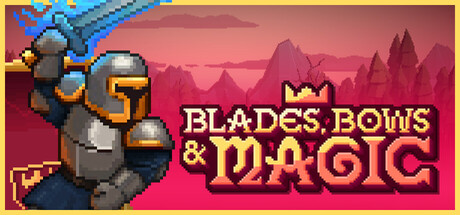
- Genre Clarity: 7/10 — Card battler with medieval fantasy. The pixelated armored warrior on the left and the title 'Blades, Bows & Magic' clearly signal a fantasy strategy game with combat focus. At tiny size, the character silhouette and bold fantasy typography remain readable enough to suggest the genre, though the card battler specific mechanic is not visually evident from the capsule alone—it reads more as general fantasy action than tactical card strategy.
- Title Readability: 8/10 — Strong golden title with good contrast. The title uses a bold, outlined golden font on the warm red-pink gradient background, providing excellent contrast and legibility at full size and maintaining clarity at small and tiny sizes. The font is decorative but structured enough that letterforms don't collapse under reduction, and the three-line layout with centered alignment keeps focus on the text hierarchy.
- Contrast & Color: 8/10 — Warm palette pops against dark background. The golden yellow title and warm magenta-red gradient background create strong value separation against Steam's dark #1b2838 interface, with the pixelated warrior in gray-orange tones providing additional silhouette clarity. The color saturation is controlled and cohesive; at tiny size, the warm glow and golden text remain visually distinct and readable despite the small scale.
- Uniqueness & Polish: 6/10 — Competent retro style, generic composition. The pixel art warrior is well-rendered with clean sprite work and the golden ornate title treatment shows craft, but the overall composition—character on left, title on right, gradient background—follows a very common capsule template in the casual strategy genre. The visual execution is solid and professional, but it lacks a distinctive hook or unique mechanic communication that would elevate it above baseline competence.
- Brand Consistency: 6/10 — Readable brand, but limited identity cues. The golden serif-outline title treatment and warm color palette are internally consistent and signal a premium fantasy brand, but there are no memorable motifs, unique character designs, or signature visual hooks that would be instantly recognizable across multiple store assets. The pixel art style is consistent with the title treatment, but the overall identity feels more like a genre aesthetic than a distinctive brand voice.
- Composition: 7/10 — Clear hierarchy, safe layout, minor crowding. The composition uses a strong left-right balance with the pixelated warrior anchoring the left side and the title dominating the right, creating clear focal hierarchy and avoiding clutter. The background gradient adds depth, but at tiny size the character and title compete slightly for attention, and the lower portion of the capsule feels somewhat underutilized—the layout is functional and safe but could benefit from more sophisticated depth layering.
What works
- Golden title contrast. The outlined golden typography pops strongly against the warm red-pink gradient and reads clearly even at tiny thumbnail size.
- Pixel art quality. The armored warrior character is cleanly rendered with readable silhouette and distinct gray-orange color separation that maintains definition at small scales.
- Color harmony. The warm magenta-gold-orange palette is cohesive and creates a premium fantasy atmosphere that stands out against Steam's dark background.
What hurts the capsule
- Generic template composition. The character-left, title-right layout with centered gradient background is a common casualty of capsule design templates and lacks distinctive positioning or staging.
- Card battler mechanic invisible. The capsule reads as fantasy action rather than tactical card strategy—there are no visual cues like card icons, hand UI elements, or strategic positioning that communicate the core 'card battler' gameplay.
- Limited brand identity. No memorable motifs, iconic characters, or signature visual elements that would create instant recognition or distinguish this from other medieval fantasy titles in the genre.
Priority fixes
- [genre_clarity] Integrate subtle card game UI elements (hand of cards, game board grid, or tactical positioning indicators) into the composition to communicate the card battler mechanic at small size.
- [uniqueness_polish] Develop a distinctive visual signature—such as a unique champion character, faction-specific iconography, or a signature tactical battle visual motif—that differentiates the brand beyond generic fantasy.
- [composition] Reposition the warrior and title to create more dynamic, asymmetrical framing that suggests action or tactical depth rather than standard left-right layout.
Store copy priority fixes
- [uniqueness] Add one concrete, specific example of a card interaction or synergy that feels unique to this game (e.g., 'Place an Archer behind a Warrior to trigger a Snipe ability that ignores basic RPS rules') to differentiate from other auto-battlers.
- [feature_communication] Expand the detailed description with concrete details on progression (how many cards to unlock, what rarity tiers or deck sizes exist) and strategic depth (team composition, synergy rewards, or economy systems) so players can mentally model the full gameplay loop.
- [audience_targeting] Lead with a clearer audience signal in the opening: specify whether this is 'perfect for strategy fans new to card games' or 'deep enough for tactical veterans' so the right player immediately recognizes fit.
- [hook_strength] Replace or supplement 'surprising results' and 'interesting interactions' in the detailed description with one vivid, specific example that shows *why* card placement and abilities create emergent moments.
Related guides
Steam app ID: 3182730 · Tags: Strategy, Card Battler, Turn-Based Tactics, Multiplayer, Singleplayer