Door4:Ultimatum scores 70/100 — better than 32% of Puzzle capsules (n=4,408).

Quick text summary

Door4:Ultimatum scored 70/100 on Steam Analyzer — Good for a Puzzle capsule. Top priority fix: [uniqueness_polish] Add a distinctive visual cue to the door—such as a unique material, glow effect, puzzle pattern overlay, or symbolic rune—that hints at the game's core mechanic and sets it apart from generic door-puzzle games.

Capsule scores by dimension

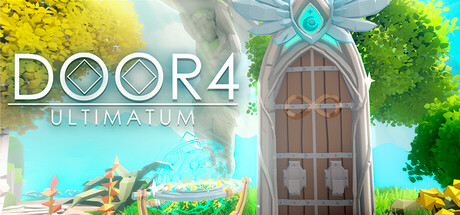
  • Genre Clarity: 7/10 — Puzzle adventure with environmental mystery. The centered wooden door with ornate frame clearly signals a puzzle-exploration game, and the bright fantasy environment with foliage reinforces an adventure setting. At tiny size, the door silhouette remains recognizable as the focal point, though the puzzle-solving mechanic itself is not visually explicit—it reads as adventure exploration rather than logic puzzle, which slightly muddles the specific subgenre cue.
  • Title Readability: 8/10 — Strong legible title with clean hierarchy. DOOR4 is rendered in a bold, geometric sans-serif with clear letter spacing and sits prominently in the upper left in white outline, ensuring readability at all sizes including tiny. ULTIMATUM appears below in smaller scale but maintains legibility. The outline treatment and placement on a semi-controlled region protects it from texture noise at small and tiny sizes, though the subtitle tagline in smaller text becomes harder to parse below 87 pixels.
  • Contrast & Color: 8/10 — High value separation and saturated clarity. The capsule employs a bright cyan-to-yellow gradient sky background with vivid green foliage that creates strong value separation from the dark wooden door in the center. The white title text stands out sharply against the warm-cool background, and the overall saturation and lightness provide excellent silhouette definition even in grayscale. At tiny size, the door and title remain distinct and do not blend into the background.
  • Uniqueness & Polish: 6/10 — Competent scene, generic puzzle-game setup. The capsule presents a polished 3D-rendered environment with clean lighting and attractive color harmony, but the visual concept—a magical door in a bright fantasy world—follows a familiar puzzle-adventure template seen in COCOON, Slay the Princess, and other door-based games. The craft is solid with no obvious cheap asset vibe, but the composition lacks a distinctive hook or unique mechanic cue that would separate it from similar titles at quick glance.
  • Brand Consistency: 6/10 — Consistent polish without memorable identity. The rendering style is cohesive across the scene—clean 3D modeling, consistent lighting, and unified color palette in warm-cool balance. However, there are no distinctive motifs, character elements, or iconic symbols that would create brand recognition or visual recall across multiple touchpoints. The door itself is the only potential identity anchor, but without unusual design or color coding, it remains generic to the genre.
  • Composition: 7/10 — Strong focal point with balanced depth layers. The wooden door occupies the center-right position as the clear primary subject, with foreground foliage and background sky creating clear depth separation. The title anchors the left side without competing for attention, and the bright environment provides strong compositional balance. At small and tiny sizes the door remains the unmistakable focal point, though the extreme left edge of foliage may risk cropping on some Steam layouts; the core composition is resilient.

What works

  • Legible title hierarchy. White outlined DOOR4 text is bold and clear at all viewing sizes, protecting readability against the background even at tiny thumbnail scale.
  • Strong value and color contrast. The bright cyan-yellow sky and green foliage create excellent separation from the dark door and white title, ensuring quick visual recognition on dark Steam background.
  • Clear focal point composition. The centered ornate door immediately directs attention and reads as the game's primary visual hook at both full and small sizes without ambiguity.
  • Professional 3D rendering quality. Consistent lighting, clean geometry, and polished environment convey a premium indie production without cheap asset indicators.

What hurts the capsule

  • Generic puzzle-adventure visual language. The bright fantasy door scene follows a template familiar from competing indie puzzle titles, offering no distinctive visual cue that signals what makes Door4 unique.
  • No memorable brand motif or icon. The door itself lacks distinctive coloring, material, or ornament patterns that could become a recognizable brand symbol across marketing materials.
  • Puzzle mechanic not visually communicated. The capsule reads as adventure exploration rather than logic-puzzle solving, missing an opportunity to hint at the core gameplay loop through visual language.
  • Subtitle text loses legibility at small scale. ULTIMATUM tagline becomes hard to read at small capsule sizes, reducing the secondary messaging impact during quick scroll browsing.

Priority fixes

  1. [uniqueness_polish] Add a distinctive visual cue to the door—such as a unique material, glow effect, puzzle pattern overlay, or symbolic rune—that hints at the game's core mechanic and sets it apart from generic door-puzzle games.
  2. [genre_clarity] Incorporate a subtle visual puzzle hint—such as glowing door options, multiple doors partially visible, or environment elements forming a pattern—to communicate the puzzle-solving mechanic rather than just exploration.
  3. [brand_consistency] Develop a signature color accent or ornamental motif on the door frame or environment that can be reused as a brand identifier across future store screenshots and marketing.
  4. [title_readability] Consider increasing the ULTIMATUM subtitle size or adding slight outline treatment to improve legibility at small capsule sizes without crowding the layout.

Store copy priority fixes

  1. [hook_strength] Replace "captivating world" and "coveted passage" with a specific, verb-forward opening: e.g., 'Find the correct door among dozens to escape each level—but every wrong choice resets the puzzle and changes the answer.'
  2. [uniqueness] Add a concrete differentiator explaining what makes Door4 distinct: e.g., mention a new mechanic, thematic twist, or scope compared to previous entries, or highlight a standout feature like procedural puzzle generation.
  3. [feature_communication] Expand the bullet points with concrete examples: e.g., instead of 'Use clues in the environment,' write 'Match visual patterns on walls to predict which door leads forward,' so players visualize actual gameplay.
  4. [audience_targeting] Add a difficulty or player-type signal: e.g., 'Perfect for logic puzzle fans who enjoy environmental storytelling' or 'Casual players who prefer exploration-based progression over time pressure.'

Related guides

Steam app ID: 3190610 · Tags: Puzzle, Indie, Exploration, Adventure, First-Person