Quick text summary
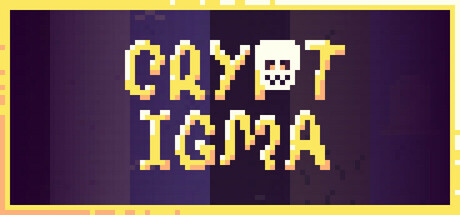
Cryptigma scored 63/100 on Steam Analyzer — Solid for a Casual capsule. Top priority fix: [genre_clarity] Replace skull/crypt imagery with a visual that hints at respawn mechanics—consider a character, respawn marker, or level geometry that signals puzzle-platforming rather than horror.
Capsule scores by dimension
- Genre Clarity: 5/10 — Puzzle intent unclear at tiny size. The pixelated aesthetic and dice icon suggest a puzzle or logic game, but the 'CRYPT' prefix and skull imagery lean heavily toward horror or roguelike rather than a casual puzzle-platformer. At tiny size, the visual reads more as mystery/horror than innovative puzzle mechanics, which misaligns with the core gameplay hook of respawn point manipulation.
- Title Readability: 8/10 — Clear retro font with good contrast. The pixelated yellow text 'CRYPT IGMA' is legible at full and small sizes with strong contrast against the dark purple-black background. At tiny size the letterforms remain distinguishable, though the dice icon becomes abstract. The only minor weakness is the split across two lines reduces impact slightly.
- Contrast & Color: 7/10 — Strong yellow-purple value separation. The bright yellow pixelated title pops clearly against the dark purple background, creating excellent value contrast that survives the grayscale squint test. The gold border frame adds visual separation from the Steam dark background. The dice icon loses some definition at tiny size due to fine pixel detail, slightly weakening silhouette clarity.
- Uniqueness & Polish: 6/10 — Retro aesthetic present but generic. The pixelated art style is intentional and clean, but this approach is now common among indie puzzle games and doesn't communicate the unique respawn-point mechanic that defines Cryptigma. The dice and skull imagery feel decorative rather than core to the game's identity, making it blend into the broader retro-puzzle category without a distinctive hook.
- Brand Consistency: 5/10 — Limited identity signals, cryptic branding. The capsule establishes a retro pixel aesthetic and purple-gold color scheme, but lacks memorable motifs tied to the respawn mechanic or puzzle identity. Without access to the 8 store screenshots, the internal cohesion appears functional but the dice icon and 'crypt' framing suggest mystery over the casual puzzle tone, creating potential inconsistency with in-game visuals and marketing positioning.
- Composition: 7/10 — Centered title with solid hierarchy. The title dominates the composition with clear vertical centering, and the dice icon sits as a supporting element to the right of the text. The gold frame provides safe margins and crop resilience. At small and tiny sizes, the hierarchy reads cleanly with title as primary focus, though the dice icon competes slightly for attention rather than purely supporting.
What works
- Bright yellow-purple contrast. The vibrant yellow pixelated text creates excellent value separation against the dark background and remains readable at all viewing sizes.
- Intentional retro aesthetic. The pixelated font and design style are clean and deliberate, communicating a vintage puzzle game vibe that feels cohesive and craft-aware.
- Clear visual hierarchy at small sizes. Title text dominates the composition with strong centralization and supporting icon placement that doesn't overshadow the main text.
What hurts the capsule
- Horror framing obscures puzzle identity. The 'CRYPT' prefix and skull imagery suggest a dark mystery or roguelike rather than a casual puzzle game, misaligning with genre expectations and the core respawn-mechanic hook.
- Dice icon lacks narrative connection. The dice appears decorative and generic rather than communicating the game's unique respawn-point movement mechanic, missing an opportunity for visual storytelling.
- Generic retro-pixel presentation. The pixelated aesthetic, while clean, is now common among indie games and doesn't establish a memorable or distinctive brand identity that would survive comparison to top-performing peers.
Priority fixes
- [genre_clarity] Replace skull/crypt imagery with a visual that hints at respawn mechanics—consider a character, respawn marker, or level geometry that signals puzzle-platforming rather than horror.
- [uniqueness_polish] Add a distinctive visual motif tied to the respawn point mechanic (e.g., a character with a glowing anchor point, or a minimal icon symbolizing repositioning) to communicate the core hook.
- [brand_consistency] Verify color palette and motifs align with in-game UI and the 8 store screenshots to ensure cohesive brand identity across all marketing materials.
Store copy priority fixes
- [hook_strength] Rewrite the short description to lead with action and stakes: 'Cryptigma is a puzzle game where death is your tool. Move your respawn point to solve increasingly complex spatial challenges in over 100 hand-crafted levels.' This strengthens the hook by framing the mechanic as empowering rather than descriptive.
- [feature_communication] Add a sentence explaining how each hazard type (poison, drowning, freezing, electrocution) creates new puzzle mechanics, not just aesthetic variety, to clarify gameplay depth.
- [audience_targeting] Insert an explicit audience signal early in the detailed description, such as 'Perfect for players who enjoy methodical, brain-bending puzzles without time pressure' to help casual vs. hardcore players self-identify.
- [uniqueness] Add a concise comparison statement such as 'Unlike traditional Sokoban, your respawn point is an active puzzle piece, not a static safety net' to reinforce differentiation.
Related guides
Steam app ID: 3207870 · Tags: Casual, Puzzle, Sokoban, 2D, Minimalist