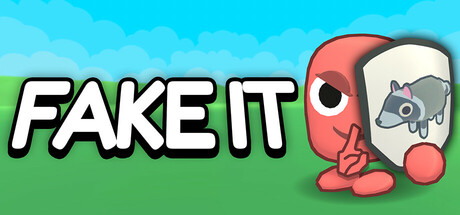
Fake It scores 75/100 — better than 65% of Casual capsules (n=10,153).

Quick text summary

Fake It scored 75/100 on Steam Analyzer — Good for a Casual capsule. Top priority fix: [genre_clarity] Add subtle NPC or crowd silhouettes in background to hint at the hide-in-plain-sight mechanic without cluttering the layout.

Capsule scores by dimension

  • Genre Clarity: 7/10 — Party game chaos clearly signaled. The absurd character design with split personalities (red and white halves) and goofy proportions immediately communicate a casual, comedic party game rather than a serious action title. At TINY size, the distinctive dual-face mascot is still recognizable and conveys silly multiplayer energy, though the specific 'hidden NPC' mechanic is not visually obvious without context.
  • Title Readability: 8/10 — Bold title with strong legibility. The 'FAKE IT' title uses thick, high-contrast white letters with black outline positioned on the left side over a clean green background, ensuring excellent readability at all sizes including TINY. The title does not collapse or blur into surrounding elements, and the strategic placement away from the character mascot prevents overlap interference at small scales.
  • Contrast & Color: 8/10 — Vibrant palette with clean separation. The bright cyan sky, lime green ground, and red-and-white character create strong value and saturation contrast against the Steam dark background. The mascot silhouette remains visually distinct even at TINY size due to warm red and neutral cream tones popping against cool backgrounds; in grayscale, the character maintains clear edge definition.
  • Uniqueness & Polish: 7/10 — Quirky mascot with cohesive style. The split-personality character design with expressive eyes and rounded forms feels intentional and memorable, avoiding the generic party game template. The simple, clean art style and color blocking convey polish and indie charm, though the overall composition is somewhat straightforward and does not communicate a unique core mechanic visually beyond 'silly fun.'
  • Brand Consistency: 7/10 — Recognizable character identity. The dual-faced mascot appears to be the game's iconic visual signature, with consistent rendering and a distinctive silhouette that would be recognizable across marketing materials. The bold, playful color palette and rounded character proportions establish a coherent brand voice aligned with casual indie sensibilities.
  • Composition: 8/10 — Clear hierarchy with balanced spacing. The title anchors the left third while the character mascot balances the right side, creating an effective two-zone layout with breathing room and no dead center void. The focal point naturally guides from title to character, and at TINY size the composition remains readable with good safe margins preventing crop issues on Steam's display formats.

What works

  • Title legibility across all sizes. Thick white outline and black core ensure 'FAKE IT' remains crisp and readable at TINY, SMALL, and FULL sizes without collapsing or muddy letterforms.
  • Distinctive character mascot. The split-personality design is memorable, quirky, and immediately communicates a casual, comedic tone that differentiates from serious action games.
  • Strong color contrast against Steam background. Vibrant cyan, lime green, and red-cream palette pops effectively against #1b2838, with clear silhouette separation maintained at thumbnail scale.
  • Balanced compositional layout. Title and character are well-spaced with no competing focal points or awkward empty regions, creating intuitive visual hierarchy.

What hurts the capsule

  • No core mechanic visual hint. The capsule does not communicate 'hiding as NPCs' or the hunter-vs-hunted gameplay loop; genre context is party chaos only.
  • Generic background scenery. The simple sky and ground lack environmental narrative or setting specificity that would elevate the design beyond basic casual game aesthetic.
  • Minimal visual storytelling. The mascot character alone cannot hint at the game's unique 'fake NPC' premise, relying entirely on name and context rather than visual communication.

Priority fixes

  1. [genre_clarity] Add subtle NPC or crowd silhouettes in background to hint at the hide-in-plain-sight mechanic without cluttering the layout.
  2. [uniqueness_polish] Introduce a secondary visual element (e.g., magnifying glass, disguise motif, or agent cue) that signals the deception/hunting core loop.
  3. [composition] Consider adding a small environment detail or props that suggest multiplayer party chaos (e.g., scattered objects, simplified crowd figures) to increase visual depth and thematic relevance.

Store copy priority fixes

  1. [feature_communication] Add a single sentence after the Hunters section explaining typical player counts and round duration (e.g., 'Rounds last X minutes with 4–12 players, split between 1–3 fakers and the rest as hunters') to ground expectations.
  2. [uniqueness] Insert a one-sentence positioning statement in the opening detailed description that explicitly highlights what makes the *acting* and *learning mobs* mechanic different (e.g., 'Unlike other hidden-role games, success depends on studying and mimicking specific NPC behaviors, not just lurking.').
  3. [feature_communication] Rewrite the Features section to explain *why* Workshop and Mob Creator matter: replace dry bullets with benefit statements (e.g., 'Steam Workshop support – play with community-created mobs for endless variety' instead of just listing it).

Related guides

Steam app ID: 3250670 · Tags: Casual, Multiplayer, Funny, Stealth, PvP