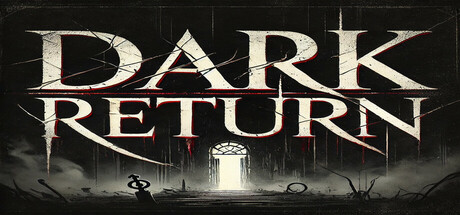
Dark Return scores 68/100 — better than 17% of Action capsules (n=8,534).

Quick text summary

Dark Return scored 68/100 on Steam Analyzer — Solid for a Action capsule. Top priority fix: [uniqueness_polish] Introduce a distinctive visual element—a character silhouette, iconic object, or unique color accent—that signals story identity and differentiates from generic dark-game aesthetics.

Capsule scores by dimension

  • Genre Clarity: 7/10 — Dark horror-adventure clearly telegraphed. The pale gothic title treatment, fog-shrouded industrial architecture, and silhouetted figures with a glowing doorway signal horror and mystery effectively. At tiny size, the imposing structure and atmospheric gloom still communicate dark narrative tension, though the specific action gameplay aspect is less obvious from visual cues alone.
  • Title Readability: 8/10 — Strong serif title with clear hierarchy. DARK RETURN uses a bold, pale serif font with sharp serifs that maintains good separation from the dark background and reads clearly at full and small sizes. At tiny size the two-line stacked layout preserves legibility well, though fine serifs become slightly soft; the word spacing and scale remain functional for quick recognition.
  • Contrast & Color: 8/10 — Excellent light-dark separation throughout. The cream and pale gold title pops distinctly against the deep charcoal and black background, creating strong value contrast that survives squinting and tiny size viewing. The silhouetted architecture and glowing doorway create clear depth layers; even in grayscale the composition maintains excellent tonal separation.
  • Uniqueness & Polish: 6/10 — Competent but generic horror aesthetic. The fog-drenched industrial ruin with gothic title treatment is visually solid and well-executed, but follows familiar dark-game visual language seen in many horror titles. The composition and rendering are professional, yet the overall hook feels like a well-crafted template rather than a memorable or distinctive visual identity that stands apart from peer titles like Resident Evil 4 or DREDGE.
  • Brand Consistency: 5/10 — Minimal identity cues, generic visual language. The capsule relies on standard horror-genre iconography (fog, broken architecture, mysterious light) without establishing a unique character, symbol, or palette signature that would be recognizable across other brand touchpoints. Without access to the 11 screenshots, internal cohesion appears competent but the capsule lacks a memorable identity hook that suggests a specific story or world beyond generic dark-narrative convention.
  • Composition: 7/10 — Clear focal point, balanced depth layering. The glowing doorway and silhouetted structure create a natural center-focal point drawing the eye inward, with foreground fog, midground ruins, and background light creating strong depth layers. Title placement at top is secure and well-positioned; at small size the composition holds hierarchy well, though at tiny size some architectural detail in the midground becomes muddy and less distinct.

What works

  • High title-background contrast. Pale serif lettering against deep charcoal background ensures the logo reads clearly even at tiny sizes and scrolls well on dark Steam UI.
  • Atmospheric depth and layering. Foreground fog, midground ruins, and distant glowing structure create visual hierarchy that guides the eye and communicates mystery effectively.
  • Genre expectation alignment. Gothic architecture, atmospheric fog, and mysterious light immediately signal horror-adventure to genre-familiar viewers at all scales.

What hurts the capsule

  • Generic visual identity. The fog-and-ruin aesthetic relies heavily on familiar dark-game tropes without establishing a distinctive visual signature or memorable hook.
  • Midground detail collapse at tiny size. Architectural silhouettes and environmental details lose clarity when squinted or viewed at thumbnail scale, reducing visual impact during quick scrolls.
  • No gameplay-specific visual language. The capsule communicates mood and genre but does not hint at core mechanics, characters, or unique selling points that differentiate from peer horror titles.

Priority fixes

  1. [uniqueness_polish] Introduce a distinctive visual element—a character silhouette, iconic object, or unique color accent—that signals story identity and differentiates from generic dark-game aesthetics.
  2. [genre_clarity] Add a subtle gameplay-specific cue such as a narrative artifact, character pose, or environmental detail that hints at the mystery-investigation or survival-horror mechanic.
  3. [composition] Ensure midground architectural elements retain clarity at small sizes by increasing contrast or simplifying overlapping silhouettes to maintain focal hierarchy when scaled.

Store copy priority fixes

  1. [hook_strength] Replace 'dark journey filled with secrets and horror' with a specific, verb-driven opening: 'Your family has vanished. Explore your childhood home to uncover what happened—and confront a terrifying truth about your bloodline.' This immediately conveys both the mystery and the personal stakes.
  2. [audience_targeting] Remove the 'Family Friendly' tag or clarify content warnings; psychological horror with family trauma is not appropriate for families with young children, and misalignment here will damage trust and create refunds.
  3. [uniqueness] Add one concrete sentence differentiating this game: specify what makes the mystery unique (e.g., 'Unlike typical haunted houses, every family secret connects to a centuries-old curse' or similar specific hook) or highlight the puzzle design or story twist that justifies the sequel setup.
  4. [feature_communication] Replace vague feature descriptions ('exciting story,' 'fine graphics') with concrete mechanics: specify puzzle types (environmental, inventory-based, logic), exploration scope (single house, multi-level), and interaction depth (dialogue choices, item collection, state changes).

Related guides

Steam app ID: 3308540 · Tags: Action, Adventure, Horror, Psychological Horror, Dark