Scoring genre clarity...

Planet Finder capsule

Planet Finder

Earth is on the brink of collapse! Explore space, discover new planets, and gather vital resources to save humanity. No weapons, no wars—just you and the vastness of space. The future depends on you!

$0.99Positive(13)
CasualExplorationIndie
Artur RezendeMay 3, 2025

Planet Finder scores 68/100 — better than 18% of Casual capsules (n=10,153).

Positive (13 reviews) · $0.99 · Released May 3, 2025 · By Artur Rezende

Quick text summary

Planet Finder scored 68/100 on Steam Analyzer — Solid for a Casual capsule. Top priority fix: [genre_clarity] Integrate a visual element that hints at the core mechanic—such as resource icons, a diverse planet landscape, or a character silhouette—to differentiate this from generic space exploration games.

Capsule scores by dimension

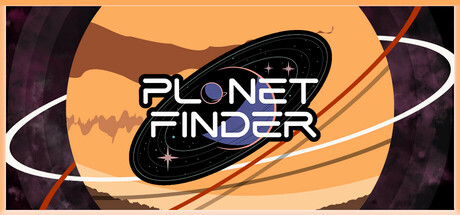
  • Genre Clarity: 7/10 — Space exploration theme clear. The planet graphic and starfield background immediately signal a space-themed game. The sci-fi aesthetic with orbital rings and celestial elements reads as exploration/simulation at full size. At TINY size, the planet silhouette and starfield still convey the space genre, though specific gameplay intent (resource gathering, survival stakes) becomes unclear without text.
  • Title Readability: 8/10 — Title legible across all sizes. PLANET FINDER uses a clean, geometric sans-serif with strong white letterforms that maintain clarity from full header down to tiny thumbnail. The text is centered over the planet logo with good contrast against darker regions. At TINY size the title remains readable, though individual letters compress slightly—the word shapes remain distinct and the logo anchor keeps it recognizable.
  • Contrast & Color: 7/10 — Warm palette pops moderately. The warm orange and golden gradients in the background create decent separation from the Steam dark background #1b2838. The black planet with blue/white starfield provides strong silhouette definition. In grayscale, the mid-tone orange and dark purple create acceptable but not exceptional value separation; the white orbital rings stand out well, but the overall contrast range feels slightly compressed at TINY sizes where the orange fades into mid-gray.
  • Uniqueness & Polish: 6/10 — Competent but familiar space aesthetic. The planet with orbital rings and starfield is well-rendered and polished, but visually generic for space exploration games—similar iconography appears across many simulation and discovery-based indie titles. The craft is solid with smooth gradients and clean vector elements, yet there is no distinctive visual hook that signals what makes Planet Finder unique (peaceful exploration, resource mechanics, survival narrative). The execution is professional but lacks memorable storytelling or a signature visual identity.
  • Brand Consistency: 6/10 — Generic space palette lacks identity. The color scheme (orange, purple, black, white) and planet-with-rings motif are standard space-game visual language with no distinctive brand markers. Without reference to the 8 store screenshots, this capsule does not establish a recognizable identity that would distinguish Planet Finder from dozens of other space sims. The consistent rendering style is competent, but the palette and iconography are too archetypal to feel like a signature brand.
  • Composition: 7/10 — Balanced layout, strong focal point. The planet logo anchors the center-left, with the title PLANET FINDER overlaid in a clear visual hierarchy. Orbital rings and gradient background guide the eye without clutter. The composition remains legible at SMALL and TINY sizes with the logo and text maintaining clear separation. The white orbital arcs frame the composition well, though the right edge has some empty space that could be optimized; overall the layout is safe and functional with no critical crop issues.

What works

  • Strong title legibility. Clean geometric sans-serif with white letterforms maintains readability at all sizes from header to thumbnail.
  • Clear focal point. Planet logo and orbits create an unmistakable visual anchor that grounds the composition and remains recognizable at tiny scale.
  • Professional rendering. Smooth gradients, clean vector graphics, and polished orbital effects demonstrate solid craft and production quality.

What hurts the capsule

  • Generic space-game aesthetic. Planet-with-rings and starfield motifs are archetypal space-exploration iconography, offering no unique visual signature or brand identity.
  • Unclear gameplay messaging. The peaceful exploration and resource-gathering mechanics implied by the game description are not visually communicated; the capsule reads as generic sci-fi rather than survival or discovery.
  • Moderate contrast at tiny size. Warm orange mid-tones compress in grayscale and lose separation from background at TINY scale, reducing visual pop in quick-scroll browsing.

Priority fixes

  1. [genre_clarity] Integrate a visual element that hints at the core mechanic—such as resource icons, a diverse planet landscape, or a character silhouette—to differentiate this from generic space exploration games.
  2. [uniqueness_polish] Introduce a distinctive color accent or design motif (e.g., a signature hue, pattern, or alien artifact) that creates brand memory and signals what makes Planet Finder unique versus competing indie space sims.
  3. [contrast_color] Increase the saturation or brightness of key elements (planet surface, orbital rings) to ensure stronger value separation and visual pop at TINY thumbnail size in grayscale.

Store copy priority fixes

  1. [feature_communication] Expand the detailed description to explain the resource-gathering loop: what resources exist, where they are found, and how they contribute to 'saving humanity'—or remove the resource promise from the short description if it is not a core mechanic.
  2. [hook_strength] Rewrite the short description opening to lead with the core emotional experience ('Peacefully explore procedurally-generated planets at your own pace') rather than the apocalypse frame, then add the stakes as secondary motivation.
  3. [uniqueness] Add one sentence explaining what makes this exploration unique: e.g., 'Name every planet you discover,' 'Unlock stories tied to each world,' or 'Build a personal atlas of the cosmos'—move beyond generic wandering language.
  4. [feature_communication] Clarify what happens after discovery: Do planets have sub-objectives, environmental hazards, hidden features, or purely aesthetic variety? This will help players understand the depth of gameplay loop.

Related guides

Steam app ID: 3317820 · Tags: Casual, Exploration, Indie, Simulation, Relaxing