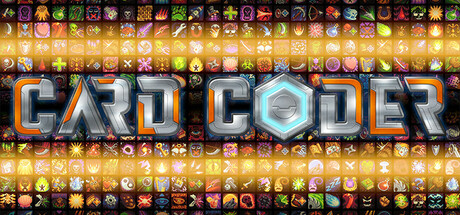
Card Coder scores 75/100 — better than 65% of Roguelike Deckbuilder capsules (n=321).

Quick text summary

Card Coder scored 75/100 on Steam Analyzer — Good for a Roguelike Deckbuilder capsule. Top priority fix: [uniqueness_polish] Introduce a signature character or iconic card archetype silhouette to anchor brand identity and stand out among similar deckbuilders.

Capsule scores by dimension

  • Genre Clarity: 8/10 — Card game roguelike strategy clear. The dense grid of colorful card icons in the background immediately signals a card-based game, and the bold typography with metallic styling reinforces a strategic, premium indie feel. At TINY size, the card grid backdrop is still recognizable as game iconography, though individual card details blur into texture; the word 'CARD' remains legible enough to anchor genre expectations.
  • Title Readability: 8/10 — Strong bold typography readable. The title 'CARD CODER' uses a thick, chunky sans-serif with orange outline and metallic silver fill against a black background with card grid texture, creating strong contrast and clear separation. At TINY size, both words remain legible due to generous letter spacing and weight, though fine metallic details soften slightly but do not collapse readability.
  • Contrast & Color: 8/10 — Excellent value separation bright. The orange and silver metallic title pops strongly against the dark #1b2838 background, aided by the glowing warm gradient of the card grid which creates lighting separation without overwhelming the focal point. In grayscale, the white/silver title and black background maintain clear silhouette edges, and the warm gradient provides sufficient midtone lift to prevent muddy blending.
  • Uniqueness & Polish: 7/10 — Polished indie card game aesthetic. The metallic 3D text with beveled edges and the dense, glowing emoji-style card grid convey premium craft and a custom visual identity specific to a card builder game. The warmth and energy of the golden gradient and icon density suggest gameplay depth, though the overall composition follows familiar indie strategy game visual language without a breakthrough distinctive hook.
  • Brand Consistency: 7/10 — Cohesive metallic card game branding. The metallic silver-and-orange palette, the grid of colorful ability icons, and the bold tech-forward typography create a recognizable and internally consistent visual identity aligned with a deck-building roguelike. The glowing gradient and icon density would be recoverable across store screenshots, though the specific character or mascot identity is not yet iconic enough to guarantee standalone recognition.
  • Composition: 7/10 — Well-balanced focal hierarchy. The title occupies center horizontal space with clear breathing room; the card grid fills the full width and height as a supporting visual layer that frames without competing. At SMALL and TINY sizes, the title remains the primary focal point while the glowing icon grid provides context and energy; safe margins are respected and no critical elements hug edges where Steam cropping would harm readability.

What works

  • Strong metallic title contrast. Orange and silver beveled letters with crisp outlines maintain exceptional legibility and premium feel even at tiny thumbnail sizes.
  • Genre-specific background iconography. The dense grid of colorful card ability icons immediately communicates deck-building mechanics and card customization core to the game loop.
  • Cohesive warm lighting and gradient. The golden glow and gradient background create visual energy and premium polish that supports the title without introducing visual noise or muddy midtones.

What hurts the capsule

  • Generic card grid visual language. While functional, the grid of emoji-style icons is a common trope in indie strategy games and does not uniquely differentiate Card Coder from peers like Balatro or other deckbuilders.
  • No character or mascot presence. The capsule relies entirely on typography and abstract iconography; lack of a memorable character or symbol reduces brand memorability compared to top-performing peers.
  • Limited narrative or mechanical storytelling. The capsule conveys 'card game' but does not visually hint at the unique 'card creation' and 'modular building' hook that differentiates the 10 billion possibility pitch.

Priority fixes

  1. [uniqueness_polish] Introduce a signature character or iconic card archetype silhouette to anchor brand identity and stand out among similar deckbuilders.
  2. [genre_clarity] Add a subtle visual cue—such as a crafting/building symbol or a glowing card being constructed—to communicate the 'create custom cards' unique mechanic at TINY size.
  3. [brand_consistency] Develop a recognizable mascot or symbol (e.g., a coder character, a card-building UI element) that can serve as a visual anchor across store screenshots and future marketing.

Store copy priority fixes

  1. [feature_communication] Replace the repeated Features opening with a clear, beginner-friendly explanation of the component system: 'Each card is built from four types of modular parts: Triggers (when does it activate?), Conditions (under what circumstances?), Selectors (which enemies?), and Effects (what happens?). Layer these together to craft cards that fit your strategy.'
  2. [audience_targeting] Add a sentence clarifying difficulty and progression: 'Perfect for roguelike veterans seeking deep customization and newcomers who want to build rather than hunt for the perfect card.'
  3. [feature_communication] Define the Commander mechanic in a single sentence within the short description or early detailed description: 'Protect your Commander card—if it falls, your run ends, making positioning and defense critical.'
  4. [uniqueness] Add a comparative line in the opening to reinforce differentiation: 'Unlike traditional deckbuilders where you're limited to predefined cards, you architect your units from scratch, creating synergies no two players will discover the same way.'

Related guides

Steam app ID: 3355940 · Tags: Roguelike Deckbuilder, Strategy, Card Battler, Card Game, Inventory Management