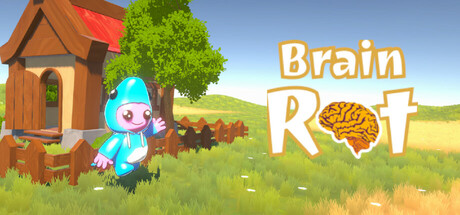
BrainRot scores 63/100 — better than 7% of Casual capsules (n=10,153).

Quick text summary

BrainRot scored 63/100 on Steam Analyzer — Solid for a Casual capsule. Top priority fix: [genre_clarity] Introduce visual language from actual gameplay—show multiple chaotic characters, meme references, or PvP action indicators to clarify multiplayer party game nature.

Capsule scores by dimension

  • Genre Clarity: 5/10 — Casual game unclear on core mechanic. The pastoral art style with cute character and farm setting reads as a cozy life sim or management game, not a PvP party game based on internet trends. At tiny size, the blue character and house are clearly visible but convey relaxation rather than competitive multiplayer chaos. The visual language actively misrepresents the game's actual genre and core appeal.
  • Title Readability: 8/10 — Title readable with minor clarity issues. The 'BrainRot' title uses a clean white outline font with orange/brown fill that contrasts well against the sky background at full size and remains legible at small size. At tiny size the letters remain distinguishable though the brain icon detail softens slightly. The title placement in the right-center avoids subject overlap and maintains good margins.
  • Contrast & Color: 7/10 — Strong daylit colors pop adequately. Bright blue character, warm orange house, and lush green trees create good value separation against the light sky background and will read well at small size. When mentally placed against Steam's dark #1b2838 background, the overall brightness and saturation help the capsule stand out during quick scroll. The mid-range sky tones are less aggressive than darker alternatives but sufficient for discoverability.
  • Uniqueness & Polish: 6/10 — Competent art style lacks distinctive hook. The illustration quality is clean and professional with smooth gradients and polished character design, placing it at baseline competence for indie casual games. However, the pastoral farm aesthetic feels generic for the 'brainrot trends PvP party' concept—the unique selling point (internet culture humor and multiplayer chaos) is completely absent from the visual. The mismatch between game concept and capsule presentation undermines any premium positioning.
  • Brand Consistency: 5/10 — Peaceful aesthetic conflicts with brand. The serene countryside setting with cottage and friendly character does not communicate the chaotic, trend-driven, competitive PvP nature of BrainRot as a party game. Without access to the 6 store screenshots context but evaluating internal cohesion, the capsule presents a cozy brand identity that likely conflicts with actual gameplay and other marketing materials. The blue character may recur across assets but the overall tone feels misaligned.
  • Composition: 7/10 — Balanced layout with clear focal points. The blue character anchors the left-center foreground while the house and tree provide supporting depth in the background, creating a natural three-layer composition. The title sits right-aligned in the upper right with adequate margin from edges and does not obscure the character at any size. Layout remains coherent at small and tiny sizes with no critical cropping risk to key elements.

What works

  • Title contrast and legibility. White outlined text with warm fill maintains readability at tiny size against the sky and will stand out on Steam's dark background.
  • Compositional balance and depth. Three-layer depth with character foreground, tree midground, and sky background creates visual hierarchy that doesn't collapse at small sizes.
  • Illustration craft quality. Smooth gradients, clean character design, and polished rendering demonstrate professional execution without visible rough edges or asset inconsistencies.

What hurts the capsule

  • Genre mismatch with gameplay concept. Peaceful pastoral aesthetic contradicts the advertised PvP party game based on chaotic internet trends, likely confusing target audience during discovery.
  • No brand identity differentiation. The cozy farm setting is generic within casual indie games and communicates nothing memorable or distinctive about BrainRot's unique humor or competitive mechanics.
  • Visual storytelling misses core appeal. The capsule does not hint at multiplayer chaos, internet culture humor, or the playful absurdism that should drive interest in a brainrot-themed party game.

Priority fixes

  1. [genre_clarity] Introduce visual language from actual gameplay—show multiple chaotic characters, meme references, or PvP action indicators to clarify multiplayer party game nature.
  2. [uniqueness_polish] Add comedic or absurdist visual elements that signal internet culture humor and differentiate from generic cozy games—distorted effects, joke poses, or meme aesthetics.
  3. [brand_consistency] Redesign overall tone to match the chaotic, trendy brand identity; use warmer, more saturated, or deliberately unpolished treatment that feels intentionally weird and fun rather than relaxing.

Store copy priority fixes

  1. [feature_communication] Add 3–4 concrete minigame examples with one sentence each describing the core action (e.g., 'Skibidi Dance-Off: Replicate trending dance moves before your opponents do').
  2. [hook_strength] Rewrite the short description to lead with the core appeal: 'Battle up to 15 friends in meme-powered minigames. Whoever racks up the most brainrot wins.' This clarifies gameplay and audience immediately.
  3. [uniqueness] Add 1–2 sentences explaining what makes brainrot-themed gameplay distinct (e.g., 'Every minigame is rooted in viral trends, so the gameplay evolves as internet culture shifts').
  4. [feature_communication] Clarify the 'brainrot' scoring mechanic in plain terms: explain how points are earned per minigame and why the metric fits the theme.

Related guides

Steam app ID: 3365140 · Tags: Casual, Arcade, 3D Platformer, 3D, Cartoony