Scoring genre clarity...
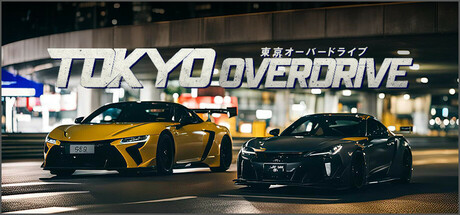
TOKYO OVERDRIVE capsule

TOKYO OVERDRIVE

This is a powerful driving simulator-type QTE game that is experienced through realistic images.The first-person view enhances the immersive experience, and the player must make full use of steering wheel and gas pedal controls to reach the checkpoints within the time limit.

$3.993 user reviews
RacingDrivingSpectacle fighter
FUNAKI GAMESFeb 3, 2026

TOKYO OVERDRIVE scores 83/100 — better than 89% of Racing capsules (n=762).

3 user reviews · $3.99 · Released Feb 3, 2026 · By FUNAKI GAMES

Quick text summary

TOKYO OVERDRIVE scored 83/100 on Steam Analyzer — Good for a Racing capsule. Top priority fix: [title_readability] Remove or significantly enlarge Japanese subtitle text, or relocate it to a lower position with more breathing room to reduce visual competition at tiny sizes

Capsule scores by dimension

  • Genre Clarity: 9/10 — Immediately recognizable racing spectacle. Two high-performance sports cars dominate the composition in a vibrant nighttime urban setting with neon signage and street lighting that screams racing culture. At tiny size, the silhouettes of the vehicles and glowing yellow/orange tones are unmistakably automotive, and the Tokyo aesthetic with Japanese characters reinforces racing game context. The staging and car focus communicate racing genre with absolute clarity.
  • Title Readability: 8/10 — Bold title with minor clarity issues. The 'TOKYO OVERDRIVE' title uses strong white lettering with a blue accent stripe, positioned prominently in the upper left quadrant against controlled dark background. At full size it is highly legible, but at tiny size the Japanese subtitle text becomes illegible noise, and the outline weight could be slightly heavier for perfect small-size retention. The main title itself survives the tiny squint test reasonably well.
  • Contrast & Color: 9/10 — Striking value separation with warm accent lighting. The gold/yellow sports car in the left foreground pops dramatically against the dark asphalt and night sky, while the black car on the right maintains silhouette clarity through rim and window highlights. The warm orange and yellow ambient lighting from the street and signage creates strong value contrast against the deep blue-black background, and the grayscale version maintains clear separation without muddy mid-tones. This works exceptionally well at small and tiny sizes.
  • Uniqueness & Polish: 8/10 — Premium presentation with strong visual hook. The nighttime urban racing setting with dual supercars and Tokyo neon aesthetic feels polished and intentional, avoiding generic racing imagery through specific location branding and dramatic two-car composition. The lighting quality and vehicle detail convey high production value, though the concept itself (night city racing with multiple cars) is familiar within the racing game space. The execution is excellent but the core idea is not entirely fresh.
  • Brand Consistency: 7/10 — Cohesive aesthetic with limited iconic elements. The capsule establishes a clear visual identity through the Tokyo urban racing setting, neon color palette, and professional photographic style that should be recognizable across other marketing materials. The white title treatment with blue accent and Japanese characters create memorable brand signaling, but there are no unique character, mascot, or distinctive symbol that would make this instantly recognizable as TOKYO OVERDRIVE specifically without text. The internal art direction is consistent and premium.
  • Composition: 9/10 — Excellent focal hierarchy and depth layering. The gold car occupies strong left-center foreground position drawing immediate eye contact, the black car provides secondary depth interest on the right, and the blurred street environment grounds the scene without competing for attention. The title sits cleanly in the upper safe zone with breathing room from edges, and the composition maintains clear primary subject focus even at tiny size. The layered depth from foreground vehicles through mid-ground street to background lights creates natural visual flow.

What works

  • Outstanding contrast and value separation. The warm golden car against cool dark night tones creates instant visual impact that survives the tiny thumbnail test and reads clearly in grayscale.
  • Clear genre messaging through vehicle staging. Dual high-performance supercars in dynamic nighttime setting communicate racing game immediately, even without reading any text.
  • Strong composition depth and focal hierarchy. Foreground vehicles guide eye naturally while street environment provides context without clutter, maintaining clean single-subject focus at all sizes.
  • Premium photographic quality and polish. Professional lighting, vehicle detail, and environmental rendering elevate the presentation above typical game capsules and convey high production value.

What hurts the capsule

  • Japanese subtitle text illegible at small sizes. The secondary text below 'OVERDRIVE' becomes unreadable noise at tiny thumbnail size and distracts from the main title despite clean primary lettering.
  • Limited iconic brand differentiation. The visual identity relies primarily on Tokyo setting and neon aesthetic rather than unique characters, symbols, or signature motifs that distinguish TOKYO OVERDRIVE from other racing games.
  • Familiar racing game composition. While executed excellently, the nighttime city racing with multiple supercars is a well-established genre trope that doesn't signal a unique selling point about QTE mechanics or first-person immersion.

Priority fixes

  1. [title_readability] Remove or significantly enlarge Japanese subtitle text, or relocate it to a lower position with more breathing room to reduce visual competition at tiny sizes
  2. [brand_consistency] Introduce a unique visual signature—distinctive UI accent color, logo mark, or repeated motif—that appears across store screenshots to create stronger brand recognition
  3. [genre_clarity] Consider subtle HUD or first-person perspective visual hints if possible to communicate the QTE/immersive driving simulator angle that differentiates from traditional racing sims

Store copy priority fixes

  1. [hook_strength] Rewrite the short description to lead with a concrete, exciting verb ('Race through Tokyo's neon-lit streets in a high-octane driving challenge') instead of technical jargon, and remove 'driving simulator-type QTE game' from the opening line.
  2. [audience_targeting] Add a one-sentence statement early in the detailed description that clarifies who the game is for—e.g., 'Perfect for players who crave visceral, time-pressured driving thrills with a cinematic visual style.'
  3. [feature_communication] Reorganize the detailed description with a clear bullet-point or numbered feature list (controls, course types, difficulty modes, etc.) to replace scattered paragraphs and remove or clarify the 'Racing Image' section.
  4. [tone_match] Remove the 'Reason for development' section or relocate it to a dev blog; replace casual/poetic language ('romance of men,' 'glamorous touch') with player-centric, action-oriented descriptions of what the player will actually do and feel.

Related guides

Steam app ID: 3382010 · Tags: Racing, Driving, Spectacle fighter, Automobile Sim, FMV