Quick text summary
Qoob scored 78/100 on Steam Analyzer — Good for a Casual capsule. Top priority fix: [uniqueness_polish] Add a subtle visual hint of the game's unique mechanic—such as a faint glow, animation suggestion, or symbolic element—to differentiate Qoob from generic Sudoku variants and increase narrative intrigue.
Capsule scores by dimension
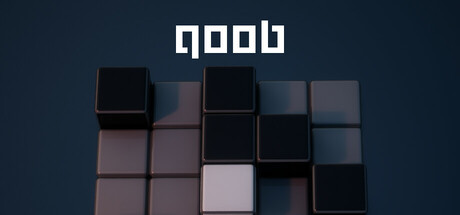
- Genre Clarity: 7/10 — Puzzle mechanics clear, genre evident. The 3D grid of colored blocks immediately communicates a logic puzzle game, with Sudoku-like spatial arrangement evident. At small size, the grid structure and color-blocking remain readable, though the exact puzzle type is more abstract than concrete. The minimalist presentation aligns with indie puzzle expectations but doesn't strongly differentiate the specific mechanic at tiny size.
- Title Readability: 9/10 — Minimal, bold, highly legible. The title 'qoob' in clean, geometric sans-serif sits centered at the top against a dark background with excellent contrast and spacing. At tiny size, the four-letter word maintains perfect clarity and is immediately recognizable due to the simple, bold letterforms without decorative interference. The placement in a safe zone above the puzzle avoids any cropping risk.
- Contrast & Color: 8/10 — Strong value separation, muted palette. The dark blue-gray background (#1b2838-adjacent) provides strong contrast with the varied block tones: black, mauve, pale lavender, and slate blue create clear silhouette separation. At small and tiny sizes, the light central block pops distinctly against darker neighbors, and the overall composition reads well in grayscale due to solid value differences. The muted color palette feels intentional and premium without saturation noise.
- Uniqueness & Polish: 8/10 — Refined minimalist design, distinctive. The 3D isometric grid with soft shadow depth and subtle material rendering feels polished and intentional, not a generic asset grab. The color selection and lighting communicate a premium, thoughtful indie aesthetic that avoids cliché puzzle game tropes. This specific arrangement and styling feels distinctive and hints at a considered design philosophy aligned with the game's Sudoku-reimagined concept.
- Brand Consistency: 7/10 — Cohesive visual language, icon potential. The geometric grid motif, minimal typography, and muted color palette create a recognizable internal identity that could serve as a brand symbol across store pages. The 3D isometric perspective and lighting treatment appear consistent with a polished indie visual language. Without seeing the five store screenshots, the capsule projects a singular, cohesive design identity that feels reinforceable across contexts.
- Composition: 8/10 — Balanced hierarchy, clear focal point. The title anchors the top third in a clear control zone, while the 3D grid dominates the center-lower space as the primary focal point with natural depth layering from shadow and perspective. At small size, the eye naturally reads title first, then settles on the grid. The symmetrical, centered arrangement avoids clutter and dead zones, though the composition is fairly static and could benefit from slightly more dynamic placement.
What works
- Title legibility at all sizes. The 'qoob' wordmark is bold, simple, and maintains perfect readability from full header down to tiny thumbnail without loss of clarity.
- Puzzle mechanic immediately evident. The 3D grid arrangement instantly communicates a logic-puzzle game, aligning viewer expectations with the game's core concept.
- Premium minimalist aesthetic. Muted color palette, soft 3D rendering, and intentional spacing create a polished, thoughtful indie vibe distinct from generic puzzle templates.
- Strong contrast against Steam background. Light blocks and title pop cleanly from the dark background, maintaining silhouette clarity and visual separation in grayscale.
What hurts the capsule
- Static, centered composition. The perfectly symmetrical arrangement, while balanced, lacks visual dynamism or movement that could increase scrolling appeal and memorability.
- Generic puzzle genre positioning. While the grid is clear, the capsule does not strongly communicate how Qoob uniquely differs from traditional Sudoku variants at quick glance.
- Limited contextual storytelling. The abstract grid alone doesn't hint at theme, tone, or narrative hook that might encourage exploration for casual players unfamiliar with the mechanic.
Priority fixes
- [uniqueness_polish] Add a subtle visual hint of the game's unique mechanic—such as a faint glow, animation suggestion, or symbolic element—to differentiate Qoob from generic Sudoku variants and increase narrative intrigue.
- [composition] Consider a slight off-center or dynamic arrangement of the grid or a supporting element (e.g., hint of UI, player progress indicator) to increase visual interest without losing the minimalist aesthetic.
- [genre_clarity] Ensure store page imagery reinforces the 'Sudoku reimagined' positioning with gameplay context, as the capsule alone may not fully convey the innovative hook to scrolling players.
Store copy priority fixes
- [feature_communication] Add one concrete sentence describing what players actually do mechanically (e.g., 'Arrange colored 3D blocks on a grid where rules change with each level') after the Sudoku comparison.
- [uniqueness] Replace or expand the Witness comparison with a specific statement about Qoob's own core mechanic or twist that makes it distinct (e.g., 'Each puzzle teaches a new rule that persists through later challenges').
- [genre_clarity] Rewrite the short description to open with 'A 3D logic puzzle game where...' rather than starting with an indirect comparison.
- [feature_communication] Add 2-3 bullet points or a short list naming the key mechanic types or progression system (e.g., grid arrangement, rule introduction, adaptive difficulty) to ground the copy.
Related guides
Steam app ID: 3382380 · Tags: Casual, Puzzle, 3D, Minimalist, Top-Down