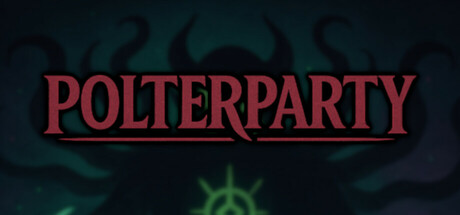
Polterparty scores 68/100 — better than 15% of Early Access capsules (n=3,067).

Quick text summary

Polterparty scored 68/100 on Steam Analyzer — Solid for a Early Access capsule. Top priority fix: [genre_clarity] Introduce visual elements that hint at multiplayer party gameplay (e.g., multiple character silhouettes, playful minigame UI elements, or a social gathering composition) to differentiate from solo horror games.

Capsule scores by dimension

  • Genre Clarity: 7/10 — Horror theme clear, co-op unclear. The dark teal background, demonic horns silhouette, and sickly green glow clearly signal supernatural horror at all sizes. However, the 4-player co-op minigame aspect is not visually communicated—this reads as pure horror rather than party game hybrid. At tiny size, the demonic horns and eerie palette dominate, making genre recognition solid for horror but missing the party/social gameplay hook.
  • Title Readability: 8/10 — Bold red title reads well throughout. The POLTERPARTY title uses strong red sans-serif letterforms with consistent spacing and a clean underline accent, maintaining excellent legibility from full size down to tiny thumbnail. The red color provides strong contrast against the dark teal-green background with no competing text or decorative elements. At tiny size, the title remains clearly readable with distinct letter separation and strong value contrast.
  • Contrast & Color: 8/10 — Strong red-teal separation, bold silhouette. The red title pops vibrantly against the dark teal background (#1b2838 range), and the green glow accent provides secondary interest without muddy mid-tones. The demonic horn silhouette reads clearly in the upper third with distinct edges and depth separation from the background haze. Grayscale test shows excellent value separation—red and teal map to distinctly different gray values, maintaining clear edge definition even at tiny size.
  • Uniqueness & Polish: 6/10 — Competent horror aesthetic, generic execution. The capsule uses familiar horror tropes—demonic horns, eerie green glow, dark atmospheric background—executed competently but without distinctive visual storytelling or personality. Compared to top-performing indie horror titles like DREDGE and Slay the Princess, this lacks a unique art style, memorable motif, or clear communication of the party game twist that differentiates it. The craft is clean but the concept feels like a standard horror template rather than a premium, standout design.
  • Brand Consistency: 5/10 — Limited identity signals, no recognizable motif. The capsule provides no memorable character, symbol, or signature visual that would allow instant brand recognition in a future encounter. The demon horns are generic horror iconography rather than a Polterparty-specific trademark, and the color palette (red-teal-green) is standard spooky aesthetic. Without reference to the 10 available screenshots, there are no internal cues that establish a cohesive brand identity beyond 'haunted mansion party game.'
  • Composition: 7/10 — Clear hierarchy, title-dominant layout. The composition establishes strong hierarchy with the bold red title commanding the upper-center zone and the demonic horn silhouette anchoring the background as atmospheric support. The focal point is clear at all sizes, with no competing elements or scattered attention. Safe margins protect the title from edge cropping, though the horn silhouette sits somewhat close to the left and right edges, which could risk minor clipping on certain viewport crops.

What works

  • Bold red title legibility. The POLTERPARTY text maintains crisp readability from full header down to tiny thumbnail thanks to strong letterform weight, consistent spacing, and excellent contrast against dark background.
  • Strong value contrast and silhouette. The red-teal-green palette creates distinct visual separation that holds up in grayscale and reads clearly at small sizes without muddy mid-tones.
  • Clear atmospheric horror messaging. The demonic horn silhouette and eerie green glow immediately communicate supernatural danger and spooky aesthetic to casual viewers in quick-scroll scenarios.

What hurts the capsule

  • Co-op gameplay not visually communicated. The capsule reads as solo horror rather than a 4-player party game, missing the unique gameplay hook that differentiates it from standard horror titles.
  • Generic horror aesthetic lacks identity. Demonic horns, green glow, and dark atmosphere are familiar horror tropes with no distinctive Polterparty-specific visual trademark or memorable motif.
  • Limited brand differentiation. The design communicates horror tone but provides no iconic character, symbol, or signature style that would enable brand recognition across multiple touchpoints.

Priority fixes

  1. [genre_clarity] Introduce visual elements that hint at multiplayer party gameplay (e.g., multiple character silhouettes, playful minigame UI elements, or a social gathering composition) to differentiate from solo horror games.
  2. [uniqueness_polish] Develop a distinctive Polterparty visual signature—an iconic character mascot, memorable ghost design, or unique color motif—that creates brand recognition and stands out against competitor horror titles.
  3. [brand_consistency] Establish and apply a recognizable motif or character asset that appears across capsule, screenshots, and store page to build internal cohesion and memorable brand identity.

Store copy priority fixes

  1. [hook_strength] Complete the short description's final clause: change 'by outsmarting supernatural' to 'by outsmarting supernatural threats' or 'by surviving supernatural encounters' for grammatical clarity.
  2. [feature_communication] Add 1-2 specific minigame examples in the detailed description to give players a concrete mental model of gameplay loop (e.g., 'escape cursed rooms before doors seal' or 'outrun vengeful spirits through shifting corridors').
  3. [uniqueness] Insert a differentiating statement about entity design or betrayal mechanics, such as 'Each spirit reacts differently to sabotage, creating unpredictable chains of chaos' or 'Entities learn from your tactics mid-run, forcing constant adaptation'.
  4. [feature_communication] Provide one concrete example of tool usage and outcome (e.g., 'Use cursed potions to bait ghosts away from teammates, or slip them to friends to divert enemy attention') to clarify mechanical strategy.

Related guides

Steam app ID: 3382670 · Tags: Early Access, Horror, Team-Based, Funny, Exploration