Scoring genre clarity...
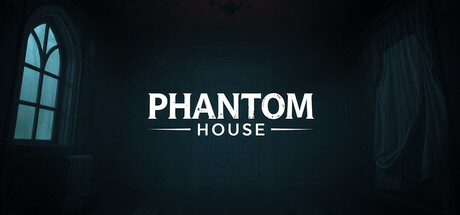
Phantom House capsule

Phantom House

Phantom House is a third-person survival horror game that plunges you into an abandoned house once home to dark rituals. Explore eerie halls, face unspeakable horrors, and rely on your wits and weapon to survive the unknown.

$6.996 user reviews
Early AccessActionHorror
Hard Shark GamesSep 1, 2025

Phantom House scores 67/100 — better than 12% of Early Access capsules (n=3,067).

6 user reviews · $6.99 · Released Sep 1, 2025 · By Hard Shark Games

Quick text summary

Phantom House scored 67/100 on Steam Analyzer — Solid for a Early Access capsule. Top priority fix: [genre_clarity] Introduce a visible creature, ghost figure, or environmental hazard in the shadows to clarify the survival-horror threat and distinguish from generic haunted-house settings.

Capsule scores by dimension

  • Genre Clarity: 7/10 — Horror atmosphere clear, survival mechanics unclear. The gothic architecture, dim lighting, and eerie window framing instantly communicate horror and mystery. However, at tiny size the setting reads as generic abandoned building rather than specifically survival-horror gameplay—no weapons, creatures, or environmental hazards are visible to reinforce the survival or combat elements mentioned in the description.
  • Title Readability: 8/10 — Strong legibility across all sizes. White sans-serif typography with clean kerning and a subtle horizontal rule separator reads clearly at full, small, and tiny sizes. The centered placement on a dark, relatively uncluttered background ensures no legibility loss even at thumbnail scale, though at tiny size the tagline 'HOUSE' becomes slightly compressed.
  • Contrast & Color: 7/10 — Good value separation with atmospheric mood. Crisp white title stands out sharply against the dark blue-black interior, and the cyan-tinted window frame adds a secondary color accent that guides focus. At small size the silhouettes remain distinct, though the overall mid-tone blue background and curtain textures create a slightly muddy atmosphere that softens the impact compared to harsher contrast alternatives.
  • Uniqueness & Polish: 6/10 — Competent gothic aesthetic, generic execution. The composition—interior room with architectural framing—is a well-worn trope in survival horror marketing (echoing Resident Evil, DREDGE, etc.) and feels familiar rather than distinctive. The clean typography and professional lighting are solid, but no unique visual hook, character, creature, or mechanic is shown to separate this from dozens of similar haunted-house titles on the store.
  • Brand Consistency: 5/10 — No memorable identity or signature elements. The capsule shows only an anonymous empty room with standard gothic atmosphere; there are no iconic characters, creatures, symbols, or visual motifs that would make 'Phantom House' recognizable in isolation. The pale cyan window treatment is pleasant but not distinctive enough to become a brand signature without further reinforcement across other store assets.
  • Composition: 7/10 — Clear focal point with balanced depth. The centered title and symmetric window-and-curtain framing create a strong, calm focal point that guides attention to the center at all sizes. The layered depth (window foreground, interior midground, distant shadows) reads cleanly at small size, though the composition is somewhat static and relies heavily on architectural symmetry rather than dynamic subject placement or leading lines.

What works

  • Title legibility across scales. White sans-serif with clean spacing and horizontal rule remains readable and professional from full size down to tiny thumbnail without loss of clarity.
  • Atmospheric mood and lighting. Moody blue-tinted interior with cyan window accent creates an immediately recognizable haunted-house aesthetic that communicates horror intent.
  • Centered composition stability. Symmetric framing ensures the focal point remains stable and centered regardless of Steam cropping or resize, reducing risk of essential elements being cut.

What hurts the capsule

  • Generic survival-horror visual language. The empty room lacks distinctive creatures, weapons, characters, or environmental storytelling that would differentiate it from dozens of existing horror titles using the same 'abandoned mansion' trope.
  • Weak brand identity signals. No iconic motif, character silhouette, or signature color palette is present that would allow players to recognize this game later on the store or in word-of-mouth marketing.
  • Gameplay mechanics not visually communicated. Nothing in the capsule hints at survival mechanics, combat systems, or exploration puzzles—only a static architectural scene, leaving the unique value proposition unclear at first glance.

Priority fixes

  1. [genre_clarity] Introduce a visible creature, ghost figure, or environmental hazard in the shadows to clarify the survival-horror threat and distinguish from generic haunted-house settings.
  2. [uniqueness_polish] Add a signature visual element—a creature silhouette, glowing artifact, ritual symbol, or distinctive character—that becomes a recognizable brand anchor and competitive differentiator.
  3. [brand_consistency] Establish and repeat a unique color accent or visual motif beyond the standard cyan-and-dark palette to create a memorable and ownable aesthetic identity.
  4. [composition] Layer a foreground element (silhouette of player, weapon, or creature) to add narrative depth and visual interest beyond the static architectural frame.

Store copy priority fixes

  1. [uniqueness] Add one concrete, specific detail about what makes Phantom House different—e.g., a unique mechanic (ritual-based puzzles tied to the dark history), a distinctive setting twist, or a narrative hook ('uncover why your family built this house') that sets it apart from other survival horror games.
  2. [hook_strength] Replace the opening line with a more evocative, verb-forward hook that hints at a specific conflict or mystery rather than generic 'unspeakable horrors'—e.g., 'Uncover your connection to an abandoned house where a ritual went catastrophically wrong' or 'Survive a house that remembers who built it.'
  3. [feature_communication] Add one or two concrete examples of how puzzles, combat, or resource management play out in practice—e.g., 'Use ritual knowledge to unlock sealed rooms' or 'Ammo is scarce; learn when to fight and when to hide'—to help players visualize actual gameplay.
  4. [audience_targeting] Add explicit messaging about player type or experience—e.g., 'For fans of story-driven horror' or 'Challenging survival mechanics' or 'Cinematic, narrative-focused experience'—to help the right audience self-identify.

Related guides

Steam app ID: 3463020 · Tags: Early Access, Action, Horror, Survival Horror, Third-Person Shooter