Scoring genre clarity...
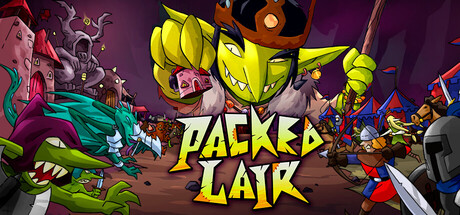
Packed Lair capsule

Packed Lair

You are an evil lord with a hero problem and not nearly enough floor space. Draft buildings, pack them into your cramped lair, toil to earn money to expand, create powerful monster synergies, and send your chaotic army of minions to repel wave after wave of heroic do-gooder pests.

Auto BattlerBase BuildingStrategy
Fables of WitsComing soon

Packed Lair scores 72/100 — better than 44% of Auto Battler capsules (n=487).

Released Coming soon · By Fables of Wits

Quick text summary

Packed Lair scored 72/100 on Steam Analyzer — Good for a Auto Battler capsule. Top priority fix: [composition] Simplify the mid and background to reduce clutter—consider darker or softer monster silhouettes to push them back and create clearer depth separation from the focal foreground monsters.

Capsule scores by dimension

  • Genre Clarity: 7/10 — Strategy puzzle with monster theme clear. The capsule immediately communicates a strategy/management game through the cramped lair setting filled with diverse monsters, buildings, and UI-like elements suggesting resource management and placement mechanics. At tiny size, the chaotic monster army and building density remain readable enough to suggest tactical gameplay, though the specific 'packing puzzle' subgenre is not immediately obvious without context.
  • Title Readability: 8/10 — Bold yellow title stands out well. The title 'PACKED LAIR' uses thick, bright yellow lettering with dark outline that maintains excellent contrast against the dark purple background and competing visual elements. At small and tiny sizes, the two-word title remains highly legible due to consistent stroke weight and generous letter spacing, though the decorative jagged edges add some minor detail loss at thumbnail scale.
  • Contrast & Color: 8/10 — Strong value separation despite busy scene. The bright lime green, vibrant purple, orange, and yellow monsters pop distinctly against the dark purple-brown background, creating clear silhouette separation even in the crowded composition. The yellow title punches through the visual noise effectively, and the overall saturation and value range prevent muddiness at small sizes, though some mid-tone monster details blur together at tiny scale.
  • Uniqueness & Polish: 7/10 — Stylized monster art with clear identity. The hand-drawn monster style and chaotic packing aesthetic feel distinct from typical strategy game presentation, with personality-driven character designs and a humorous evil-lord angle that differentiates it from serious strategy titles. However, the overall execution feels more indie quirky than premium-polished; the scene reads as fun and deliberate rather than cinematic or aspirational like top-tier strategy peers.
  • Brand Consistency: 7/10 — Cohesive art style with strong character voice. The monster character designs, color palette, and hand-drawn aesthetic create a recognizable and consistent visual identity aligned with the 'evil lair chaos' theme. The bold typography and cartoony rendering style would be distinctive on a storefront, though without access to other brand touchpoints, internal consistency appears solid but lacks iconic symbol or motif that elevates memorability.
  • Composition: 6/10 — Busy but functional with clear title placement. The title is centered and positioned clearly above the crowded monster mass, creating adequate hierarchy, though the composition itself is intentionally chaotic with many competing elements scattered throughout the frame. At small size, the visual density remains readable but lacks strong focal point guidance; at tiny size, the image becomes a busy blur of colors where individual monsters lose definition, though the title stays dominant.

What works

  • High-contrast title treatment. Bright yellow with dark outline ensures the title remains readable at all sizes and cuts through the visual noise of the monster-filled background.
  • Distinctive character-driven aesthetic. The colorful, hand-drawn monster designs and chaotic lair theme immediately communicate a unique identity separate from serious strategy competitors.
  • Clear genre and game concept. The cramped lair setting with diverse buildings and monsters effectively conveys the core packing puzzle and monster synergy mechanics.

What hurts the capsule

  • Excessive visual clutter. The dense arrangement of monsters, buildings, and decorative elements creates a busy composition that lacks clear focal point and loses definition at tiny thumbnail size.
  • Generic evil lair cliché. While stylized, the monster collection and dungeon setting lean on familiar fantasy tropes without a distinctive hook that would set it apart from other indie strategy games.
  • Insufficient depth layering. Elements feel scattered on a flat plane rather than organized into clear foreground, midground, and background regions, reducing compositional hierarchy.

Priority fixes

  1. [composition] Simplify the mid and background to reduce clutter—consider darker or softer monster silhouettes to push them back and create clearer depth separation from the focal foreground monsters.
  2. [genre_clarity] Add a subtle UI element (resource counter, grid overlay, or placement indicator) to reinforce the packing puzzle mechanic at small sizes.
  3. [uniqueness_polish] Increase the production value of supporting elements and refine the overall rendering consistency to match the premium positioning of top-tier strategy competitors.

Store copy priority fixes

  1. [feature_communication] Clarify whether building unlocks and progression are permanent meta-unlocks across runs or run-scoped randomization—add one sentence like 'Unlock new buildings permanently to expand your strategic options in future runs' or 'Each run randomizes available buildings from your unlocked collection.'
  2. [audience_targeting] Add a sentence signaling accessibility level or difficulty flexibility—e.g., 'Perfectly suited for both casual optimization fans and efficiency-focused strategy players' or 'Adjust difficulty to tune how punishing hero waves become.'
  3. [feature_communication] Expand the spell casting mechanic with one concrete example or descriptor of spell types (e.g., 'Cast crowd-control, damage-boost, or army-buffing spells') to show this is a meaningful tactical layer, not just a spectator feature.

Related guides

Steam app ID: 3489680 · Tags: Auto Battler, Base Building, Strategy, Inventory Management, Deckbuilding