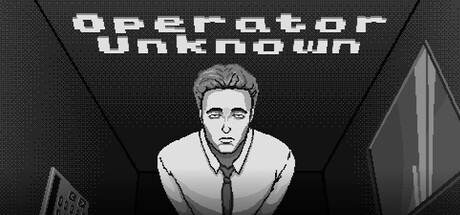
Operator Unknown scores 63/100 — better than 7% of Singleplayer capsules (n=16,133).

Quick text summary

Operator Unknown scored 63/100 on Steam Analyzer — Solid for a Singleplayer capsule. Top priority fix: [uniqueness_polish] Introduce a subtle color accent—warm amber or cool cyan—to the portrait or title to create visual distinctiveness while maintaining the noir aesthetic and help the capsule pop at SMALL and TINY sizes.

Capsule scores by dimension

  • Genre Clarity: 6/10 — Psychological thriller, genre uncertain. The capsule shows a monochromatic portrait of a man in business attire against geometric architectural elements, which suggests a narrative-driven or psychological game. However, the exact genre—whether it is a point-and-click adventure, visual novel, puzzle game, or walking simulator—is not clearly communicated at tiny size. At TINY size, the architectural framing and serious expression hint at intrigue, but gameplay type remains ambiguous.
  • Title Readability: 7/10 — Title readable but tagline weak. The main title 'OPERATOR UNKNOWN' in pixelated white font is legible at FULL and SMALL sizes with adequate contrast against the dark background. However, the smaller subtitle 'UNKNOWN' below it is less crisp and the overall treatment feels utilitarian rather than distinctive. At TINY size the main title holds, but secondary text becomes noise.
  • Contrast & Color: 7/10 — Strong monochrome separation. The grayscale portrait and white typography create clean value separation against the dark #1b2838 background, with clear silhouette definition of the character's head and shoulders. The geometric architectural shapes in gray provide layered depth without competing for attention. Contrast holds well at TINY size, though the limited color palette sacrifices visual pop compared to top-performing peers like DREDGE or Lethal Company.
  • Uniqueness & Polish: 5/10 — Competent but generic aesthetic. The design is technically clean with intentional monochromatic styling and architectural framing that suggests a psychological narrative. However, the portrait-plus-geometry approach feels familiar in indie game marketing and lacks a memorable visual hook or distinctive art direction that would stand out. The capsule reads as professionally executed but does not convey a unique selling point or core mechanic that differentiates it from narrative-driven competitors.
  • Brand Consistency: 6/10 — Coherent but generic identity. The monochromatic palette and geometric framing create internal cohesion within the capsule itself, with consistent rendering of the character portrait and architectural elements. However, without reference to the 11 store screenshots, the visual identity does not establish a distinctive or iconic motif—the serious businessman portrait could belong to many games in the psychological thriller space. The treatment is consistent but not memorable.
  • Composition: 7/10 — Clear focal point, safe hierarchy. The character portrait centered in the frame serves as a strong primary focal point, with architectural elements framing and supporting the composition without competing for attention. Vertical symmetry and centered title placement create balance and intentionality. At SMALL and TINY sizes, the hierarchy remains clear with the face as the primary read. Safe margins protect the title from crop risk, though the composition could benefit from more dynamic energy or off-center tension.

What works

  • Strong monochromatic contrast. White typography and grayscale portrait maintain excellent value separation against the dark Steam background, preserving legibility at TINY size.
  • Clear focal hierarchy. The centered character portrait commands immediate attention as the primary subject, with architectural framing supporting without competing.
  • Intentional art direction. The monochromatic aesthetic and geometric framing suggest deliberate creative vision aligned with psychological themes.

What hurts the capsule

  • Generic visual hook. The businessman-in-memory-space concept lacks distinctive visual storytelling that separates it from other indie psychological thrillers.
  • Limited color palette appeal. Pure grayscale offers clarity but no visual pop or saturation that would make the capsule stand out in a crowded genre versus peers like DREDGE.
  • Unclear gameplay communication. The portrait and architecture do not hint at core mechanics or gameplay loop, leaving genre ambiguous at quick-scroll speeds.

Priority fixes

  1. [uniqueness_polish] Introduce a subtle color accent—warm amber or cool cyan—to the portrait or title to create visual distinctiveness while maintaining the noir aesthetic and help the capsule pop at SMALL and TINY sizes.
  2. [genre_clarity] Add a subtle UI element, object, or environmental cue that hints at the core mechanic (memory exploration, puzzle-solving, or navigation) to clarify gameplay type at TINY size.
  3. [uniqueness_polish] Refine the architectural framing with more dynamic perspective or layering to signal psychological disorientation and create a memorable visual signature separate from generic mystery-game templates.

Store copy priority fixes

  1. [feature_communication] Expand the 'Digital Nightmares' section to explain the core loop: what does a neurodive feel like, how do you interact with memories, and what do 'files' represent mechanically?
  2. [uniqueness] Add a sentence after 'Retro Aesthetic' that explains how the experimental pixel-art style serves the horror atmosphere—e.g., 'Glitchy visuals that distort reality as you sink deeper into corrupted memories.'
  3. [feature_communication] Clarify what 'relying on your reflexes and wit' means with one concrete example: dodge entities, solve memory puzzles, navigate shifting geometry, etc.

Related guides

Steam app ID: 3497680 · Tags: Singleplayer, Psychological Horror, Pixel Graphics, 2D, First-Person