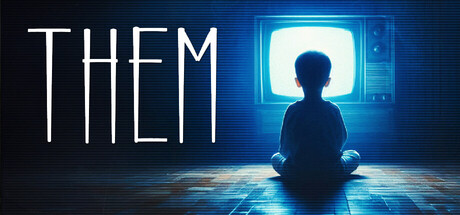
Them scores 72/100 — better than 48% of Adventure capsules (n=7,922).

Quick text summary

Them scored 72/100 on Steam Analyzer — Good for a Adventure capsule. Top priority fix: [brand_consistency] Add a subtle visual cue within or around the screen (arcade cabinet grid, pixel artifact, or retro monitor frame detail) to hint at the game-within-game mechanic and differentiate from generic horror.

Capsule scores by dimension

  • Genre Clarity: 7/10 — Psychological horror with clear visual language. The silhouette of a figure facing a glowing screen with blue neon framing strongly signals psychological horror and immersion themes. At tiny size, the backlit subject and screen glow remain readable, though the 2D platformer component within a 3D horror wrapper is not visually apparent from the capsule alone. The dark atmosphere and neon aesthetic communicate unease and technological dread effectively.
  • Title Readability: 8/10 — Clean, minimal sans-serif positioned clearly. The title 'THEM' is rendered in a modern, clean sans-serif font with excellent contrast against the dark background, positioned in the upper left with ample breathing room. At tiny size, the four-letter word remains legible due to its bold weight and simple letterforms. The minimal approach supports quick recognition without competing with the visual composition.
  • Contrast & Color: 8/10 — Strong blue-to-black separation with clear silhouette. The cyan-blue neon glow of the screen creates excellent value separation from the dark background and the backlit figure's silhouette reads cleanly. The warm golden floor accent and cool blue screen create color harmony while maintaining strong luminance contrast. At small and tiny sizes, the glowing screen and figure outline remain distinct and readable.
  • Uniqueness & Polish: 7/10 — Polished neon horror aesthetic, slightly familiar. The execution is clean with intentional lighting design, smooth gradients, and cohesive sci-fi horror mood that feels deliberate and crafted. However, the backlit silhouette in front of a glowing screen is a recognizable archetype in psychological horror marketing (see Senua's Saga, The Invincible). The composition works well but lacks a distinctive visual hook unique to 'Them' specifically.
  • Brand Consistency: 6/10 — Atmospheric but lacks memorable identity cue. The neon blue palette and dark silhouette treatment are consistent with psychological horror brands, but there is no visible character, logo, or symbolic motif that would make 'Them' immediately recognizable on repeat viewing. The concept of immersion into a game-within-a-game is not visually communicated through the capsule. Internal rendering is coherent, but lacks a distinctive brand anchor.
  • Composition: 7/10 — Strong focal point, balanced depth layers. The figure-at-screen arrangement creates clear hierarchy with the glowing monitor as primary focal point and the silhouette as secondary anchor, with floor and background creating depth recession. Title placement in the upper left is safe and does not conflict with the central visual. At tiny size, the composition compresses well but risks the figure becoming a dark blob; the blue glow compensates with sufficient luminance separation.

What works

  • Excellent title contrast and placement. Clean sans-serif 'THEM' in white with ample margin from the image edge ensures readability at all sizes without competing for attention.
  • Strong atmospheric mood and lighting design. Neon blue backlight, warm floor tones, and dark silhouette create cohesive psychological horror ambiance that reads instantly.
  • Clear depth layering and focal hierarchy. Background, glowing screen, and foreground figure create visual recession that guides the eye naturally from title to subject to environment.

What hurts the capsule

  • Silhouette lacks distinctive character identity. The backlit figure is generic and anonymous, offering no visual cue about who 'Them' are or what makes this narrative unique.
  • Game-within-a-game premise not visually communicated. The 2D platformer element and the juxtaposition of retro arcade with modern horror are core mechanics but entirely absent from the capsule visual language.
  • Neon-horror aesthetic risks commoditization. The blue screen glow and dark silhouette echo several top-performing horror titles, making this feel derivative rather than distinctive.

Priority fixes

  1. [brand_consistency] Add a subtle visual cue within or around the screen (arcade cabinet grid, pixel artifact, or retro monitor frame detail) to hint at the game-within-game mechanic and differentiate from generic horror.
  2. [uniqueness_polish] Incorporate a recognizable character silhouette, pose, or gesture that hints at the protagonist's personality or the horror they face, rather than a blank standing figure.
  3. [genre_clarity] Consider a faint arcade-style UI element or scan line effect on the screen to telegraphically communicate the hybrid 2D-in-3D gameplay loop.

Store copy priority fixes

  1. [hook_strength] Rewrite the short description opening to lead with the core gameplay hook: 'Enter a 1990s arcade nightmare where you escape through a 2D platformer trapped inside a 3D first-person horror game' instead of the current narrative setup.
  2. [feature_communication] Replace vague feature descriptors ('deep story,' 'engaging environments') with concrete gameplay verbs: specify one or two example puzzle types, clarify platforming difficulty/style, and explain what 'multiple endings' requires from the player.
  3. [audience_targeting] Add a single sentence clarifying the intended player: e.g., 'Perfect for horror fans seeking challenging puzzle-platforming' or 'Light-paced exploration for story-focused horror players,' to set clear expectations.
  4. [uniqueness] Dedicate one sentence to what makes the puzzles or platforming distinct from existing games in either genre—e.g., 'Puzzles are solved by manipulating the arcade game itself' or 'Platforming sections shift between 2D and pseudo-3D perspective.'

Related guides

Steam app ID: 3553320 · Tags: Adventure, Horror, Puzzle, First-Person, Dark