Quick text summary
Show Yourself (Director's Cut) scored 65/100 on Steam Analyzer — Solid for a Adventure capsule. Top priority fix: [uniqueness_polish] Replace the generic geometric door with a distinctive visual element that embodies the core mechanic—such as Charlie's silhouette, the flying brain, or a fragmented memory motif that signals choice-driven narrative.
Capsule scores by dimension
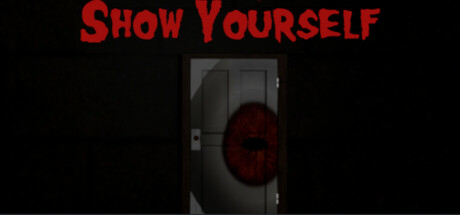
- Genre Clarity: 7/10 — Horror atmosphere clear, narrative intent unclear. The red title treatment and dark monochromatic palette immediately signal psychological horror or dark indie game. The geometric door/chamber silhouette in the center reads as claustrophobic and unsettling, which reinforces the psychological tension mentioned in the description. At tiny size, the red text and dark geometric form still register as horror, though the specific narrative hook (memory, choice-driven gameplay) is not visually apparent.
- Title Readability: 8/10 — Bold red caps lock stands out well. The title 'SHOW YOURSELF' in all-caps red sans-serif has excellent contrast against the black background and remains readable at small and tiny sizes due to its size, weight, and saturation. Letter spacing is generous enough to maintain legibility even at the smallest thumbnail view. The all-caps treatment adds urgency and command that fits the horror tone.
- Contrast & Color: 8/10 — Strong red-black contrast, clear silhouette separation. The bright red title pops decisively against the black background with high value separation. The geometric door/chamber in the center has a warm red accent that creates focal depth, while the gray interior of the structure maintains tonal separation. The grayscale squint test shows clear edge definition and silhouette integrity; the design does not collapse when squinting.
- Uniqueness & Polish: 5/10 — Competent but minimalist, lacks distinctive hook. The capsule uses a restrained, geometric aesthetic that feels intentional and craft-aware rather than generic. However, the composition is very simple—just a title and a single centered geometric form—which lacks the visual storytelling or distinctive art style that would set it apart in the psychological horror indie space. Compared to top performers like Slay the Princess or The Invincible, this reads as competent but generic in execution.
- Brand Consistency: 5/10 — Minimal identity cues, no memorable motif. The capsule does not establish a recognizable brand symbol, character, or signature palette that could be identified in future marketing or store listings. The geometric door is functional to the mood but is not iconic or memorable. Without reference to the 7 store screenshots, it is unclear whether a coherent visual identity system exists across the game's assets; this capsule alone reads as stripped-down and anonymous.
- Composition: 6/10 — Centered focal point, adequate but static. The title anchors the top, the geometric chamber sits centered in the middle, and black fills the rest—creating a clear visual hierarchy and single focal point. At small and tiny sizes, the composition reads cleanly with no competing elements. However, the layout is vertically balanced but horizontally flat; there is dead space on all sides that does not enhance the design, and the centered geometric form lacks the dynamic positioning or layered depth that would elevate the composition.
What works
- Red title contrast and legibility. The all-caps red sans-serif 'SHOW YOURSELF' has excellent value separation and remains crisp and readable down to tiny thumbnail size.
- Psychological horror mood established. The combination of bold red text, black void, and geometric door silhouette quickly communicates a dark, claustrophobic, and unsettling atmosphere appropriate to the genre.
- Clean, uncluttered layout. Minimal elements and generous negative space ensure no visual competition and allow the title and focal form to dominate at all viewing sizes.
What hurts the capsule
- Generic geometric placeholder feel. The centered door/chamber is functional but visually indistinct and does not communicate the game's unique mechanic, narrative hook, or emotional core.
- No iconic brand identity signal. There is no recognizable character, symbol, or visual motif that would allow recognition across multiple marketing assets or create a memorable identity.
- Static and predictable composition. The centered vertical alignment and symmetrical negative space create a balanced but uninspired layout with no dynamic depth or visual storytelling.
Priority fixes
- [uniqueness_polish] Replace the generic geometric door with a distinctive visual element that embodies the core mechanic—such as Charlie's silhouette, the flying brain, or a fragmented memory motif that signals choice-driven narrative.
- [brand_consistency] Introduce a recognizable character, icon, or signature visual element (e.g., a fractured mirror, a unique brain design) that can become the game's visual identity across all store assets.
- [composition] Reposition or layer elements to create depth—move the title off-center, integrate the focal image with the title, or add background detail that hints at the psychological/narrative tension without clutter.
Store copy priority fixes
- [hook_strength] Replace 'What happened to Charlie?' with a more vivid opening that combines the core question with emotional stakes, e.g., 'Charlie's memories are fractured—but are they false? In this psychological horror, choosing to face your past... or flee it... is survival.'
- [feature_communication] Add concrete gameplay descriptions for the three ending types and what player choices or puzzle-solving decisions lead to each, e.g., 'Will you trust the flying brain and follow logic to one ending, listen to the voice and follow instinct to another, or reject both to reach the hidden third?'
- [feature_communication] Clarify the role and scope of environmental puzzles—are they mandatory, optional, narrative-embedded, or tied to specific endings? Provide one example to ground the concept.
- [uniqueness] Strengthen the differentiation by explicitly framing the 'rationality vs. feeling' framework as the game's core system, rather than burying it in a feature list—this is what makes it distinct from other choice-driven games.
Related guides
Steam app ID: 3556490 · Tags: Adventure, Puzzle, Interactive Fiction, Immersive Sim, Choose Your Own Adventure