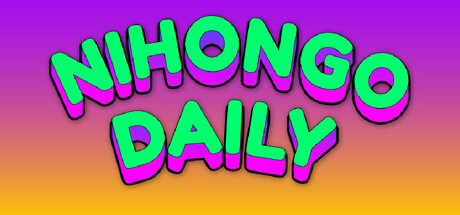
Nihongo Daily scores 63/100 — better than 7% of Casual capsules (n=10,153).

Quick text summary

Nihongo Daily scored 63/100 on Steam Analyzer — Solid for a Casual capsule. Top priority fix: [genre_clarity] Add a recognizable visual element—a kanji character, hiragana symbol, or stylized Japanese motif—in the lower gradient area to signal this is a language learning game.

Capsule scores by dimension

  • Genre Clarity: 5/10 — Educational game unclear at tiny. The bright neon aesthetic and playful typography suggest a casual, colorful game but do not clearly communicate that this is an educational Japanese language tool. At tiny size, the viewer sees bold letters and vibrant gradients but has no visual cues—character charts, kanji symbols, or learning UI hints—that would identify this as a language learning app rather than a general casual game.
  • Title Readability: 8/10 — Bold logo reads well at all sizes. NIHONGO DAILY uses a thick, high-contrast neon green letterform with black outlines that remains legible at small and tiny sizes. The two-line stack keeps the title compact and centered. At tiny size (120×45), the letters maintain enough weight and separation that the title does not collapse, though fine detail in the outline becomes soft.
  • Contrast & Color: 7/10 — Strong value range, slight mid-tone blend. The neon green (#00FF00 approx) pops sharply against the purple-to-orange gradient background with excellent light-dark separation. The black outline adds silhouette clarity. However, the gradient mid-tones (pink-to-orange transition) create a warm busy field in the lower half that slightly competes for attention; at tiny size the gradient flattens and some definition is lost, though the green title still separates clearly in grayscale.
  • Uniqueness & Polish: 6/10 — Competent neon style, generic theme. The thick neon green lettering with black outline and vibrant gradient background is cleanly executed and has a premium feel, but the aesthetic is a common retro-digital style applied to many casual/indie titles without a unique hook. There is no visual element—character, symbol, or UI motif—that signals this is a language learning game or differentiates it from other neon-styled casual games in the marketplace.
  • Brand Consistency: 5/10 — No memorable identity or game icons. The capsule shows only typography and gradient with no recurring character, symbol, or visual motif that could be recognized as brand-specific. Without access to in-game UI or store screenshots at this moment of analysis, the neon style alone does not establish a cohesive or iconic brand identity; it reads as a generic aesthetic applied to the title rather than a signature look tied to the game's educational mission or gameplay loop.
  • Composition: 7/10 — Centered title, stable gradient balance. The title is centered and vertically stacked, commanding the focal point effectively at all sizes and sitting safely away from edges. The gradient background is balanced (purple top, yellow-orange bottom) and provides a clean canvas that does not distract. At tiny size the composition remains stable with no element crowding or cropping risk, though the lower gradient field lacks a supporting visual anchor beyond the color transition.

What works

  • Legible title at all sizes. Thick neon green letterforms with black outline maintain readability from full size down to tiny thumbnails without collapse or muddy detail loss.
  • Vibrant, premium color palette. Bold neon green paired with a smooth purple-to-orange gradient creates high visual impact and strong contrast against the Steam dark background.
  • Safe, centered composition. Title placement is centered and well-spaced, avoiding edge crop risk and maintaining clear hierarchy at all viewing sizes.

What hurts the capsule

  • No genre or learning visual cues. The capsule lacks any symbol, character, or UI element that communicates this is a Japanese language learning game, making it indistinguishable from generic casual titles at quick glance.
  • Generic neon aesthetic without differentiation. The retro-digital neon style is trendy but applied generically; it does not establish a unique brand identity or memorable visual hook specific to Nihongo Daily's educational purpose.
  • Gradient lacks compositional depth. The background is a flat smooth gradient with no supporting visual layer, character, or gameplay icon to anchor the lower half and suggest what the game offers.

Priority fixes

  1. [genre_clarity] Add a recognizable visual element—a kanji character, hiragana symbol, or stylized Japanese motif—in the lower gradient area to signal this is a language learning game.
  2. [uniqueness_polish] Introduce a mascot character or iconic symbol in the composition that can become a brand identifier and appears consistently in store screenshots and UI.
  3. [brand_consistency] Develop a cohesive visual language that ties the neon typography to Japanese design elements (e.g., brushstroke accents, color symbolism) so the aesthetic feels intentional rather than generic.

Store copy priority fixes

  1. [hook_strength] Rewrite the short description to lead with a player benefit, not the creator's need: 'Learn Japanese words every day in just minutes using science-backed spaced repetition—build a learning streak and stick with it.'
  2. [audience_targeting] Add an explicit audience line early in the detailed description: 'Perfect for Japanese learners of any level who want daily practice without the complexity of full flashcard apps.'
  3. [feature_communication] Create a structured bullet-point list of core features (Daily Quiz, Spaced Repetition, Streak Tracker, Achievements) rather than burying them in paragraphs.
  4. [uniqueness] Replace the Anki comparison with a concrete differentiator: explain what makes the Romaji-to-Hiragana/Katakana card format or the daily-focus approach superior for retention.

Related guides

Steam app ID: 3589830 · Tags: Casual, Card Game, Choose Your Own Adventure, Incremental, 2D