Syvnta: Sovereignty scores 62/100 — better than 3% of Casual capsules (n=10,153).

Quick text summary

Syvnta: Sovereignty scored 62/100 on Steam Analyzer — Solid for a Casual capsule. Top priority fix: [title_readability] Redesign title with clean, bold sans-serif font and place it on a solid color bar or semi-transparent overlay to ensure readability from FULL down to TINY size.

Capsule scores by dimension

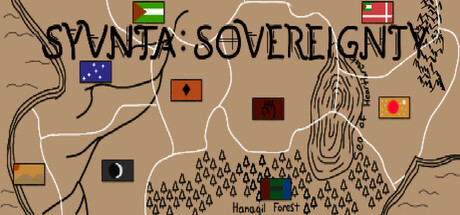
  • Genre Clarity: 7/10 — Geopolitical strategy with map setting. The hand-drawn world map with country flags, forest regions, and territorial divisions clearly signals a strategy or management game with a geopolitical theme. The 1940s aesthetic and multiple flag icons communicate nation-state decision-making. At TINY size, the map structure and flags remain legible, though the specific gameplay mechanic (card-based decision swiping) is not visually obvious from the capsule alone.
  • Title Readability: 5/10 — Title legible at full, collapses small. The title 'SYNTA: SOVEREIGNTY' uses a bold serif font with a distressed/rough texture effect that reads clearly at full size but loses definition and becomes chunky at SMALL and TINY sizes. The subtitle text is too small to read at any reduced size. The rough letterspacing and artistic distortion, while thematic, actively harm legibility when the canvas shrinks.
  • Contrast & Color: 6/10 — Warm tan palette with weak pop. The muted tan and beige color palette creates a period-appropriate historical atmosphere but lacks strong value contrast against Steam's dark background #1b2838. The dark brown/maroon flag elements and black outlines provide some silhouette definition, but the overall warm mid-tone dominance means the capsule does not 'pop' during quick scroll. At TINY size the composition flattens significantly due to limited highlight separation.
  • Uniqueness & Polish: 7/10 — Distinctive hand-drawn historical aesthetic. The hand-drawn cartographic style with deliberate line work, geographic detail, and period-specific design language feels intentional and distinct from generic strategy game capsules. The craftsmanship in the map illustration and border decorations suggests care and thematic coherence. However, the execution lacks the visual polish or memorable icon/character hook that would elevate it to premium tier; it reads as competent indie craft rather than standout design.
  • Brand Consistency: 6/10 — Cohesive map aesthetic, no iconic motif. The capsule maintains strong internal consistency in the hand-drawn cartographic style, muted historical palette, and border decorations that suggest a recognizable visual language. However, there is no singular iconic symbol, character, or color signature that would make the game instantly recognizable on repeat viewing. The brand identity relies entirely on the map theme, which is thematically appropriate but not uniquely memorable.
  • Composition: 6/10 — Centered map, balanced but static. The composition centers the map illustration with title text overlaid at top and supporting elements (flags, forest, Hanagi Forest label) distributed across the frame. The layout is symmetrical and balanced but lacks a clear focal point hierarchy; at SMALL size the eye is pulled equally to multiple areas. The title placement over the map texture reduces readability, and the composition feels more like a reference image than a dynamic marketing piece.

What works

  • Distinctive hand-drawn cartography. The illustrated map style with careful line work and period detail communicates a thoughtful, premium indie approach that stands apart from generic strategy templates.
  • Thematic coherence with setting. The 1940s color palette, flag icons, and geographic layout all reinforce the geopolitical decision-making premise consistently across the design.
  • Clear genre territory signals. At full size, the map structure, flags, and nation divisions immediately communicate a strategy or governance game without ambiguity.

What hurts the capsule

  • Title legibility collapses at small sizes. The distressed serif font and rough letter spacing become unreadable when the capsule shrinks to SMALL or TINY, severely harming discoverability during scroll.
  • Weak contrast against dark background. The warm tan and beige palette blends into the Steam dark background rather than popping, reducing visual impact during quick browsing.
  • No memorable visual anchor. The capsule relies entirely on the map aesthetic with no iconic character, symbol, or color signature that would create instant brand recognition.
  • Static composition without focal drama. The centered, symmetrical layout and title-over-texture placement lack a clear primary subject or visual hierarchy that guides attention at small sizes.

Priority fixes

  1. [title_readability] Redesign title with clean, bold sans-serif font and place it on a solid color bar or semi-transparent overlay to ensure readability from FULL down to TINY size.
  2. [contrast_color] Introduce cooler accent colors (deep blue, bright red from flags) or increase value contrast by adding lighter highlights or darker shadows to make the capsule pop against the dark Steam background.
  3. [composition] Create a clear focal point by enlarging or highlighting a single key map element (e.g., the central nation or Hanagi Forest) and move the title to a dedicated safe margin zone to improve hierarchy at small scales.
  4. [genre_clarity] Add a subtle visual hint of the card mechanic (e.g., a hand holding a card, or a card icon in the corner) to signal the decision-making gameplay without cluttering the map.

Store copy priority fixes

  1. [uniqueness] Add a concrete differentiator in the short description—e.g., 'the only game where espionage mechanics dynamically unlock based on player reputation' or 'combines choice-driven rulership with emergent betrayal storylines'—to distinguish from genre competitors.
  2. [feature_communication] Expand the detailed description with one concrete example of a decision (e.g., 'A spy reports a neighbor's military buildup—will you mobilize forces (risking war) or negotiate (risking credibility)?') to show players what gameplay actually feels like.
  3. [tone_match] Lighten the closing rhetorical question and dramatic language to match the casual genre tag; rewrite to focus on the strategic puzzle rather than grandiose stakes.
  4. [audience_targeting] Add an explicit audience signal—e.g., 'Perfect for players who love Reigns-style decision games with deeper espionage mechanics' or 'A bite-sized political strategy experience for choice-driven story fans'—to clarify who should buy this game.

Related guides

Steam app ID: 3595130 · Tags: Casual, Card Game, Indie, 2D, Fantasy