Scoring genre clarity...

The Room in a Glass Box capsule

The Room in a Glass Box

Escape a captivating diorama! Rotate, zoom, and solve puzzles to find the key. Explore a miniature world and unlock its secrets!

$3.993 user reviews
AdventureStrategySoftware
XSGamesApr 11, 2025

The Room in a Glass Box scores 60/100 — better than 0% of Adventure capsules (n=7,922).

3 user reviews · $3.99 · Released Apr 11, 2025 · By XSGames

Quick text summary

The Room in a Glass Box scored 60/100 on Steam Analyzer — Solid for a Adventure capsule. Top priority fix: [title_readability] Redesign the title with bolder, higher-contrast letterforms and position it on a solid dark background panel to ensure legibility at TINY size without sacrificing hand-drawn character.

Capsule scores by dimension

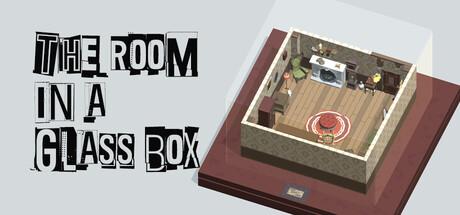
  • Genre Clarity: 7/10 — Puzzle exploration evident. The isometric diorama with miniature room interior clearly signals a puzzle-adventure game focused on observation and spatial exploration. At TINY size, the boxed room structure remains recognizable as a contained puzzle space, though fine details of the interior furniture blur together and the genre reads as 'puzzle' rather than specifically 'escape room' without text support.
  • Title Readability: 5/10 — Hand-drawn text struggles small. The title 'THE ROOM IN A GLASS BOX' uses a casual, hand-drawn serif font positioned on the light gray background at top-left. At SMALL size (231x87), the letterforms remain mostly legible but lack weight and contrast. At TINY size (120x45), the text collapses into a rough blur and becomes functionally unreadable, forcing reliance on the visual alone.
  • Contrast & Color: 6/10 — Adequate separation, muted palette. The isometric box with tan/beige stone walls and burgundy base platform reads against the light gray background with decent value separation. However, the overall warm, desaturated palette lacks punch against Steam's dark theme (#1b2838)—the capsule feels washed out in grayscale, and the room interior details fade into mid-tone mud at smaller sizes, reducing immediate visual impact.
  • Uniqueness & Polish: 6/10 — Clean craft, generic concept. The 3D isometric rendering of the miniature room is technically competent and well-lit, suggesting a polished indie title. However, the 'puzzle box' concept is well-trodden in indie games, and the visual presentation lacks a distinctive hook or memorable character—it reads as a solid execution of a familiar formula rather than something uniquely branded or visually striking.
  • Brand Consistency: 5/10 — Limited identity signals. The capsule shows no recurring visual motifs, iconic symbols, or signature color palette that would anchor brand recognition across multiple assets. The isometric miniature aesthetic is technically consistent, but without character, UI styling, or distinctive art direction visible, there is little to distinguish this from other puzzle-box indie games beyond the specific room layout shown.
  • Composition: 7/10 — Clear focal point, good depth. The isometric diorama sits center-right as the dominant subject with the hand-drawn title anchoring the upper-left, creating a balanced asymmetrical layout with clear depth layering (background, room structure, platform base). At SMALL and TINY sizes, the room remains the unmistakable focal point. However, title placement on a slightly busy left side and lack of safe margin breathing room around the box edges slightly reduce compositional elegance.

What works

  • Strong focal point with depth. The isometric miniature room reads clearly as the primary subject across all sizes and creates satisfying visual depth through layering of background, structure, and base.
  • Genre-appropriate visual language. The puzzle-box diorama immediately communicates exploration, observation, and spatial problem-solving without requiring text.
  • Technically polished rendering. The 3D isometric model is well-lit, proportioned, and cleanly executed with no obvious technical flaws or cheap asset feel.

What hurts the capsule

  • Title illegible at TINY size. The hand-drawn serif font loses all legibility at 120x45 pixels, forcing players to identify the game entirely by the visual without text support.
  • Muted palette lacks pop. Warm desaturated tones (beige, burgundy, gray) blend into mid-tone sludge against Steam dark backgrounds and feel washed out in grayscale contrast tests.
  • Generic puzzle-box concept. The miniature diorama aesthetic is familiar from dozens of recent indie titles and lacks a distinctive visual or thematic hook that sets it apart from competitors.
  • No memorable brand signals. Absence of iconic character, recurring motif, or signature style makes the capsule forgettable and difficult to recognize in a crowded store shelf.

Priority fixes

  1. [title_readability] Redesign the title with bolder, higher-contrast letterforms and position it on a solid dark background panel to ensure legibility at TINY size without sacrificing hand-drawn character.
  2. [contrast_color] Increase saturation and value separation by introducing a deeper accent color (e.g., darker frame or warm highlight) that pops against #1b2838 and reads in grayscale.
  3. [uniqueness_polish] Add a distinctive visual hook such as a recognizable character, glowing key detail, or unique art style signature that differentiates this from generic puzzle-box games.
  4. [genre_clarity] Emphasize the 'rotate and zoom' mechanic with subtle directional arrows or UI hints visible in the diorama to reinforce the core gameplay at small sizes.

Store copy priority fixes

  1. [uniqueness] Rewrite the second paragraph to emphasize what the 3D rotation mechanic uniquely enables—e.g., 'Rotate the box to reveal hidden angles and perspectives—areas you'd never find in a flat escape room.'
  2. [feature_communication] Add a single sentence explaining the incremental or progression systems hinted at by the tags, such as 'Unlock new areas and challenges as you solve each puzzle' or 'Collect pieces to construct the key.'
  3. [tone_match] Remove or drastically shorten the developer bio, or integrate it as a subtle one-liner at the end (e.g., 'Handcrafted by XSGames solo dev.') to maintain professional consistency.
  4. [audience_targeting] Add a sentence clarifying intended play duration and difficulty (e.g., 'Perfect for a relaxing puzzle session' or 'Challenging even for escape room veterans') to help players self-select.

Related guides

Steam app ID: 3619950 · Tags: Adventure, Strategy, Software, Point & Click, Incremental