Golden Arrow scores 70/100 — better than 32% of Puzzle capsules (n=4,408).

Quick text summary

Golden Arrow scored 70/100 on Steam Analyzer — Good for a Puzzle capsule. Top priority fix: [genre_clarity] Integrate arrow direction or puzzle mechanics into the frame design—e.g., arrows pointing into the vines or forming a puzzle pattern—to clarify the core gameplay hook at tiny size.

Capsule scores by dimension

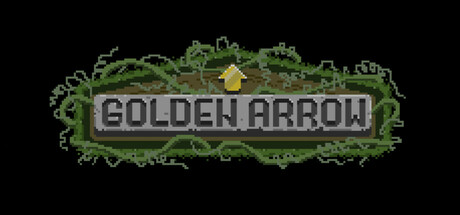
  • Genre Clarity: 7/10 — Puzzle game signals clear. The pixel art style and arrow motif immediately communicate a puzzle game context. The golden arrow icon above the title and green vine/plant framing suggest a nature or garden-themed puzzle mechanic. However, at tiny size the specific puzzle interaction (arrow physics, direction-based logic) is not fully apparent—it reads as 'puzzle' generically rather than conveying the unique 'arrows' mechanic distinctly.
  • Title Readability: 8/10 — Strong title contrast readable. The 'GOLDEN ARROW' text is rendered in a solid gray/beige tone with clear letterforms and sits centered against a dark background with vine framing. The title maintains excellent legibility at full and small sizes due to strong value contrast and clean geometric letterforms. At tiny size the text remains recognizable, though the decorative vine border begins to blur into texture—the core title stays sharp.
  • Contrast & Color: 8/10 — High value separation effective. The pale gray-beige title and golden arrow icon create strong contrast against the near-black background, with the bright green vines adding a secondary accent layer that frames without competing. In grayscale the design maintains clear silhouettes and value hierarchy. At tiny size the overall shape reads as a unified logo with a clear light-on-dark composition that pops against Steam's dark interface.
  • Uniqueness & Polish: 6/10 — Competent pixel art, generic composition. The pixel art execution is clean and the vine framing adds a handcrafted charm, but the overall composition—centered title with symmetrical organic border—follows a familiar indie capsule template. The golden arrow icon is a clear thematic hook, but the vine wrapping feels decorative rather than communicative of core gameplay. It reads polished but not distinctly memorable compared to top-tier indie puzzle capsules like Balatro or ANIMAL WELL.
  • Brand Consistency: 6/10 — Consistent style, limited identity. The pixel art palette and ornamental vine aesthetic are internally consistent and suggest a cohesive 2D pixel world. The golden arrow and green nature motifs are recognizable hooks for the game's identity. However, without reference to other brand touchpoints, the capsule feels like a solid but generic pixel-puzzle presentation—strong enough internally but not distinctive enough to form an iconic, instantly recognizable brand presence.
  • Composition: 7/10 — Centered title, balanced framing. The title is positioned centrally with the golden arrow as a clear focal point above, and the vine frame creates natural containment without edge cutting. The layering is simple: solid background, vine border, text. At small size the vine detail softens slightly but the core title and icon remain the primary read. The composition is safe and functional but lacks dynamic focal hierarchy—everything sits passively centered rather than creating visual pull or depth.

What works

  • Title legibility at scale. Gray-beige letterforms maintain sharp readability even at tiny size thanks to strong contrast against dark background and clean, geometric letter construction.
  • Cohesive pixel art execution. The vine ornament and arrow icon are rendered in a consistent retro pixel aesthetic that feels intentional and polished rather than cheap or hastily assembled.
  • Clear thematic hook. The golden arrow icon immediately signals the core game mechanic and title concept, creating a straightforward visual-verbal connection.

What hurts the capsule

  • Generic template feel. The centered ornamental frame composition is a common indie capsule pattern that doesn't distinguish Golden Arrow from other casual puzzle games at quick glance.
  • Mechanic clarity at tiny size. The specific 'arrows as puzzle mechanic' concept is not visually evident at small or tiny sizes—it reads as generic pixel-puzzle rather than communicating directional or physics-based gameplay.
  • Decorative vine doesn't serve gameplay. The green vine framing is aesthetically pleasant but doesn't reinforce the game's puzzle or arrow mechanics, missing an opportunity for visual storytelling of core systems.

Priority fixes

  1. [genre_clarity] Integrate arrow direction or puzzle mechanics into the frame design—e.g., arrows pointing into the vines or forming a puzzle pattern—to clarify the core gameplay hook at tiny size.
  2. [uniqueness_polish] Replace or reimagine the vine border with a unique visual element tied to the game's specific mechanic or world (e.g., arrow trajectory lines, target circles, or game board elements) to elevate polish and distinction.
  3. [composition] Consider asymmetrical or dynamic title placement with a secondary visual element (game board preview, arrow trail effect) to create stronger focal hierarchy and visual pull.

Store copy priority fixes

  1. [hook_strength] Rewrite the short description to lead with the arrow-direction mechanic and its puzzle consequence: 'Guide arrows toward their goals in a sokoban-style puzzle where every piece moves toward its own direction.' This immediately communicates the core twist and appeal.
  2. [uniqueness] Add a sentence explaining why the arrow-direction mechanic fundamentally changes puzzle design compared to traditional sokoban: 'Unlike standard block-pushing, arrows move autonomously in their pointed direction, forcing you to predict and choreograph chains of motion rather than just blocking paths.'
  3. [feature_communication] Clarify the 'specific circumstances' that allow arrows to move through obstacles, or remove the phrase and replace with a concrete example of an advanced rule: 'As difficulty increases, you'll unlock new rules—such as arrows pushing other arrows along their path—that create exponential puzzle complexity.'
  4. [audience_targeting] Add a sentence that bridges casual and hardcore positioning to resolve the 'difficult' tag tension: 'Perfect for puzzle fans who love a progressive challenge: the first world eases you in, but later levels demand careful planning and spatial reasoning.'

Related guides

Steam app ID: 3633540 · Tags: Puzzle, Sokoban, 2D, Retro, Singleplayer