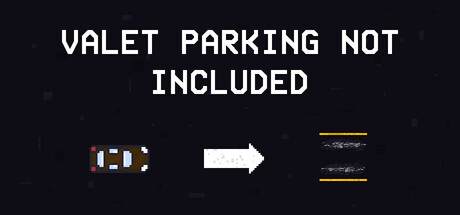
Valet Parking Not Included scores 70/100 — better than 29% of Casual capsules (n=10,153).

Quick text summary

Valet Parking Not Included scored 70/100 on Steam Analyzer — Good for a Casual capsule. Top priority fix: [uniqueness_polish] Introduce a distinctive character or visual hook—such as an anthropomorphic car with personality, a unique art style flourish, or a signature color accent—to elevate brand presence and premium perception.

Capsule scores by dimension

  • Genre Clarity: 7/10 — Puzzle mechanics clearly signaled. The pixel-art car, directional arrow, and parking spaces immediately establish this as a puzzle-strategy game about vehicle control constraints. At tiny size, the car icon and arrow remain readable enough to communicate the core mechanic. The visual language aligns well with casual indie puzzle expectations, though the genre doesn't stand out as uniquely memorable compared to top performers.
  • Title Readability: 8/10 — Title clear and well-positioned. VALET PARKING NOT INCLUDED uses a clean, blocky serif font with strong contrast against the dark navy background. The title remains legible at small and tiny sizes due to large letterforms and adequate spacing. The humorous subtitle reinforces the game's premise, though it is smaller and slightly less readable at tiny size.
  • Contrast & Color: 8/10 — Strong light-dark separation. White and light gray text and UI elements pop clearly against the dark navy-black background (#1b2838 equivalent). The car sprite uses warm red-orange tones that stand out, and the arrow is rendered in bright white. Silhouettes remain distinct even at tiny size, with minimal muddy midtones.
  • Uniqueness & Polish: 6/10 — Functional but generic presentation. The capsule executes a straightforward visual concept—car, arrow, parking spaces—without distinctive art direction or memorable hook. The pixel-art style is clean and appropriate for the indie puzzle genre, but lacks the polish, color sophistication, or narrative punch seen in top performers like Balatro or DAVE THE DIVER. The design communicates the mechanic plainly but doesn't stand out as premium or visually compelling.
  • Brand Consistency: 6/10 — Coherent but no iconic identity. The visual style is internally consistent—pixel-art car, simple UI, dark palette—and matches typical indie puzzle expectations. However, there are no memorable character, motif, symbol, or signature palette elements that would create lasting brand recognition. The design would be difficult to distinguish from other casual puzzle games without the title.
  • Composition: 7/10 — Clear hierarchy with centered layout. The title anchors the top half with strong dominance, while the car-arrow-parking space diagram centers cleanly below, creating obvious two-zone hierarchy. The primary subject (car and mechanic) holds the focal point at all sizes. The composition is safe and balanced, though somewhat static; the centered alignment and symmetrical diagram lack dynamic energy compared to more premium capsules.

What works

  • Strong title contrast and legibility. White sans-serif text is bold and readable at all sizes, including tiny thumbnails.
  • Clear mechanic visualization. The car, arrow, and parking spaces immediately communicate the core puzzle concept without ambiguity.
  • Appropriate genre visual language. Pixel-art style and simple UI align well with casual indie puzzle game expectations.

What hurts the capsule

  • Generic visual treatment. The design lacks distinctive art direction, color complexity, or visual storytelling that would elevate it above baseline indie puzzle aesthetic.
  • No memorable brand identity. The capsule contains no iconic character, mascot, or signature visual motif that would create lasting recognition.
  • Static, symmetrical composition. The centered, balanced layout is safe but lacks dynamic energy or visual intrigue that draws the eye and differentiates from competitors.

Priority fixes

  1. [uniqueness_polish] Introduce a distinctive character or visual hook—such as an anthropomorphic car with personality, a unique art style flourish, or a signature color accent—to elevate brand presence and premium perception.
  2. [composition] Shift away from rigid center symmetry toward asymmetrical, layered composition that creates depth and visual narrative tension reflecting the game's frustration mechanic.
  3. [brand_consistency] Develop a signature palette or iconic visual motif (e.g., a specific car design, recurring UI element, or thematic color scheme) that appears consistently across all marketing materials and store screenshots for instant recognition.

Store copy priority fixes

  1. [feature_communication] Expand the Features section with 4–5 concrete examples: describe how obstacles escalate (cones → puddles → gates), explain if car types have different handling, or detail how the control constraint creates puzzle variety across levels.
  2. [feature_communication] Replace 'More surprises to come post launch!' with a specific, substantive commitment: state whether new cars, mechanics, or obstacle types are planned, or remove it entirely if undefined.
  3. [audience_targeting] Add a sentence signaling expected playtime (e.g., 'Complete all 60 levels in 2–4 hours, or chase leaderboard times') to clarify if this is a quick casual experience or deeper replayability challenge.
  4. [uniqueness] Clarify how the reverse-turn-left mechanic creates escalating puzzle variety: e.g., 'Each level demands new spatial reasoning as obstacles force you to think backward.'

Related guides

Steam app ID: 3708870 · Tags: Casual, Strategy, Racing, Puzzle, 2D