Quick text summary
Somnum scored 80/100 on Steam Analyzer — Good for a Action capsule. Top priority fix: [uniqueness_polish] Add a distinctive visual hook or symbol that uniquely identifies Somnum's dream-puzzle mechanic, such as an hourglass, puzzle piece motif, or dreamscape effect not seen in comparable horror titles.
Capsule scores by dimension
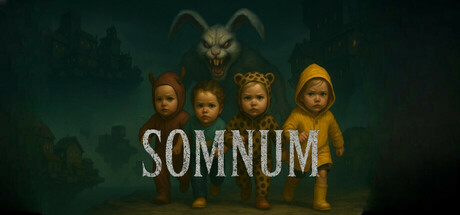
- Genre Clarity: 8/10 — Horror multiplayer puzzle clear. The horned demon figure looming in the background immediately signals horror, while four small characters in the foreground suggest multiplayer or group dynamics. The teal-green atmospheric lighting and mysterious poses communicate a supernatural puzzle scenario effectively. At tiny size, the silhouette of the creature and grouped figures still convey the core genre tension and collaborative element.
- Title Readability: 9/10 — Clean white title excellent contrast. The word 'SOMNUM' is rendered in a clean, bold serif font with strong white-on-dark contrast positioned centrally in the lower third of the composition. The letterforms remain fully legible even at tiny 120x45 size due to generous spacing and thick stroke weight. No decorative flourishes or obscuring effects compromise readability across all viewing scales.
- Contrast & Color: 9/10 — Strong value separation dark background. The title uses bright white against a deep teal-green background creating excellent luminosity contrast, while the four characters in golden-yellow clothing pop distinctly against the darker environment. The demon silhouette has sufficient value separation to read clearly even when squinting. Grayscale conversion shows crisp edge definition and clear silhouette separation across all key elements.
- Uniqueness & Polish: 7/10 — Stylized horror with strong mood. The capsule demonstrates deliberate art direction through color grading, atmospheric fog effects, and cohesive character styling that communicates a premium indie horror experience rather than a generic asset collection. The pose arrangement of the four figures and demonic backdrop conveys narrative intent, though the overall execution follows established horror game visual language. Craft quality is evident but not exceptionally distinctive compared to top-tier horror titles like Lies of P or Senua's Saga.
- Brand Consistency: 7/10 — Consistent color palette atmospheric. The golden-yellow character outfits, teal-green atmospheric lighting, and deep shadows form a cohesive internal palette that likely carries through the game's visual identity. The four-character silhouettes create a recognizable motif for the multiplayer hook. Without reference to the five store screenshots, the style appears purposeful and self-reinforcing, though no single iconic element uniquely anchors brand recognition at first glance.
- Composition: 8/10 — Clear hierarchy focal point strong. The demon creature anchors the upper composition drawing the eye upward, while the four characters and title create a strong lower focal zone with clear depth layering: background demon, midground characters, foreground title. Title placement in the lower third avoids Steam's common crop zones and maintains safe margins. At small and tiny sizes, the composition collapses cleanly into a readable arrangement with no scattered competing elements.
What works
- Exceptional title legibility. White serif letterforms with thick strokes and generous letter spacing remain perfectly readable at all sizes including 120x45 tiny thumbnail.
- Strong visual hierarchy. Demon creature, character group, and title create distinct depth layers that guide the eye without clutter or equal emphasis competing for attention.
- Excellent contrast against Steam dark background. Both the white title and golden character outfits achieve strong luminosity separation from the deep teal environment, maintaining silhouette clarity even in grayscale.
- Genre and mood immediately apparent. The horned demon and grouped vulnerable characters in golden light instantly communicate horror multiplayer puzzle tone without ambiguity.
What hurts the capsule
- Generic horror visual language. While well-executed, the composition uses familiar tropes from established horror games without a distinctive visual signature that differentiates Somnum's brand.
- Limited secondary visual storytelling. The capsule communicates the genre and multiplayer aspect but provides minimal hint of the core puzzle-solving or time-pressure mechanics that make the game unique.
- Character detail lost at tiny scale. While the group silhouette reads clearly, individual character designs and golden outfit details collapse into a blur at 120x45 size, reducing character personality impact.
Priority fixes
- [uniqueness_polish] Add a distinctive visual hook or symbol that uniquely identifies Somnum's dream-puzzle mechanic, such as an hourglass, puzzle piece motif, or dreamscape effect not seen in comparable horror titles.
- [genre_clarity] Consider subtle UI elements like floating puzzle geometry or temporal countdown indicators in the background to strengthen the puzzle-solving core beyond pure horror signaling.
- [brand_consistency] Ensure the golden character palette and teal atmospheric lighting appear consistently across all marketing materials and in-game UI to reinforce a memorable brand silhouette.
Store copy priority fixes
- [feature_communication] Explain what 'gathering energy' actually involves and how it connects to the puzzle-solving and escape objective—is it a resource system, a progression gate, or an environmental mechanic?
- [uniqueness] Add a sentence articulating what makes the 'player-voted penalties' system distinct from standard co-op horror games and why it matters to gameplay.
- [feature_communication] Clarify the failure state: what happens if time runs out before escape, and do players restart the level or lose permanent progress?
- [tone_match] Choose a clearer tone—either lean into horror with more atmospheric language, or fully embrace the party-game angle and adjust horror framing to match.
Related guides
Steam app ID: 3713850 · Tags: Action, Adventure, Action-Adventure, First-Person, Third Person