Scoring genre clarity...

Silverlake capsule

Silverlake

Guide your survivor in this exploration game with random generation, where every moment could be your last.

$7.99
CasualRPGAction Roguelike
FutureParkMay 30, 2025

Silverlake scores 65/100 — better than 10% of Casual capsules (n=10,153).

$7.99 · Released May 30, 2025 · By FuturePark

Quick text summary

Silverlake scored 65/100 on Steam Analyzer — Solid for a Casual capsule. Top priority fix: [contrast_color] Increase character sprite saturation or add subtle rim lighting to separate figures from background with stronger edge definition at tiny size.

Capsule scores by dimension

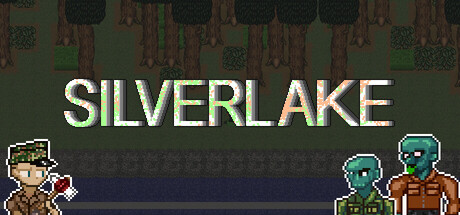
  • Genre Clarity: 7/10 — Pixel survival exploration readable. The retro pixel art style immediately signals indie RPG or survival game, and the character sprites with varied outfits on left and right suggest character customization or different survivor states. At tiny size, the silhouettes of standing figures remain recognizable as human characters, and the muted palette with hints of teal/brown clothing conveys a survival or post-apocalyptic theme. The genre is clear but not distinguished from general pixel art adventure games—no specific gameplay mechanic icons or environmental hazards jump out.
  • Title Readability: 8/10 — Strong white title legible throughout. The title SILVERLAKE is rendered in a clean, sans-serif white font with a subtle outline that holds up well at full, small, and tiny sizes. The text sits in the upper half against a darker background, avoiding noisy texture overlap. At tiny size the letterforms remain distinct and the full title is readable without squinting, making it one of the capsule's strongest elements.
  • Contrast & Color: 6/10 — Adequate contrast muddy mid-tones. The capsule relies on a muted green-brown palette with character sprites that have limited value separation from the background. The white title pops well against the dark upper region, but the pixel art characters blend slightly into the earthy tones, particularly at tiny size where individual pixels lose definition. A grayscale mental test shows the characters do read as silhouettes but without strong edge crispness—mid-tone saturation could be higher to improve pop against the #1b2838 Steam background.
  • Uniqueness & Polish: 5/10 — Competent pixel art no standout hook. The capsule demonstrates solid technical execution with recognizable character sprites and thematic color choices, but the overall presentation feels like a generic pixel art survival game without a memorable distinctive element or core mechanic visual hook. The composition is functional and the art is clean, but it does not signal what makes Silverlake unique compared to other pixel-based indie RPGs—no iconic character, environmental signature, or visual storytelling device elevates it beyond baseline competence.
  • Brand Consistency: 6/10 — Consistent style no iconic identity. The pixel art rendering is internally cohesive—character sprites, background, and palette all follow the same retro aesthetic. However, without access to seeing multiple capsule variants or game assets, the visual identity lacks a memorable signature motif, icon, or character silhouette that would make Silverlake instantly recognizable in a scrolling store feed. The style is consistent but generic for the pixel art indie genre.
  • Composition: 7/10 — Balanced layout clear focal points. The composition places the title prominently at the top, character sprites anchoring left and right, and a dark horizontal band in the center providing visual breathing room. At small and tiny sizes, the symmetrical placement of two figure groups creates clear focal points without clutter. The layout is resilient to cropping and maintains hierarchy across all sizes, though the centered dark band is somewhat inactive real estate that could better integrate environmental storytelling.

What works

  • White title holds legibility at tiny size. The sans-serif SILVERLAKE text with subtle outline remains crisp and readable even at thumbnail scale, providing strong discoverability.
  • Symmetrical composition balances focal points. Character sprites anchor left and right with clear visual weight, creating stable hierarchy across all viewing sizes without scattered attention.
  • Cohesive pixel art rendering style. All visual elements—characters, background, and palette—follow consistent retro aesthetics that feel intentional and polished.

What hurts the capsule

  • Limited value contrast in character silhouettes. Pixel art figures blend into muted green-brown background tones, reducing edge clarity and pop at small and tiny sizes in grayscale test.
  • Generic visual identity no distinctive hook. The capsule does not communicate a unique selling point or core mechanic—it reads as a competent but interchangeable pixel art survival game without memorable iconography.
  • Inactive central dark band wastes prime space. The horizontal band in the center provides breathing room but does not advance visual storytelling or reinforce genre clarity.

Priority fixes

  1. [contrast_color] Increase character sprite saturation or add subtle rim lighting to separate figures from background with stronger edge definition at tiny size.
  2. [uniqueness_polish] Add a distinctive environmental element, hazard icon, or character motif that visually communicates the core survival or exploration mechanic.
  3. [composition] Replace the inactive central band with a thematic background element—ruins, landmarks, or weather—that reinforces setting and genre identity.

Store copy priority fixes

  1. [hook_strength] Rewrite the short description to open with the unique combat mechanic or a specific survival challenge rather than generic 'every moment could be your last' language—e.g., 'Survive a post-nuclear wasteland using real-time tactical combat and scavenged weaponry, but one mistake ends your run forever.'
  2. [feature_communication] Expand the detailed description with 2–3 concrete examples of gameplay loops—e.g., 'Scavenge ruins for supplies, craft a weapon, survive an encounter, manage hunger and fatigue, then die and start over with a new map.'
  3. [uniqueness] Clarify the 'hybrid real-time turn-based combat' system with a direct comparison or example—e.g., 'Unlike turn-based roguelikes, combat flows in real-time, but you can pause to plan your next move.'
  4. [audience_targeting] Add 1–2 sentences identifying the ideal player—e.g., 'Perfect for players who love challenging roguelikes but want to play solo at their own pace, with casual-friendly controls.'

Related guides

Steam app ID: 3717620 · Tags: Casual, RPG, Action Roguelike, Exploration, 2D