Scoring genre clarity...
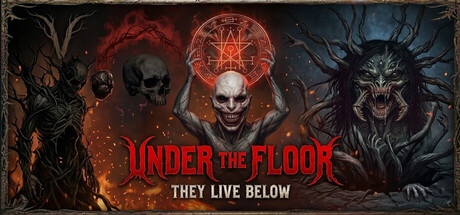
Under The Floor capsule

Under The Floor

A psychological horror simulator where every playthrough is unpredictable. Face ever-changing events, sounds, and rules in a haunted house filled with hostile entities. You can't predict. You can't learn. You can only survive… or break.

$8.995 user reviews
ActionRhythmExploration
No Laugh StudioOct 12, 2025

Under The Floor scores 73/100 — better than 58% of Action capsules (n=8,534).

5 user reviews · $8.99 · Released Oct 12, 2025 · By No Laugh Studio

Quick text summary

Under The Floor scored 73/100 on Steam Analyzer — Good for a Action capsule. Top priority fix: [title_readability] Remove or enlarge tagline; integrate core hook ('Unpredictable' or 'Rules Change') into main title treatment or use a single iconic symbol instead of secondary text

Capsule scores by dimension

  • Genre Clarity: 8/10 — Horror entities clearly identifiable. The capsule immediately reads as psychological horror through three distinct demonic/supernatural entities with glowing red and dark imagery, skeletal and creature designs, and ominous atmosphere. At TINY size, the red glowing elements and creature silhouettes still register as horror-specific iconography, though fine detail on individual faces becomes unclear. The tagline 'THEY LIVE BELOW' reinforces the horror premise and gameplay unpredictability.
  • Title Readability: 7/10 — Title readable but tagline obscured small. The main title 'UNDER THE FLOOR' uses red angular letters with clear spacing and contrast against the dark background, remaining legible at SMALL size. However, the white tagline 'THEY LIVE BELOW' becomes nearly illegible at TINY size due to reduced character size and placement over dark areas. At FULL size both read clearly with good letter definition.
  • Contrast & Color: 8/10 — Strong red-orange against dark base. The red and orange glowing elements create sharp value separation from the dark blue-black background (#1b2838 equivalent), with the crimson title letters and face halos reading distinctly even at SMALL size. The grayscale silhouettes of the three entities maintain edge clarity and separation from background clutter. Strong warm-to-cool contrast keeps the composition from feeling muddy.
  • Uniqueness & Polish: 7/10 — Polished horror aesthetic, minor generic risk. The three-entity composition with detailed demon/creature designs and atmospheric particle effects demonstrates solid craft and visual storytelling around the 'unpredictable horror' core mechanic. The angular typography and selective red color grading feel intentional and cohesive. However, the overall aesthetic sits within expected psychological horror conventions without a truly distinctive visual hook that separates it from titles like Hellblade or resident Evil-adjacent work.
  • Brand Consistency: 6/10 — Coherent but not iconic internally. The dark palette, red/orange accents, and creature-focused composition are internally consistent across the visible design elements with matching lighting and rendering style. However, there is no immediately memorable symbol, character, or signature motif that would make this instantly recognizable in future marketing without the title text. The brand identity relies on genre conventions rather than distinctive identity cues.
  • Composition: 8/10 — Clear hierarchy, three-point focal balance. The three entities are distributed left-center-right creating visual balance and natural eye flow, with the red glowing skull center as primary focal point and the title positioned in clear reading zone at lower third. At SMALL and TINY sizes, the composition remains scannable with no single element lost due to edge proximity. The layered background-entities-title structure creates effective depth without clutter.

What works

  • Red-dark contrast pops on dark UI. Crimson title letters and orange entity glows maintain excellent silhouette separation against the #1b2838 Steam background, ensuring discoverability during rapid scrolling.
  • Three-entity composition balances focal weight. Left-center-right distribution of the skull and creature designs creates natural viewing hierarchy that works at FULL, SMALL, and TINY sizes without visual overload.
  • Title placement avoids busy regions. Main title sits on controlled dark background rather than overlapping complex entity details, maximizing legibility across all viewing scales.

What hurts the capsule

  • Tagline unreadable at TINY size. The white 'THEY LIVE BELOW' text becomes illegible below SMALL size, reducing communication of the core gameplay premise in thumbnail context.
  • Generic horror aesthetic without signature. While well-executed, the dark palette and demon creature design follow established psychological horror conventions without a distinctive visual identity unique to Under The Floor.
  • Entity detail lost in compression. Fine facial features and textures on the three creatures collapse into murky silhouettes at TINY size, undermining the craftsmanship of individual designs.

Priority fixes

  1. [title_readability] Remove or enlarge tagline; integrate core hook ('Unpredictable' or 'Rules Change') into main title treatment or use a single iconic symbol instead of secondary text
  2. [uniqueness_polish] Add a signature visual motif—floor crack pattern, recurring symbol, or unique entity design—that distinguishes Under The Floor from generic horror and creates brand recall
  3. [genre_clarity] Ensure the middle skull or central entity remains the dominant focal point; consider slight enlargement or glow enhancement to guarantee it reads as primary subject at TINY size

Store copy priority fixes

  1. [feature_communication] Clarify the 'cleanse the place' mechanic: explain what this victory condition requires and how it connects to the survive-as-long-as-you-can loop, so players understand the full gameplay arc.
  2. [feature_communication] Add 2-3 sentences describing the visual or atmospheric identity of the house and entities—references to aesthetic style (pixel art, 3D, found-footage, etc.) and mood (abandonment, decay, supernatural phenomena) would help players visualize the experience.
  3. [uniqueness] Emphasize a specific systems-design differentiator beyond randomization alone—for example, does the house itself 'learn' to counter player strategies, or do entities form hierarchies that change each run?

Related guides

Steam app ID: 3720720 · Tags: Action, Rhythm, Exploration, First-Person, Horror