HAL Protocol scores 73/100 — better than 51% of Simulation capsules (n=5,188).

Quick text summary

HAL Protocol scored 73/100 on Steam Analyzer — Good for a Simulation capsule. Top priority fix: [genre_clarity] Introduce a visual anomaly or moment of 'shift' in the corridor (subtle distortion, duplicate wall, or temporal rift) to communicate the core looping mystery mechanic without text.

Capsule scores by dimension

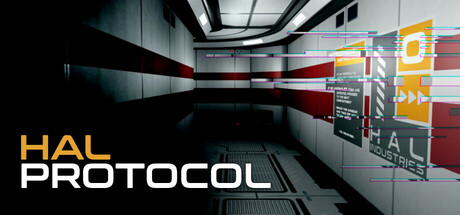
  • Genre Clarity: 7/10 — Sci-fi horror corridor setting clear. The industrial corridor with harsh lighting, gridded floor, and claustrophobic architecture immediately signals a sci-fi setting with survival or horror undertones. At TINY size, the geometric tunnel perspective and institutional aesthetic still read as a space station or laboratory environment. However, the specific gameplay loop mechanic (endless corridor mystery) is not visually evident from the capsule alone, which slightly reduces clarity for the simulation/puzzle aspect.
  • Title Readability: 8/10 — Bold two-line title, strong contrast. HAL PROTOCOL uses large, clean sans-serif typography split across two lines with a warm gold and white color scheme against the dark corridor background. At SMALL size the title remains fully legible with good letter spacing and weight. At TINY size, the two-line stack and heavy font weight preserve readability, though individual letter detail compresses slightly—still functional for quick recognition.
  • Contrast & Color: 8/10 — High value separation, warm accents. The gold/orange title text and warm lighting in the corridor create strong contrast against the cool dark blues and blacks of the background and Steam's #1b2838 backdrop. The bright fluorescent ceiling light and horizontal red stripe add focal depth. In grayscale, the corridor architecture and title maintain clear separation due to strong value differences between lit and shadowed areas.
  • Uniqueness & Polish: 7/10 — Polished sci-fi aesthetic, recognizable vibe. The capsule demonstrates professional 3D rendering with a cohesive industrial sci-fi look that avoids generic templates—the specific corridor geometry and lighting design feel intentional and branded to the game's mystery premise. However, sci-fi corridors are a familiar trope in the genre, so while execution is clean, the core visual hook is not entirely distinctive compared to other space horror/mystery titles like DREDGE or Lethal Company.
  • Brand Consistency: 7/10 — Consistent sci-fi interior, recognizable setting. The industrial corridor aesthetic with yellow/gold accent lighting and the HAL name create a cohesive sci-fi brand identity that likely repeats across store screenshots and UI. The warm-on-cool color palette and brutalist architecture feel intentional and signature to this game's visual world. This internal consistency supports recognition, though without access to all screenshots, uniqueness within the sci-fi game space is moderate.
  • Composition: 7/10 — Centered perspective, strong depth hierarchy. The vanishing-point perspective creates a natural focal point down the corridor center, with the title positioned at lower-left in a safe margin away from edges. The layered ceiling, walls, and floor create clear foreground-midground-background separation. At SMALL and TINY sizes the tunnel perspective still reads clearly as the primary subject, and the title placement avoids cropping risk on typical Steam layouts.

What works

  • Strong sci-fi atmospheric foundation. The industrial corridor setting with institutional lighting and geometric architecture immediately establishes genre tone and intrigue at all viewing sizes.
  • Excellent title contrast and legibility. Gold and white text on dark background maintains readability even at TINY size thanks to bold weight and two-line spacing strategy.
  • Professional depth and lighting design. The vanishing perspective and warm-cool light layering create visual interest and hierarchy that prevents the capsule from feeling flat or generic.

What hurts the capsule

  • Gameplay loop mechanic invisible in capsule. The core mystery element (endless looping corridor with shifts) is implied but not explicitly visualized, which may confuse buyers unfamiliar with the game's premise.
  • Generic sci-fi corridor aesthetic. While well-executed, industrial space corridors are a familiar visual trope that does not stand distinctly apart from other sci-fi horror games in the genre.
  • Limited character or entity presence. The capsule shows only environment with no visible character, creature, or NPC to anchor player perspective or hint at survival mechanics.

Priority fixes

  1. [genre_clarity] Introduce a visual anomaly or moment of 'shift' in the corridor (subtle distortion, duplicate wall, or temporal rift) to communicate the core looping mystery mechanic without text.
  2. [uniqueness_polish] Add a distinctive visual element—subtle HAL entity indicator, protagonist silhouette, or iconic object—that signals the specific game's identity beyond generic sci-fi corridor.
  3. [composition] Consider if the perspective could benefit from an off-center focal point or foreground element to reduce reliance on corridor symmetry and increase visual uniqueness at TINY size.

Store copy priority fixes

  1. [hook_strength] Add one sentence to the short description explicitly naming the psychological horror element or the sense of being trapped, to strengthen the emotional hook and match the tag profile—e.g., 'Something is wrong aboard the HIS 01 Echo, and you can't leave.'
  2. [feature_communication] Clarify the consequence of repeated failures or resets—does the player retain memory, progress toward a solution, or face a genuine 'game over' scenario? This is critical for player expectation-setting.
  3. [uniqueness] Add a differentiating statement that positions HAL Protocol against similar observation-puzzle or walking-simulator games—e.g., 'Unlike linear walking sims, your choices reshape the ship itself,' or 'The only observation game where the environment is your true antagonist.'

Related guides

Steam app ID: 3726440 · Tags: Simulation, Walking Simulator, Psychological Horror, First-Person, Choices Matter