Scoring genre clarity...

Magnecube capsule

Magnecube

A 2D puzzle game where you control a magnetic cube navigating levels filled with obstacles and unique mechanics. Includes on-line level editor.

$6.991 user reviews
PuzzleLevel EditorPuzzle Platformer
Alejandro Ibrahim Ojea, Alana Cristina Fernández BasqueroMay 31, 2025

Magnecube scores 78/100 — better than 87% of Puzzle capsules (n=4,408).

1 user reviews · $6.99 · Released May 31, 2025 · By Alejandro Ibrahim Ojea

Quick text summary

Magnecube scored 78/100 on Steam Analyzer — Good for a Puzzle capsule. Top priority fix: [uniqueness_polish] Add a distinctive visual personality or secondary element that signals what makes Magnecube unique (e.g., particle effects showing magnetic field, or a recognizable character mascot) to differentiate from generic retro puzzle games.

Capsule scores by dimension

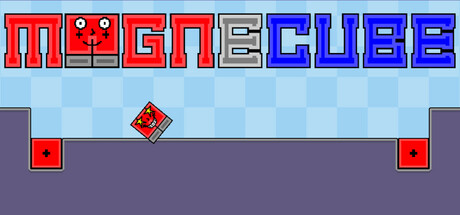
  • Genre Clarity: 8/10 — Clear puzzle game identity. The retro pixel aesthetic, grid-based checkerboard background, and magnetic cube mechanic with red/blue polarized elements immediately signal a puzzle game. At tiny size, the cube silhouette and grid pattern still communicate strategy/puzzle gameplay clearly. The magnetic visual language (red and blue opposing elements) hints at the core mechanic without confusion.
  • Title Readability: 9/10 — Excellent legibility across all sizes. The title 'MAGNECUBE' uses bold, chunky pixel lettering with strong outline treatment that maintains perfect clarity from full header down to tiny thumbnail. Each letter has distinct letterforms with high contrast against the light background. Even at 120x45, the title reads confidently as a complete word with no letter collapse or blending.
  • Contrast & Color: 8/10 — Strong value separation and pop. The red cube and title elements create bold contrast against the light blue checkerboard and purple/gray game interface zone. The red and blue color scheme has high saturation and clear value separation from the background. At small sizes, the silhouettes remain distinct; in grayscale test, the red and blue still separate meaningfully from the neutral background.
  • Uniqueness & Polish: 7/10 — Solid retro charm, modest originality. The pixel art style is clean and intentional, with careful attention to outline and grid alignment that feels premium for the retro aesthetic. However, the design relies heavily on familiar pixel-art puzzle game conventions rather than a distinctive visual hook—the magnetic cube concept is communicated but the overall composition feels like a competent but somewhat generic retro puzzle presentation.
  • Brand Consistency: 7/10 — Coherent retro identity, limited uniqueness. The art direction is internally consistent: uniform pixel density, a cohesive red/blue/gray palette, and clean geometric UI elements that all feel part of one visual system. The retro arcade aesthetic is recognizable and would carry through game screenshots. However, there are no distinctive iconic elements (character, mascot, signature symbol) that would make Magnecube visually memorable beyond 'a retro puzzle game.'
  • Composition: 8/10 — Well-balanced hierarchy and focal point. The title anchors the top with clear dominance, the cube sits at a balanced center-top position as the secondary focal point, and the interface mockup grounds the lower half without competing for attention. The composition reads intuitively at all sizes with no dead zones or awkward voids. At tiny size, the cube and title remain the clear subjects while supporting elements fade appropriately into background context.

What works

  • Title remains perfectly readable at tiny size. Bold pixel lettering with strong outline treatment maintains complete legibility even at 120x45 thumbnail view.
  • Clear puzzle game genre signaling. Grid background, magnetic cube, and retro aesthetic immediately communicate strategy/puzzle gameplay without ambiguity.
  • Strong color contrast and visual pop. Red and blue elements create bold value separation against light and neutral backgrounds, standing out in quick scroll.
  • Balanced composition with clear hierarchy. Title dominates top, cube is focused secondary element, interface grounds lower area—no visual clutter or competing focal points.

What hurts the capsule

  • Limited brand memorability and distinctiveness. Design relies on recognizable retro puzzle game conventions rather than a unique visual hook or iconic element that would be remembered.
  • Generic puzzle game presentation. While competent and clean, the overall composition doesn't communicate a specific selling point or core mechanic innovation beyond 'magnetic cube puzzle.'
  • Minimal character or mascot presence. The cube is functional but lacks personality or charm that would make the brand emotionally distinctive from other retro puzzle titles.

Priority fixes

  1. [uniqueness_polish] Add a distinctive visual personality or secondary element that signals what makes Magnecube unique (e.g., particle effects showing magnetic field, or a recognizable character mascot) to differentiate from generic retro puzzle games.
  2. [brand_consistency] Introduce an iconic symbol or visual motif (magnetic field pattern, stylized pole marker, or repeatable decorative element) that could become a signature brand cue across screenshots and promotional materials.
  3. [composition] Consider if a subtle animated or highlighted element in the cube (glow, directional arrow, or polarity indicator) could hint at the magnetic mechanic more explicitly without cluttering the layout.

Store copy priority fixes

  1. [hook_strength] Rewrite the short description to lead with 'Master magnetism in this gravity-optional puzzle game' or similar to front-load the unique mechanic and create immediate intrigue.
  2. [feature_communication] Expand the mechanics list with 1–2 sentences of gameplay context—e.g., 'magnets attract and repel your cube to solve spatial logic puzzles' or 'shifting floors change puzzle state mid-solve'—so players understand *how* to use these elements.
  3. [audience_targeting] Add a sentence explicitly targeting the intended player: e.g., 'Perfect for puzzle enthusiasts who enjoy lateral thinking' or 'Ideal for creators who want to design and share levels with a community' depending on primary audience.
  4. [uniqueness] Replace or strengthen 'ever-expanding universe of levels' with a specific differentiator, such as 'the only puzzle platformer where magnetic polarity is the core mechanic' or a comparison to similar games.

Related guides

Steam app ID: 3737600 · Tags: Puzzle, Level Editor, Puzzle Platformer, Logic, Physics