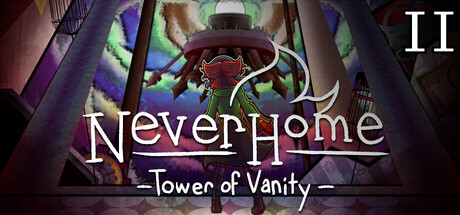
NeverHome Ch.2 - Tower of Vanity scores 75/100 — better than 74% of Adventure capsules (n=7,922).

Quick text summary

NeverHome Ch.2 - Tower of Vanity scored 75/100 on Steam Analyzer — Good for a Adventure capsule. Top priority fix: [title_readability] Increase subtitle font size and weight or adjust placement to ensure 'Tower of Vanity' remains legible at small size without loss of context.

Capsule scores by dimension

  • Genre Clarity: 7/10 — Mystery adventure with horror undertones. The surreal, geometric architecture and eerie purple-tinted lighting clearly signal a psychological/horror adventure rather than combat-focused RPG. The abstract world design and ornate mechanical structures communicate exploration and puzzle-solving. At tiny size, the silhouette reads as a fantastical world but genre specificity softens—could be adventure or dark fantasy without the subtitle.
  • Title Readability: 8/10 — Clear sans-serif with strong hierarchy. The main title 'NeverHome' uses a clean, readable sans-serif font in white with good contrast against the dark background, and the 'II' indicator is prominent in the top right. The subtitle 'Tower of Vanity' is smaller but still legible at full size. At small and tiny sizes, the main title remains readable; the subtitle begins to blur but does not completely collapse.
  • Contrast & Color: 8/10 — Strong purple-warm gradient separation. The capsule uses a rich purple-to-warm orange gradient that creates clear value separation from the Steam dark background (#1b2838). The bright white title text pops sharply against the darker regions. In grayscale, the mid-dark tones of the architectural elements maintain sufficient separation from the background, and the white type remains legible even at tiny size.
  • Uniqueness & Polish: 7/10 — Distinctive surreal aesthetic with craft. The abstract geometric architecture and ornate mechanical eye-like centerpiece feel deliberately crafted and unusual, avoiding generic fantasy tropes. The art style is cohesive and premium-feeling, with layered lighting and intentional color grading. However, the surreal abstract world approach, while striking, is becoming more common in indie adventure titles, limiting the sense of a truly unique hook.
  • Brand Consistency: 7/10 — Coherent palette and ornate visual language. The purple-orange color palette and ornate mechanical/architectural motifs appear consistent with a surreal horror anthology brand identity. The geometric abstraction and ornamental eye symbol could serve as recognizable identity cues across marketing. Without access to the store page visuals, internal cohesion appears strong, though the identity feels more thematic than character- or symbol-driven.
  • Composition: 8/10 — Balanced focal point with clear hierarchy. The ornate mechanical structure sits naturally in the center-upper portion, drawing the eye immediately, with architectural framing elements on left and right creating depth. The title is positioned in a safe, readable zone at center-left without blocking the primary visual. At small and tiny sizes, the central mechanical element remains the focal point and the composition does not collapse into noise.

What works

  • Strong color contrast against dark background. The purple-to-warm-orange gradient creates clear separation from the Steam dark background and the white title text pops sharply at all viewing sizes.
  • Clear visual hierarchy and focal point. The ornate mechanical structure commands attention at center, while the title and chapter indicator occupy safe, non-competing regions, maintaining readable hierarchy even at tiny size.
  • Readable sans-serif typography. The main 'NeverHome' title is clean and legible across full, small, and tiny sizes with effective white contrast and strategic placement away from visual noise.
  • Intentional surreal world-building. The abstract geometric architecture and ornamental mechanical elements communicate a distinctive, curated aesthetic that signals mystery and exploration without generic fantasy clichés.

What hurts the capsule

  • Subtitle clarity diminishes at small sizes. The 'Tower of Vanity' subtitle becomes harder to parse at small and tiny viewing sizes, potentially reducing understanding of the chapter's specific theme during quick scrolls.
  • Limited uniqueness within indie adventure market. While well-executed, the surreal abstract world approach is increasingly common among top-performing indie titles, and the capsule does not strongly differentiate this chapter from similar games in the genre.
  • Abstract visual identity lacks strong character hook. The mechanical ornament is visually striking but non-specific; a recognizable character or symbol would create stronger brand recall across the anthology series.

Priority fixes

  1. [title_readability] Increase subtitle font size and weight or adjust placement to ensure 'Tower of Vanity' remains legible at small size without loss of context.
  2. [uniqueness_polish] Add a distinctive character, mascot, or recurring visual motif that could serve as a franchise icon and differentiate this chapter's identity in storefronts.
  3. [genre_clarity] Consider reinforcing the horror or mystery element with additional atmospheric detail (mist, decay, shadow) to strengthen genre signaling at tiny size.

Store copy priority fixes

  1. [hook_strength] Rewrite the short description to lead with a specific conflict or twist unique to Tower of Vanity rather than a generic 'explore and escape' premise (e.g., replace 'find a way out' with a hook like 'trust no one—not even those who claim to help you').
  2. [uniqueness] Add a single sentence to the detailed description that articulates what differentiates Tower of Vanity from other party-based puzzle RPGs (e.g., 'Unlike traditional RPGs, every party member permanently alters how you solve puzzles and combat in ways that cannot be undone').
  3. [tone_match] Revise the 'Meet the Cast' character descriptions to align tone with the horror framing—replace lighthearted language ('don't get it twisted') with descriptions that feel more ominous or unreliable, matching the narrative theme of uncertainty and danger.
  4. [audience_targeting] Add one sentence after the gameplay description that explicitly signals the ideal player (e.g., 'Perfect for puzzle-adventure fans who enjoy tactical party choices and emotional story outcomes') to clarify who will find this game most rewarding.

Related guides

Steam app ID: 3749880 · Tags: Adventure, RPG, Party-Based RPG, Puzzle, Visual Novel