Scoring genre clarity...

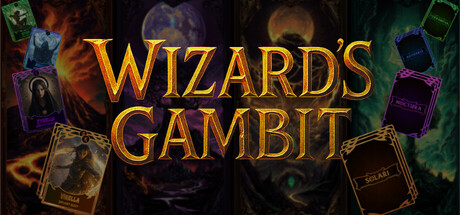
Wizard’s Gambit capsule

Wizard’s Gambit

Wizard’s Gambit — A 2D strategy card game where four magical factions battle for dominance through tactical card placement, faction powers, and evolving decks.

Free to Play5 user reviews
Board GameCard GameIndie
Ravi Deepak TrivediJan 5, 2026

Wizard’s Gambit scores 70/100 — better than 25% of Board Game capsules (n=631).

5 user reviews · Free to Play · Released Jan 5, 2026 · By Ravi Deepak Trivedi

Quick text summary

Wizard’s Gambit scored 70/100 on Steam Analyzer — Good for a Board Game capsule. Top priority fix: [uniqueness_polish] Introduce a distinctive visual hook—such as a recognizable faction emblem, unique card style, or character silhouette—that differentiates the game from generic fantasy card games and creates a memorable brand identity

Capsule scores by dimension

  • Genre Clarity: 7/10 — Card game magic theme reads clearly. The tarot/oracle card imagery around the edges and mystical dark background immediately signal a magic-themed card game, supported by the spell-casting aesthetic. At TINY size, the card elements and glowing magical effects convey strategy and fantasy gameplay, though the specific '4-faction battle' mechanic isn't visually obvious. Genre clarity succeeds through recognizable card game iconography rather than pure gameplay visual cues.
  • Title Readability: 8/10 — Bold gold title highly legible. WIZARD'S GAMBIT is rendered in large, bright golden-yellow serif text with strong outline/shadow treatment that creates excellent contrast against the dark background. At SMALL size (231×87) the title remains fully readable; at TINY size (120×45) the letters compress but stay decipherable. The text placement in the upper-center region avoids noisy textures and maintains clarity across all viewing scales.
  • Contrast & Color: 8/10 — Strong value separation and warm glow. The golden title and bright magical effects (orange/yellow glows, green card accents) contrast sharply against the cool dark purples and blacks of the background. Even in grayscale, the light golden text and bright focal areas separate clearly from the shadowed mystical figures behind. The color palette uses warm accent tones strategically to guide the eye and maintain silhouette clarity at all sizes.
  • Uniqueness & Polish: 6/10 — Competent but visually familiar. The dark mystical background with tarot cards and glowing magical effects is well-executed but follows a fairly common template for fantasy card games. The craft is clean and the effects are coherent, but the composition doesn't present a distinctive hook or unique visual storytelling that differentiates it from other TCG/card game capsules. It reads as polished competence rather than memorable artistry.
  • Brand Consistency: 6/10 — Coherent style lacks iconic identity. The dark mystical aesthetic, tarot card motif, and golden typography create internal visual cohesion across the design. However, without access to the game's UI or character art, the capsule lacks a distinctive branded symbol or motif that would make it instantly recognizable as 'Wizard's Gambit' specifically rather than a generic fantasy card game. The palette and style are consistent but not uniquely memorable.
  • Composition: 7/10 — Clear hierarchy with balanced layout. The title dominates the upper-center region with supporting card and magical elements distributed around the edges, creating a clear focal point and balanced composition. The background figures provide depth layering without overwhelming the text. At SMALL and TINY sizes the core hierarchy survives—the title remains primary and card elements frame the edges without crowding safe margins, though the smallest size does compress the peripheral card details considerably.

What works

  • Excellent title contrast and scale. The golden-yellow serif text with outline treatment pops distinctly against the dark background and remains highly readable at TINY size (120×45).
  • Strong magical atmosphere and depth. Layered background figures, glowing effects, and card elements create visual interest and suggest a mystical, strategic game theme that reads quickly on scroll.
  • Clean composition hierarchy. The title dominates the top-center while card and effect elements guide the eye without competing for primary attention or cluttering safe margins.

What hurts the capsule

  • Generic card game aesthetic. The tarot card motif and dark mystical background, while well-executed, lack distinctive branding that sets it apart from other TCG/strategy card game capsules.
  • Limited gameplay clarity. The visuals emphasize magical atmosphere over the specific '4-faction battle' and 'tactical card placement' mechanics—the capsule doesn't visually communicate what makes this game's strategy unique.
  • Peripheral card legibility at TINY. The individual tarot cards at the corners compress significantly at 120×45 and become decorative noise rather than readable branded elements.

Priority fixes

  1. [uniqueness_polish] Introduce a distinctive visual hook—such as a recognizable faction emblem, unique card style, or character silhouette—that differentiates the game from generic fantasy card games and creates a memorable brand identity
  2. [genre_clarity] Add a subtle UI element or icon (like a spell effect, faction symbol, or tactical grid hint) that telegraphs the '4-faction tactical' mechanic more explicitly at SMALL and TINY sizes
  3. [composition] Simplify or reposition the corner card elements to prevent compression at TINY size; consider moving one iconic card into the mid-ground where it remains legible and branded

Store copy priority fixes

  1. [uniqueness] Add a specific differentiator in the opening: e.g., 'Wizard's Gambit uniquely combines [specific mechanic like rotating board zones or faction synergy effects] with real-time tactical placement,' or compare directly to a known title ('like Slay the Spire meets auto-battler strategy').
  2. [hook_strength] Rewrite the short description to lead with a concrete win-state or emotional hook instead of mechanical list: e.g., 'Master four rival magical schools, each with wildly different strategies—only one faction will dominate the arena.'
  3. [audience_targeting] Clarify the current game state and intended audience: replace 'In this first build' with explicit positioning ('Early Access—single-player campaign now live, multiplayer coming Q[X]') or commit to a finished feature set; separately, signal whether this is casual or hardcore-competitive.
  4. [feature_communication] Replace generic adjectives in Key Features with concrete mechanics: instead of 'Simple to learn, tough to master,' describe a specific learning curve moment; instead of 'Strategic Gameplay,' explain one signature mechanic (e.g., 'Faction Synergies – Combine school abilities for exponential power').

Related guides

Steam app ID: 3755740 · Tags: Board Game, Card Game, Indie, Turn-Based Strategy, Strategy