Scoring genre clarity...
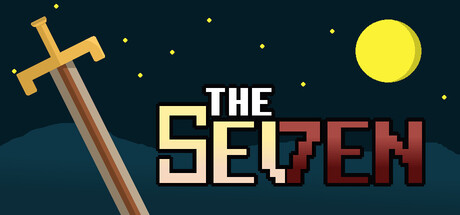
The Seven capsule

The Seven

“THE SEVEN” is a single-player autobattler roguelike strategy game where the Seven Deadly Sins clash with the Seven Virtues. Endless growth, but only one chance. In the midst of the war between good and evil, build your own deck and claim victory.

$7.991 user reviews
Auto BattlerSimulationRoguelike
CreydFeb 12, 2026

The Seven scores 75/100 — better than 72% of Auto Battler capsules (n=469).

1 user reviews · $7.99 · Released Feb 12, 2026 · By Creyd

Quick text summary

The Seven scored 75/100 on Steam Analyzer — Good for a Auto Battler capsule. Top priority fix: [genre_clarity] Add a subtle card or deck visual element to hint at the autobattler mechanic and differentiate from generic roguelike adventure

Capsule scores by dimension

  • Genre Clarity: 7/10 — Roguelike strategy with good visual hooks. The golden cross, celestial moon, and starfield clearly signal a battle between divine forces, which aligns with the Sins vs. Virtues theme. The pixel-art style and bold typography suggest indie roguelike/strategy gameplay. At TINY size, the cross and moon remain legible symbols that communicate conflict and cosmic setting, though the autobattler mechanic itself is not explicitly shown.
  • Title Readability: 8/10 — Strong bold typography, mostly readable. THE SEVEN uses chunky pixel-art lettering in cream and dark red with excellent contrast against the dark teal background. The title placement in the center-right creates a clear focal point and reads well even at small sizes. At TINY size, individual letters remain distinguishable, though 'SEVEN' in red may merge slightly with the dark background if contrast dips further.
  • Contrast & Color: 8/10 — High value separation, clear silhouettes. The bright yellow moon, golden cross, and cream/red text all create strong separation from the dark teal #1b2838 background. The golden cross has warm tone contrast against cool background, and the yellow moon pops prominently at top right. In grayscale, the light values of cross and text remain clearly distinguished from midtone background, supporting readability at tiny sizes.
  • Uniqueness & Polish: 7/10 — Distinctive aesthetic with thematic depth. The divine/cosmic visual language (cross, moon, stars) paired with pixel-art style creates a memorable identity that distinguishes it from generic roguelikes. The color scheme and symbolic elements feel intentional rather than template-based. However, the composition is relatively straightforward and doesn't reveal the autobattler or deck-building core mechanic, keeping it from being highly distinctive.
  • Brand Consistency: 7/10 — Cohesive religious-cosmic visual identity. The cross, moon, stars, and warm/cool color palette establish a recognizable internal identity around the Sins vs. Virtues concept. The pixel-art style is consistent throughout and suggests a defined art direction. Without reference to other store screenshots, the capsule communicates a consistent worldview, though memorable iconography beyond the cross would strengthen long-term brand recall.
  • Composition: 8/10 — Balanced focal points with clear hierarchy. The cross anchors the left third, the moon establishes the top right corner, and the title dominates center-right, creating a three-point visual hierarchy without clutter. The starfield provides atmospheric depth without competing for attention. Layout remains resilient at small sizes; key elements (cross, moon, title) maintain clear spatial relationships and avoid edge cropping issues.

What works

  • Strong thematic iconography. The golden cross and yellow moon instantly communicate the divine conflict central to the game's premise, creating immediate thematic recognition.
  • Excellent contrast and readability. High value separation between text, moon, cross, and background ensures the capsule remains legible at all sizes, including rapid scrolling.
  • Balanced composition across sizes. The three-point layout (cross, moon, title) maintains visual hierarchy from full size to tiny thumbnail without collapse or confusion.

What hurts the capsule

  • Mechanic not visually communicated. The capsule does not hint at the autobattler or deck-building gameplay; visuals focus on theme rather than gameplay loop, limiting discoverability clarity.
  • Limited originality in visual approach. While thematic, the divine conflict aesthetic and pixel-art style are common in indie roguelikes, reducing distinctiveness against competitive genre peers.
  • Starfield adds atmospheric noise. The scattered stars, while atmospheric, contribute minimal narrative value and slightly dilute focal point intensity without supporting composition.

Priority fixes

  1. [genre_clarity] Add a subtle card or deck visual element to hint at the autobattler mechanic and differentiate from generic roguelike adventure
  2. [uniqueness_polish] Introduce a signature character or symbol (e.g., a Sin or Virtue silhouette) to increase brand memorability and reduce generic aesthetic feel
  3. [composition] Reduce or stylize starfield to minimize visual noise and strengthen the primary focal points of cross, moon, and title

Store copy priority fixes

  1. [feature_communication] Add a 3-4 sentence breakdown of core mechanics after the opening (e.g., 'Sins and Virtues are selectable factions with unique unit abilities. Relics modify your deck mid-run. Each battle tier introduces escalating enemy synergies requiring adaptive strategy.').
  2. [uniqueness] Include one sentence explicitly stating what distinguishes this autobattler—e.g., 'Unlike standard autobattlers, your sin/virtue alignment unlocks exclusive units and alters relic effects, forcing strategic identity choices.'
  3. [feature_communication] Remove or condense redundant story text and reallocate space to describe progression milestones, run length, and roguelike-specific systems (e.g., meta-progression, unlocks, difficulty modifiers).

Related guides

Steam app ID: 3806030 · Tags: Auto Battler, Simulation, Roguelike, Roguelite, Action Roguelike