Scoring genre clarity...

Subway Exit capsule

Subway Exit

A short first-person puzzle game set in an eerie subway. Not anomaly-spotting — each level asks you to infer the goal by reading the environment, entering the right switch sequences, and turning the surroundings to your advantage.

$2.99No user reviews
PuzzleZombiesHorror
SmallBigSquareOct 9, 2025

Subway Exit scores 72/100 — better than 45% of Puzzle capsules (n=4,408).

No user reviews · $2.99 · Released Oct 9, 2025 · By SmallBigSquare

Quick text summary

Subway Exit scored 72/100 on Steam Analyzer — Good for a Puzzle capsule. Top priority fix: [genre_clarity] Add a visual gameplay hint—such as a switch, control panel, or environmental puzzle element in the foreground—to communicate the puzzle-solving mechanic at small size.

Capsule scores by dimension

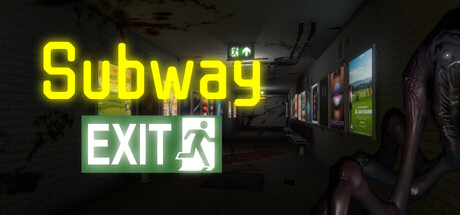
  • Genre Clarity: 7/10 — Subway setting clear, puzzle intent ambiguous. The neon 'Subway' text and underground corridor environment immediately signal a subway-set game, and the EXIT sign reinforces an escape or navigation goal. However, at tiny size the puzzle/simulation mechanic is not visually obvious—it reads more like a first-person exploration or horror game than a puzzle-solving adventure. The environment communicates location strongly but not gameplay type clearly enough.
  • Title Readability: 8/10 — Bold neon title reads well at all sizes. The bright yellow neon 'Subway' logotype has excellent contrast against the dark background and maintains legibility even at tiny thumbnail size due to thick, high-saturation letterforms. The green 'EXIT' subtitle sits directly below in a clean sans-serif and reads clearly at small size. At full size both elements are crisp and well-placed in the upper-left quadrant without competing with the background clutter.
  • Contrast & Color: 8/10 — Strong neon pop, excellent silhouette separation. The yellow neon 'Subway' and green 'EXIT' signage create vibrant value separation against the dark interior scene, with the glowing effect adding visual weight and depth. The warm yellow and cool green complement each other and both pop distinctly in grayscale contrast testing. At tiny size the neon glow is still readable and the signage maintains clear edges; the subway interior provides adequate dark backdrop without muddy mid-tones interfering.
  • Uniqueness & Polish: 7/10 — Authentic subway aesthetic, functional not distinctive. The neon signage and realistic subway corridor setting feel authentic and well-executed, with attention to environmental detail like visible pipes, exit signs, and atmospheric lighting. However, the visual approach is somewhat generic for indie puzzle games—the aesthetic is familiar from many indie titles in this category and does not convey a unique mechanic or standout hook. The craft is solid but lacks a memorable visual signature that separates it from peers like Viewfinder or COCOON.
  • Brand Consistency: 6/10 — Coherent subway theme, no memorable brand identity. The capsule maintains internal consistency with its underground setting, industrial lighting, and signage-focused design—the color palette of dark tones with neon accents is cohesive. However, there are no iconic characters, symbols, or signature visual motifs that would make this capsule immediately recognizable as 'Subway Exit' in a second viewing. The brand identity is functional but generic; nothing stands out as uniquely tied to this specific game's identity or core mechanic.
  • Composition: 7/10 — Clear focal point, good balance, minor edge concerns. The neon title occupies the left-center-top with clear visual hierarchy, and the EXIT sign creates a secondary focal point that guides the eye downward. The subway corridor recedes into depth, establishing a three-layer composition (foreground signage, midground corridor, background exit). At tiny size the neon text remains the primary anchor, though at small sizes some background detail in the right portion becomes noisy; the title placement avoids edge-hugging and allows safe margins.

What works

  • High-contrast neon typography. Yellow 'Subway' and green 'EXIT' signage read clearly at all viewing sizes with strong value separation and glowing effects that maintain legibility in grayscale.
  • Authentic subway environment. Industrial corridor with pipes, realistic lighting, and thematic consistency creates an immersive setting that grounds the game's premise without feeling generic.
  • Strong focal point hierarchy. Primary neon title and secondary EXIT sign work together to guide the eye and maintain visual interest at thumbnail sizes.

What hurts the capsule

  • Puzzle mechanic not visually communicated. The capsule reads as exploration or atmospheric game rather than a puzzle-solving adventure; the 'infer the goal' core mechanic is invisible.
  • Generic indie puzzle aesthetic. While well-executed, the neon-subway-corridor look is familiar from many indie titles and lacks a distinctive visual hook or memorable brand signature.
  • Background detail density at small sizes. The right side corridor and background clutter becomes visually noisy at small capsule sizes, diluting focus from the title and sign.

Priority fixes

  1. [genre_clarity] Add a visual gameplay hint—such as a switch, control panel, or environmental puzzle element in the foreground—to communicate the puzzle-solving mechanic at small size.
  2. [uniqueness_polish] Introduce a distinctive visual signature element (character silhouette, unique UI detail, or signature object) that communicates what makes Subway Exit different from other puzzle games.
  3. [composition] Simplify or darken the right-side background corridor to reduce visual noise and strengthen focus on the neon title and exit sign at thumbnail sizes.

Store copy priority fixes

  1. [hook_strength] Rewrite the opening line to lead with the puzzle deduction mechanic ('Figure out what moves the scene forward by reading clues in an unsettling subway') and reserve atmospheric tone for the detailed description.
  2. [uniqueness] Integrate the Zombies, Horror, and Surreal tags into the detailed description to explain how they influence the puzzle environment and differentiate from other environmental puzzle games.
  3. [tone_match] Remove or reposition 'WAKE UP!' to the opening paragraph where it can act as a thematic hook rather than a late-stage tonal rupture.
  4. [audience_targeting] Add a single sentence clarifying difficulty expectations (e.g., 'Designed for players who enjoy lateral thinking and environmental storytelling') to sharpen audience signals.

Related guides

Steam app ID: 3814580 · Tags: Puzzle, Zombies, Horror, Surreal, Atmospheric