Quick text summary
TileGuesser scored 65/100 on Steam Analyzer — Solid for a Casual capsule. Top priority fix: [uniqueness_polish] Replace the generic grid background with a vibrant, playful scene or UI mockup showing the actual guessing mechanic (e.g., revealed and hidden tiles with player silhouettes or social cues) to communicate the game's party focus and differentiate from generic puzzle games.
Capsule scores by dimension
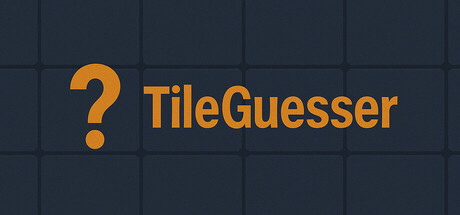
- Genre Clarity: 5/10 — Ambiguous casual game type. The question mark and tilted grid pattern suggest a puzzle or guessing mechanic, but at tiny size the grid alone reads as generic tile-based gameplay rather than clearly communicating a party/social guessing game. The visual lacks character, UI hints, or thematic elements that would clarify the specific casual game experience to a quick scroller.
- Title Readability: 8/10 — Clear and legible at all sizes. The orange sans-serif 'TileGuesser' text reads cleanly at full, small, and tiny sizes with strong contrast against the dark grid background. The question mark icon left of the title reinforces the concept and provides visual hierarchy, though at tiny size some serif detail may soften slightly but remains readable.
- Contrast & Color: 8/10 — Strong orange-to-dark separation. Bright orange (#FF9500 approximately) creates excellent value contrast against the dark navy grid background (#1b2838), and the color pops immediately even in grayscale simulation. The silhouette of the question mark and letterforms remain crisp and separate clearly at all viewing sizes, supporting discoverability in quick scroll.
- Uniqueness & Polish: 6/10 — Clean but generic minimalist approach. The design is competently executed with professional typography and intentional color choice, but the grid pattern and question mark are common visual tropes in puzzle games and lack a distinctive hook that communicates TileGuesser's unique party guessing mechanic. It reads as a polished generic puzzle game rather than something memorable or standout.
- Brand Consistency: 5/10 — Minimal identity without distinctive signal. The orange question mark and sans-serif logo are clean but do not establish a memorable, recognizable brand motif—no character, no signature palette depth, no visual element that would be unmistakably TileGuesser if seen again. Without reference to the 9 store screenshots, this capsule offers no iconic hook or internal brand language that reinforces identity.
- Composition: 7/10 — Balanced but uninspired layout. The question mark sits left of the title in clear left-to-right hierarchy, with ample safe margins and no edge-hugging risk. However, the centered composition on a plain grid background is passive and does not leverage depth, layering, or focal point drama—it reads as functional rather than engaging, and the grid pattern fills otherwise dead space without narrative or play context.
What works
- Excellent title contrast and legibility. Orange text reads sharply at tiny size against dark background with no letterform collapse or outline softening.
- Safe margins and clean layout. No elements hug edges, title placement avoids cropping risk, and composition is well-balanced across all viewport sizes.
- Professional color choice and saturation. Orange is vibrant and intentional, creating strong visual pop without appearing cheap or over-processed.
What hurts the capsule
- Generic grid background lacks narrative. The tileable grid pattern is a common puzzle trope and does not communicate the specific social party guessing mechanic or game personality.
- No thematic or character hook. The capsule relies only on typography and a generic question mark icon, missing an opportunity to show game personality, art style, or distinctive visual identity that peers like Balatro or DAVE THE DIVER achieve.
- Minimal brand consistency signals. There is no iconic motif, character, or signature visual element that would make TileGuesser instantly recognizable in a crowded store or remembered after a quick browse.
Priority fixes
- [uniqueness_polish] Replace the generic grid background with a vibrant, playful scene or UI mockup showing the actual guessing mechanic (e.g., revealed and hidden tiles with player silhouettes or social cues) to communicate the game's party focus and differentiate from generic puzzle games.
- [brand_consistency] Introduce a distinctive character, mascot, or signature visual element (e.g., a smiling tile, quirky player avatar, or memorable game-specific icon) that can anchor the brand and become recognizable across future marketing materials.
- [genre_clarity] Add subtle contextual hints such as player icons, a scoreboard, or revealed tile patterns to immediately convey that this is a social guessing party game, not a single-player puzzle solver.
Store copy priority fixes
- [feature_communication] Move 'The game itself does not include any images' to the end of the first paragraph and reframe it positively as 'fully customizable to any theme or topic you choose.'
- [hook_strength] Replace the closing rhetorical questions with a single concrete reason to play this game (e.g., 'Master the art of reading tiny clues, or sabotage rivals with hidden effects.') that differentiates it from other guessing games.
- [audience_targeting] Add a sentence clarifying whether the game supports solo play or requires multiple players, to set expectations upfront for solo-only buyers.
- [uniqueness] Emphasize the Steam Workshop integration as a live community asset ('Download thousands of themed image packs from the community, or build your own') rather than treating it as a technical feature.
Related guides
Steam app ID: 3840600 · Tags: Casual, Education, Tabletop, Trivia, Puzzle