Scoring genre clarity...

Planetris capsule

Planetris

A challenging Suika-like with no ground and an end

$0.991 user reviews
CasualPuzzlePhysics
Milky FoxSep 10, 2025

Planetris scores 67/100 — better than 15% of Casual capsules (n=10,153).

1 user reviews · $0.99 · Released Sep 10, 2025 · By Milky Fox

Quick text summary

Planetris scored 67/100 on Steam Analyzer — Solid for a Casual capsule. Top priority fix: [genre_clarity] Add a visual element that hints at the stacking or puzzle mechanic—such as a small floating shape or layered planet rings—to signal Suika-like gameplay at TINY size.

Capsule scores by dimension

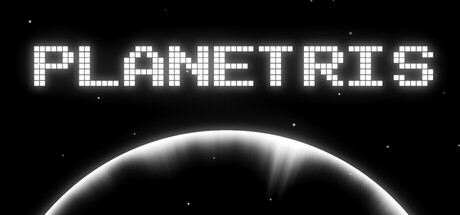
  • Genre Clarity: 5/10 — Space setting unclear genre intent. The celestial sphere and starfield evoke a space or astronomy theme, but the pixel-art PLANETRIS title is the only gameplay hint. At TINY size, the planet silhouette dominates while the title becomes a small white bar; the casual puzzle-game nature is not immediately apparent from visuals alone. Without seeing the Suika-like stacking mechanic, this reads as generic space rather than signaling a specific casual gameplay loop.
  • Title Readability: 8/10 — Pixel title clear at small sizes. PLANETRIS is rendered in a clean, high-contrast pixel font in white against the black background, positioned in the upper third with ample breathing room. At SMALL (231×87) and TINY (120×45) sizes, the letterforms remain distinct and legible due to the crisp geometric design and strong value separation. The title placement avoids the planet silhouette, preventing collision and maintaining clarity across all viewing conditions.
  • Contrast & Color: 8/10 — Strong grayscale separation clean read. The white pixel-art title and planet rim glow create sharp contrast against the pure black space background and dark planet sphere. In grayscale, the bright white letterforms and crescent highlight on the sphere's edge maintain excellent silhouette definition and prevent blur at TINY size. The sparse starfield adds visual texture without muddying the primary focal elements.
  • Uniqueness & Polish: 6/10 — Retro aesthetic functional not distinctive. The pixel-art style and minimalist space composition reflect intentional craft and a nostalgic arcade tone, which fits casual gaming positioning. However, the design feels more generic retro-space than unique; there is no visual hook that communicates the Suika-like stacking puzzle mechanic or differentiates it from other space-themed casual games. Compared to benchmarks like Balatro or Tiny Glade, this lacks a memorable visual identity or distinctive art direction.
  • Brand Consistency: 6/10 — Minimal internal cohesion signals. The capsule uses a consistent monochromatic pixel-art aesthetic and maintains a cohesive retro-space theme throughout. However, without a distinctive character, icon, or signature palette to anchor brand recognition, the design reads as neutral rather than iconic. The visual language—black void, white geometry, starfield—is standard enough that it would not reliably signal Planetris identity when viewed alongside other casual game capsules.
  • Composition: 7/10 — Clear hierarchy strong focal depth. The composition uses a clean vertical hierarchy: title in the upper third, large planet sphere in the lower half, with the black void providing breathing room and depth. The planet's crescent-lit rim draws the eye downward naturally, creating a single focal point that works well at SMALL and TINY sizes. Title placement is safe and does not compete for attention; however, the planet sphere sits very close to the bottom edge and may risk cropping on some platform layouts.

What works

  • Legible pixel-art title. White, geometric letterforms remain readable and distinct at all sizes due to high contrast and crisp stroke definition.
  • Strong value separation. Pure black background, white text, and glowing planet rim create unambiguous visual hierarchy that stands out against the Steam dark background.
  • Intentional minimalist composition. Sparse starfield, clear focal point on the planet, and ample negative space convey a polished, focused design approach.

What hurts the capsule

  • Generic space theme no game-type signal. The celestial sphere and starfield do not communicate the Suika-like puzzle-stacking mechanic, leaving genre identity ambiguous at a glance.
  • Limited visual distinctiveness. The retro pixel aesthetic and minimalist space composition feel functional but lack a memorable visual hook or brand identity cue that would stand out among casual game competitors.
  • Planet sphere edge crop risk. The bottom-half planet positioning sits close to the edge and may be clipped or awkwardly framed depending on platform or aspect-ratio adjustments.

Priority fixes

  1. [genre_clarity] Add a visual element that hints at the stacking or puzzle mechanic—such as a small floating shape or layered planet rings—to signal Suika-like gameplay at TINY size.
  2. [uniqueness_polish] Introduce a distinctive color accent or iconic motif (e.g., a recurring symbol, character, or palette shift) that creates a memorable brand identity separate from generic space themes.
  3. [composition] Reposition the planet sphere with more padding from the bottom edge to ensure safe margins and reduce crop-related distortion across Steam display formats.

Store copy priority fixes

  1. [hook_strength] Rewrite the short description to lead with the core gameplay verb and remove genre jargon: 'Drop planets in zero gravity, shift their orbits, and trigger chain reactions to reach the supernova' makes the mechanic and goal immediately clear.
  2. [audience_targeting] Add one sentence after the opening that explicitly names the intended player: 'Perfect for puzzle lovers seeking a meditative, finite challenge with no endless grinding.'
  3. [genre_clarity] Add a parenthetical after 'Suika-like' in the short description: 'Suika-like (merging puzzle game) with no ground' to onboard players unfamiliar with that reference.

Related guides

Steam app ID: 3846730 · Tags: Casual, Puzzle, Physics, Minimalist, Relaxing