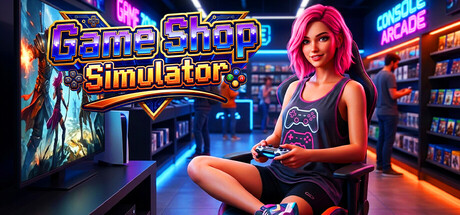
Game Shop Simulator scores 65/100 — better than 10% of Simulation capsules (n=5,188).

Quick text summary

Game Shop Simulator scored 65/100 on Steam Analyzer — Solid for a Simulation capsule. Top priority fix: [title_readability] Simplify title treatment with solid bold sans-serif font and remove gradient to improve legibility at small and tiny sizes without losing neon aesthetic through background color alone.

Capsule scores by dimension

  • Genre Clarity: 7/10 — Simulation shop management clearly communicated. The capsule effectively conveys a retail simulation through the game shop setting with shelves, arcade aesthetic, and a character holding a game controller. At tiny size, the neon arcade environment and retail shelving remain legible enough to signal the shop management genre, though the specific 'game shop' focus could be ambiguous without text. The controller in hand and cabinet-lined walls provide strong genre cues for casual simulation gameplay.
  • Title Readability: 6/10 — Title readable at full but struggles small. The 'Game Shop Simulator' title uses bold gradient text with yellow and pink coloring positioned in the upper portion, which reads clearly at full header size but begins to lose crispness at small 231x87 dimensions due to the decorative gradient effect and thin letter strokes. At tiny 120x45 size, the title becomes noticeably compressed and the gradient detail collapses, making individual letters harder to distinguish. The text placement avoids the character but competes with busy background neon elements.
  • Contrast & Color: 7/10 — Strong neon pop with good separation. The capsule leverages vibrant cyan, magenta, and orange neon accents against the dark blue arcade environment, creating strong value separation from the #1b2838 Steam background. The character's magenta hair and the bright arcade signage pop effectively, though the mid-tone shelving and cabinet details blend slightly into the darker background. In grayscale, the silhouette of the character and neon text maintain reasonable clarity, though some background elements lose definition.
  • Uniqueness & Polish: 6/10 — Competent arcade aesthetic lacks distinctive hook. The arcade game shop setting with neon lighting is well-executed visually but follows familiar cyberpunk retail aesthetics seen in similar simulator titles like TCG Card Shop Simulator and Drug Dealer Simulator 2. The character pose and shop interior are polished and cleanly rendered, but the capsule does not communicate a unique mechanic or selling point beyond 'run a game shop' without relying on the descriptive text. The execution is solid but the visual identity feels generic for the shop simulator genre.
  • Brand Consistency: 6/10 — Coherent arcade style, no iconic identity. The capsule maintains consistent neon arcade theming with unified color palette (cyan, magenta, orange) and a cohesive cyberpunk retail environment that would align with in-game visuals. However, there are no distinctive brand symbols, iconic character traits, or memorable motifs that would create instant recognition if seen again at different sizes. The aesthetic is competent but interchangeable with other shop management sims using similar neon arcade backdrops.
  • Composition: 7/10 — Clear focal point, balanced spatial arrangement. The character seated center-right serves as the primary focal point with strong eye contact and clear silhouette, while background shelving and arcade elements provide supporting context without overwhelming the subject. At small and tiny sizes, the character remains the dominant visual anchor, guiding viewer attention effectively despite the detailed background. The composition uses depth layering (shelves in back, character mid, console controller in front) though the title placement in the upper area creates slight competition for attention.

What works

  • Neon color palette pops against Steam dark background. Vibrant cyan, magenta, and orange lighting creates strong value contrast and visual impact that stands out during quick scrolling.
  • Character serves as clear primary focal point. The seated figure with controller maintains visual dominance and guides viewer attention across all size variations from full to tiny.
  • Arcade game shop setting immediately contextualizes genre. The shelving, neon signage, and arcade aesthetic clearly communicate shop simulation gameplay without ambiguity about the business type.

What hurts the capsule

  • Title readability degrades significantly at small sizes. The gradient text treatment and decorative styling cause letterforms to compress and blur at 231x87 and especially at 120x45 dimensions.
  • Generic arcade shop aesthetic lacks distinctive identity. The visual style does not establish memorable brand cues or unique mechanics that differentiate it from competing shop simulators in the genre.
  • Busy background competes with title placement. The neon signage and arcade elements create visual clutter that makes the upper-positioned title harder to isolate and read quickly.

Priority fixes

  1. [title_readability] Simplify title treatment with solid bold sans-serif font and remove gradient to improve legibility at small and tiny sizes without losing neon aesthetic through background color alone.
  2. [uniqueness_polish] Add a distinctive visual hook such as an iconic store layout element, signature character trait, or UI mockup that communicates the unique selling point beyond 'game shop' to elevate polish perception.
  3. [composition] Reduce background neon sign density or adjust title placement to a cleaner region with dark backing to improve title contrast and readability while maintaining focal point hierarchy.

Store copy priority fixes

  1. [hook_strength] Replace the opening sentence with a clear, action-focused hook: 'Design and manage your own video game store from the ground up, expanding from a small shop to the best gaming destination in town.' This leads with the core loop and removes the awkward streamer reference.
  2. [audience_targeting] Clarify who this game is for by adding: 'Perfect for fans of business sims and life games who love customization and gradual progression.' This signals the intended audience without relying on niche pandering.
  3. [feature_communication] Expand one feature with a concrete example, e.g., 'Keep track of which games and consoles are trending with customers, then restock and rearrange shelves to maximize sales and player satisfaction.'
  4. [uniqueness] Add a differentiator that explains why this streamer element exists or what makes it special, or remove it entirely and focus on the core store-building fantasy that is more universally appealing.

Related guides

Steam app ID: 3848580 · Tags: Simulation, Casual, Life Sim, Immersive Sim, 3D