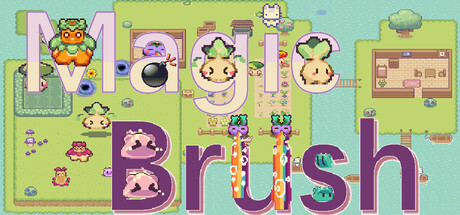
Magic Brush scores 70/100 — better than 28% of 2D Platformer capsules (n=1,970).

Quick text summary

Magic Brush scored 70/100 on Steam Analyzer — Good for a 2D Platformer capsule. Top priority fix: [title_readability] Consolidate 'Magic Brush' title into a single readable word block with consistent spacing and positioning to maintain legibility at small/tiny sizes.

Capsule scores by dimension

  • Genre Clarity: 7/10 — Casual puzzle with clear gameplay hook. The capsule effectively communicates a casual, colorful puzzle game through the whimsical art style, cute character (rabbit), and playful obstacles scattered across the scene. At tiny size, the bright pastel palette and scattered game elements still read as a light, strategy-based casual title, though the specific mechanic of drawing obstacles is not immediately obvious without the title context.
  • Title Readability: 6/10 — Title readable at full, struggles at tiny. The 'Magic Brush' title is split across the composition in a playful, integrated manner that works at full header size with the purple letters fitting naturally into the scene layout. However, at tiny size (120x45), the distributed letter placement becomes difficult to parse as a cohesive title, and the playful integration that works at large scale becomes a readability liability at small thumbnails.
  • Contrast & Color: 7/10 — Bright pastels with solid value separation. The soft mint green, light pink, and pastel yellow background create warm, inviting contrast against the Steam dark background. Character silhouettes and purple text elements have reasonable separation, though the overall mid-tone dominated palette lacks the punch of high-contrast designs; at tiny size, elements maintain legibility but don't pop dramatically.
  • Uniqueness & Polish: 7/10 — Charming aesthetic with cohesive art direction. The capsule demonstrates clean, consistent illustration work with a distinctive hand-drawn storybook quality that feels premium and intentional. The composition reads as purposeful world-building rather than generic assets, and the cute character design with themed room/level layouts communicates care in visual storytelling, though the core mechanic itself is not immediately communicated as a unique selling point.
  • Brand Consistency: 8/10 — Recognizable character and color identity. The cute orange rabbit with distinctive features serves as a memorable mascot that could anchor brand recognition across store assets. The consistent pastel color palette, playful illustration style, and room-based theme create strong internal coherence and a recognizable identity that should translate well across the five available screenshots without feeling generic or copycat.
  • Composition: 7/10 — Busy but hierarchical layout with clear focal point. The central orange rabbit serves as the primary focal point surrounded by thematically arranged level rooms and obstacles, creating depth and visual interest. While the composition is detailed and full of activity, the arrangement remains balanced and readable at full size, though at small/tiny sizes the scattered room elements create some visual noise that competes for attention.

What works

  • Distinctive mascot character. The orange rabbit is immediately recognizable and memorable, serving as a strong brand anchor that communicates personality and warmth.
  • Cohesive art style and palette. The consistent hand-drawn illustration approach with soft pastels creates a premium, intentional aesthetic that feels polished and purposeful throughout the composition.
  • Clear casual gameplay vibe. The playful arrangement of rooms, obstacles, and whimsical elements successfully conveys a light-hearted, approachable puzzle game experience.

What hurts the capsule

  • Title placement reduces legibility at small sizes. The distributed, integrated letter placement works beautifully at full size but fragments at tiny thumbnails, making the title difficult to parse quickly during Steam browsing.
  • Mechanic clarity depends on context. The core gameplay mechanic of drawing/sliding to create obstacles is not visually communicated; viewers must read the description to understand the unique selling point.
  • Dense composition creates visual noise at thumbnail scale. The many scattered rooms and small obstacle details compete for attention at small/tiny sizes, reducing immediate visual hierarchy clarity.

Priority fixes

  1. [title_readability] Consolidate 'Magic Brush' title into a single readable word block with consistent spacing and positioning to maintain legibility at small/tiny sizes.
  2. [genre_clarity] Add a subtle visual representation of the draw/slide mechanic (e.g., a brush stroke or trajectory line) to communicate the core gameplay loop without relying on text.
  3. [composition] Increase focal point emphasis on the central rabbit character by adding subtle depth cues (shadow, vignette, or scale adjustment) to anchor attention at thumbnail size.

Store copy priority fixes

  1. [hook_strength] Rewrite the opening to lead with the core verb and appeal: 'Draw lines to guide a magical rabbit through obstacles—it's brick-breaking meets creative control across nearly 100 clever levels.'
  2. [feature_communication] Add 2-3 sentences after the opening explaining what drawing actually does (bounces, curves, blocks obstacles) and what player agency feels like moment-to-moment.
  3. [audience_targeting] Insert a single sentence identifying the primary audience: 'Perfect for puzzle lovers seeking a casual, creative alternative to traditional block-breakers' or similar.
  4. [genre_clarity] Remove contradictory tags (RTS, Incremental, Platformer) from the store page tags list or clarify in copy why they apply; align tags with 'brick-breaker + drawing puzzle' identity.

Related guides

Steam app ID: 3862830 · Tags: 2D Platformer, Strategy, Cute, Quick-Time Events, Pixel Graphics