Scoring genre clarity...

PolyLumina capsule

PolyLumina

A colorful rhythm simulation game where you compose polyrhythmic chord progressions and watch them come alive through glowing, reactive visuals.

Free to Play9 user reviews
SimulationCasualRhythm
RheaProductionsDec 6, 2025

PolyLumina scores 73/100 — better than 51% of Simulation capsules (n=5,188).

9 user reviews · Free to Play · Released Dec 6, 2025 · By RheaProductions

Quick text summary

PolyLumina scored 73/100 on Steam Analyzer — Good for a Simulation capsule. Top priority fix: [brand_consistency] Introduce a subtle iconic motif or color accent (secondary hue) that can become a signature visual element across all marketing materials and store screenshots.

Capsule scores by dimension

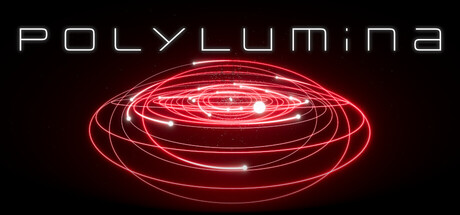
  • Genre Clarity: 7/10 — Rhythm and music simulation clear. The neon red wireframe orbital/circular pattern immediately signals a music or rhythm game, reinforced by the geometric, symmetrical composition that evokes audio visualization and polyrhythmic structure. At TINY size, the concentric glowing rings remain recognizable as rhythm-related imagery, though the specific 'polyrhythmic chord progression' mechanic is not explicit—the visual reads as synth/electronic music game rather than composition tool.
  • Title Readability: 8/10 — Clean geometric sans-serif, excellent contrast. POLYLUMINA is rendered in a crisp, modern geometric sans-serif with consistent letterforms and strong white-on-black contrast that holds at SMALL and TINY sizes. The title sits in a safe, clutter-free upper region with ample breathing room, and the font weight and spacing remain legible even when scaled down to 120x45 pixels.
  • Contrast & Color: 8/10 — Strong red glow pops against dark background. The vibrant neon red wireframe central element creates excellent value separation against the pure black background, with bright glowing line weight that reads clearly at all scales. The warm red-orange hue and luminous edge treatment provide strong silhouette definition; in grayscale the contrast remains sharp and the focal point unmistakable even at thumbnail size.
  • Uniqueness & Polish: 7/10 — Polished neon aesthetic with clear identity. The neon red orbital wireframe motif is well-executed and distinctive for a rhythm/music game, evoking synth-wave and electronic music culture with intentional, coherent visual language. The craft is clean and premium-feeling; however, the neon geometric aesthetic is not entirely unique in indie games and does not communicate a specific gameplay hook beyond 'music/synth game' without additional context.
  • Brand Consistency: 6/10 — Minimal identity cues, geometric motif consistent. The neon red wireframe sphere and geometric sans-serif typography form a cohesive internal style, but without access to the full 10 store screenshots, identifiable brand motifs or signature visual patterns are not apparent from the capsule alone. The color palette and wireframe geometry would likely be recognizable across assets if applied consistently, but no iconic character, symbol, or distinctive mark is evident here.
  • Composition: 8/10 — Clear hierarchy, centered focal point, balanced. The neon red wireframe sphere anchors the center with strong visual weight, the title is positioned safely at top in a uncluttered region, and negative space is well-distributed without dead zones. At SMALL and TINY sizes, the composition collapses to the essential focal point (glowing orb) and readable title, maintaining clear hierarchy and avoiding edge cropping issues.

What works

  • Title legibility at scale. POLYLUMINA remains clearly readable at TINY size due to geometric font choice, consistent weight, and high white-on-black contrast.
  • Focal point clarity. The glowing neon red wireframe sphere immediately draws the eye and reads as the primary subject across all viewing sizes without competition.
  • Genre signaling. The neon aesthetic and geometric orbital pattern effectively communicate a music/rhythm game without ambiguity.
  • Contrast against Steam background. The warm red glow and pure black background create strong value separation that pops against Steam's dark theme #1b2838.

What hurts the capsule

  • Limited brand identity. The capsule lacks iconic motifs, characters, or distinctive visual marks that would make PolyLumina immediately recognizable from visual memory alone.
  • Gameplay mechanic ambiguity. The neon wireframe sphere communicates 'music game' but does not visually suggest the specific 'polyrhythmic chord progression' composition mechanic that differentiates the game.
  • Generic neon aesthetic. While well-executed, the neon-on-black style is common in electronic/synth games and does not feel particularly unique or premium compared to benchmarks like DAVE THE DIVER or Hades II.

Priority fixes

  1. [brand_consistency] Introduce a subtle iconic motif or color accent (secondary hue) that can become a signature visual element across all marketing materials and store screenshots.
  2. [uniqueness_polish] Add a subtle visual cue suggesting composition or harmony (e.g., layered geometric shapes, chord symbols, or a hint of musical notation integrated into the wireframe) to communicate the core mechanic.
  3. [composition] Consider a slight off-center placement of the sphere with complementary visual elements (smaller secondary orbits, chord indicators, or light particles) to add visual depth and narrative without cluttering the title region.

Store copy priority fixes

  1. [feature_communication] Expand the detailed description with 2-3 sentences on progression or depth: does the game have a campaign mode, challenges, unlockable patterns, or is it purely open-ended sandbox play? This will anchor player expectations.
  2. [uniqueness] Add a sentence explicitly stating what sets PolyLumina apart: e.g., 'The only music game where every polyrhythmic pattern generates its own unique visual language' or 'combines real chord theory with abstract animation.'
  3. [feature_communication] Replace bullet points with short descriptive sentences explaining how each feature works together (e.g., 'Craft progressions with any key or tempo, then watch the visualizer respond in real time to every harmonic shift') to build a coherent mental model of gameplay flow.

Related guides

Steam app ID: 3908010 · Tags: Simulation, Casual, Rhythm, Visual Novel, Audio Production