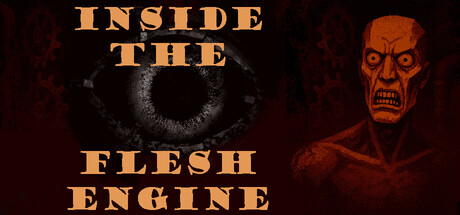
Inside the Flesh Engine scores 72/100 — better than 48% of Adventure capsules (n=7,922).

Quick text summary

Inside the Flesh Engine scored 72/100 on Steam Analyzer — Good for a Adventure capsule. Top priority fix: [uniqueness_polish] Refine the demon design with more distinctive facial features or expressive detail to create a recognizable character anchor rather than a generic skull.

Capsule scores by dimension

  • Genre Clarity: 7/10 — Horror atmosphere clear, mechanics unclear. The grotesque orange demon face and dark red atmosphere immediately signal horror, and the factory/body conveyor premise is implied by the composition. However, at tiny size the retro-style pixel art and first-person perspective are not evident from visuals alone, and the narrative choice-driven mechanic is completely invisible. The horror subgenre reads clearly but gameplay identity is weak.
  • Title Readability: 8/10 — Bold serif title reads well across sizes. The uppercase serif font 'INSIDE THE FLESH ENGINE' uses warm orange (#D4860C range) with strong contrast against the dark background and is positioned across the top in clean horizontal lines. At small and tiny sizes the title remains legible due to thick letterforms and strategic vertical stacking. The spacing is generous and the outline is clean, though at the absolute tiniest size some serif detail softens.
  • Contrast & Color: 8/10 — Strong value separation with warm accent. The orange title and demon face create excellent silhouette separation against the near-black background (#1b2838 assumed). The warm orange hue saturates distinctly in the dark palette, and the demon's lighter facial features (eye whites, tooth detail) provide internal contrast within the red-orange form. In grayscale the composition maintains clear edge definition; at small size the orange-to-black shift remains readable despite texture noise in the background.
  • Uniqueness & Polish: 7/10 — Retro style distinct but execution unrefined. The pixel-art demon and hand-drawn organic texture create a deliberate low-fi aesthetic that differentiates from polished AAA horror capsules. However, the execution feels slightly rough—the title font, while readable, lacks the refined custom lettering seen in benchmarks like DREDGE or Slay the Princess, and the background texture reads as generic noise rather than a signature art direction. The concept is strong but the craft feels indie rough rather than intentionally minimalist.
  • Brand Consistency: 6/10 — Consistent retro style, weak identity anchor. The orange and red palette, pixel demon, and dark atmosphere are internally cohesive and suggest a consistent art direction across store materials. However, there are no iconic character, symbol, or motif cues that would make this capsule instantly recognizable in isolation—the demon is a generic horror trope rather than a memorable brand mascot. The retro aesthetic choice is coherent but not distinctive enough to build strong brand recall.
  • Composition: 7/10 — Clear focal point, balanced but simple. The demon face on the right serves as the primary focal point while the title dominates the left, creating a natural left-to-right reading flow with good balance. At small size the title and demon silhouettes remain distinct and legible. However, the composition is relatively flat—there is minimal foreground/background layering, and the texture fills dead space without adding narrative depth. The design is competent and safe but lacks the layered visual storytelling of top benchmarks.

What works

  • Bold readable typography. The uppercase serif title maintains excellent legibility across all viewing sizes due to thick strokes and clear spacing.
  • Strong atmospheric color choice. The warm orange accent pops decisively against the dark background, creating immediate visual impact and mood recognition.
  • Cohesive retro aesthetic. The pixel-art demon and overall dark palette work together to signal a deliberate low-fi horror style.

What hurts the capsule

  • Generic demon character. The pixelated skull-faced demon lacks memorable or distinctive features that would serve as a strong brand anchor.
  • Flat composition with minimal depth. The layout is two-dimensional with no clear foreground/midground/background layering, reducing visual interest and narrative communication.
  • Unclear gameplay mechanics. The choice-driven and first-person perspective mechanics are completely invisible from the capsule; horror atmosphere dominates over gameplay identity.

Priority fixes

  1. [uniqueness_polish] Refine the demon design with more distinctive facial features or expressive detail to create a recognizable character anchor rather than a generic skull.
  2. [composition] Add layered depth by introducing a clear foreground element (e.g., part of the factory machinery, a body on conveyor) to create visual storytelling hierarchy.
  3. [genre_clarity] Incorporate a subtle first-person perspective cue (e.g., hands, HUD element, or angular machinery edge) to communicate the FPS experience without cluttering the design.
  4. [brand_consistency] Develop a signature visual motif—such as a recurring machinery symbol or stylized factory element—that can anchor brand recognition across promotional materials.

Store copy priority fixes

  1. [feature_communication] Add a sentence or short list after the thematic opening describing core gameplay verbs—e.g., 'Navigate factory rooms, manage resources scavenged from the dead, and decode the creature's logic to survive or sabotage it.'
  2. [genre_clarity] Explicitly clarify the ratio of exploration, survival mechanics, and narrative choices—specify whether this is primarily atmosphere-driven walking simulator or systems-heavy survival game.
  3. [uniqueness] Add a differentiating statement about what is mechanically or thematically unique—e.g., 'Unlike traditional survival horror, the factory itself is a living antagonist that adapts to your choices' or similar concrete claim.

Related guides

Steam app ID: 3919520 · Tags: Adventure, Walking Simulator, Exploration, Dungeon Crawler, Mystery Dungeon