Scoring genre clarity...

Homebound: Escape Room capsule

Homebound: Escape Room

In Homebound, you awaken in a locked house filled with cryptic clues and hidden dangers. Every object hides a secret, every sound a warning. Can you uncover the truth and escape before it's too late?

$2.491 user reviews
AdventureEscape RoomSingleplayer
Hard Shark GamesMar 3, 2026

Homebound: Escape Room scores 70/100 — better than 33% of Adventure capsules (n=7,922).

1 user reviews · $2.49 · Released Mar 3, 2026 · By Hard Shark Games

Quick text summary

Homebound: Escape Room scored 70/100 on Steam Analyzer — Good for a Adventure capsule. Top priority fix: [uniqueness_polish] Introduce a distinctive visual element—cryptic symbol, unsettling detail, or signature color accent—that signals this game's unique premise and differentiates from generic escape room visuals.

Capsule scores by dimension

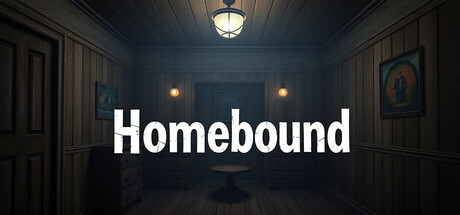
  • Genre Clarity: 7/10 — Escape room mystery atmosphere clear. The dark, confined interior setting with wooden paneling, closed doors, and institutional lighting immediately signals puzzle/mystery gameplay rather than action or combat. At TINY size, the claustrophobic hallway composition and locked-door motif still read as escape room or psychological thriller, though the exact genre specificity softens slightly due to the generic domestic interior aesthetic.
  • Title Readability: 9/10 — Bold white title highly legible. The word 'Homebound' is rendered in large, clean white sans-serif font with strong contrast against the dark background, positioned centrally in the mid-frame. At TINY size (120x45), the title remains fully readable with excellent letter clarity and no collapse, and the placement avoids being obscured by architectural elements.
  • Contrast & Color: 8/10 — Dark moody palette with bright accents. The capsule uses a narrow value range dominated by dark cool tones (navy, charcoal, black wood) with strategic warm highlights from ceiling and wall sconces that create subtle depth without clashing. The white title pops cleanly against this muted foundation, and in grayscale the silhouettes of doors and ceiling fixture remain distinct, maintaining readability at small sizes even if the warm accent lights are less prominent.
  • Uniqueness & Polish: 6/10 — Competent but generic domestic interior. The staging is clean and well-lit photographically, with deliberate symmetry and professional environment design, but the locked-house-with-doors aesthetic is a familiar escape room visual cliché without distinctive art direction or memorable hook. While not poorly executed, the image reads as a stock institutional interior rather than something with a unique visual identity or gameplay-specific visual storytelling that differentiates it from other puzzle games.
  • Brand Consistency: 5/10 — No recognizable signature identity yet. The capsule presents a literal real-world interior with no iconic character, symbol, or stylistic motif that would be memorable across future marketing materials. The generic 'locked house' trope and neutral color palette offer no internal cues that would make this brand instantly recognizable if the title were removed, unlike top performers like DREDGE or Slay the Princess which have distinctive visual signatures.
  • Composition: 7/10 — Centered symmetry with clear focal zone. The composition uses strong central symmetry with the hallway receding toward a focal point (ceiling light and distant doors), creating depth and guiding the eye naturally through the space. The title placement in the upper-middle area is well-positioned to remain visible even with Steam's variable cropping, and the symmetric framing avoids clutter, though the empty mid-ground space could be leveraged more strategically for additional mood or detail.

What works

  • Title legibility at all sizes. White sans-serif text remains perfectly readable at TINY size with no decorative collapse or outline degradation.
  • Atmospheric mood established immediately. Dark institutional setting with warm accent lighting instantly communicates mystery and confinement without needing gameplay UI or text.
  • Safe composition for Steam cropping. Centered layout and mid-frame title placement ensure key elements remain visible across different aspect ratios and thumbnail crops.

What hurts the capsule

  • Generic escape room visual template. The locked-house-with-doors aesthetic is a well-worn cliché in puzzle games with no distinctive visual hook or unique art direction.
  • No recognizable brand identity or character. The capsule communicates a scenario but has no iconic motif, symbol, or stylistic signature that would create brand recall across marketing touchpoints.
  • Limited visual storytelling of core mechanic. The image shows confinement but does not visually communicate what makes this specific escape room experience unique—puzzle types, supernatural elements, time pressure, or narrative hook.

Priority fixes

  1. [uniqueness_polish] Introduce a distinctive visual element—cryptic symbol, unsettling detail, or signature color accent—that signals this game's unique premise and differentiates from generic escape room visuals.
  2. [brand_consistency] Add a recurring motif or iconic object (e.g., a glowing artifact, shadowy figure, or repeated pattern) that becomes recognizable across all marketing materials and store screenshots.
  3. [genre_clarity] Subtly reinforce the 'escape room' specificity with a visible clue, puzzle element, or danger cue (scratches on doors, flickering light, mysterious shadow) that heightens the thriller element at small sizes.

Store copy priority fixes

  1. [feature_communication] Add 1-2 concrete puzzle examples: replace 'solve over five major puzzles' with 'solve over five major puzzles—from deciphering a coded journal to reassembling hidden mechanisms—to unlock the house's secrets.'
  2. [uniqueness] Insert a specific narrative or thematic hook that differentiates this game: clarify what the 'truth' is (e.g., 'uncover why you're trapped' or 'discover the house's dark history') and why it matters beyond generic escape urgency.
  3. [audience_targeting] Explicitly state the intended player type and difficulty: add 'Perfect for puzzle fans new to escape rooms' or 'Designed for story-driven players seeking atmospheric mystery over hardcore logic puzzles.'
  4. [feature_communication] Clarify the interaction model: specify whether players use inventory, observation, or environmental interaction to solve puzzles, so players understand the gameplay loop before purchasing.

Related guides

Steam app ID: 3940130 · Tags: Adventure, Escape Room, Singleplayer, Hidden Object, Point & Click