Scoring genre clarity...
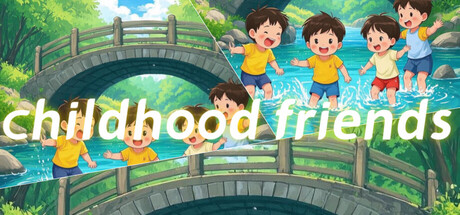
childhood friends capsule

childhood friends

This is a casual puzzle game, where the position of each game image is random and can be repeated.At first, it may be very chaotic,Then gradually place the image in the corresponding position,The image gradually becomes complete,Come and give it a try!

$29.99No user reviews
Casual2D Fighter2D Platformer
hgmGameAug 27, 2025

childhood friends scores 63/100 — better than 7% of Casual capsules (n=10,153).

No user reviews · $29.99 · Released Aug 27, 2025 · By hgmGame

Quick text summary

childhood friends scored 63/100 on Steam Analyzer — Solid for a Casual capsule. Top priority fix: [composition] Reposition the title to a clear, non-overlapping region (top left, bottom bar, or isolated upper area) to establish clear hierarchy and improve tiny-size readability.

Capsule scores by dimension

  • Genre Clarity: 7/10 — Casual puzzle with children theme. The bright, cheerful art style with multiple children in a pastoral setting immediately signals a casual, family-friendly game. The puzzle/collection gameplay is not explicitly shown, but the playful composition and innocent character design align well with casual puzzle expectations. At tiny size, the color palette and character arrangement still read as wholesome and casual, though the specific puzzle mechanic is not visually apparent.
  • Title Readability: 6/10 — Readable but overlapped styling. The title 'childhood friends' is rendered in white/light green text and sits prominently across the center of the image, making it legible at full and small sizes. However, at tiny size, the overlapping of text with the character figures and background creates some visual noise that slightly reduces clarity. The font styling is straightforward sans-serif, which preserves readability across scales, but the dual-color treatment and character overlap could compress awkwardly at thumbnail dimensions.
  • Contrast & Color: 7/10 — Bright cheerful palette with good separation. The vibrant greens of the foliage, blues of the water, and the yellow shirts of the children create strong warm-cool color separation against the darker background. The light text title reads well against the mid-tone greens and blues, and in grayscale the value separation between sky, foliage, water, and characters remains clear. At tiny size, the overall brightness and saturation keep the composition readable, though fine detail in the bridge and background vegetation collapses slightly.
  • Uniqueness & Polish: 6/10 — Polished but generic casual aesthetic. The illustration quality is solid with clean line work, smooth gradients, and a consistent anime-influenced art style that feels professional and on-brand for casual games. However, the pastoral scene with children by a bridge is a familiar trope in family-game marketing and does not communicate a unique selling point or distinctive mechanic specific to this puzzle game. The execution is competent, but the visual concept lacks a memorable hook that distinguishes it from other casual titles in the genre.
  • Brand Consistency: 6/10 — Consistent illustrative style, weak identity. The warm color palette, soft character designs, and pastoral setting are internally cohesive and appear consistent across store assets based on the description provided. However, there are no iconic symbols, motifs, or signature visual elements that create a recognizable brand identity unique to Childhood Friends; the aesthetic relies on generic wholesome tropes rather than memorable identity cues. The style does not scream 'this is Childhood Friends' without the text—it reads as 'a casual puzzle game' generically.
  • Composition: 6/10 — Centered but evenly distributed focus. The title text is centered horizontally across the composition, and the children are arranged in a loose line that draws the eye across the frame, with the bridge and natural scenery forming layers of depth. However, the distribution of character figures is relatively even, creating multiple focal points rather than one clear primary subject, which dilutes visual hierarchy. At small and tiny sizes, this wide spread of equal-weight elements reads as busy rather than focused, and the title's overlap with characters competes rather than commanding attention from a single clear hierarchy.

What works

  • Cheerful, recognizable casual aesthetic. The bright palette of yellows, greens, and blues immediately signals a family-friendly, wholesome game experience aligned with casual puzzle expectations.
  • Readable white title text. The 'childhood friends' title maintains legibility across full and small sizes with straightforward sans-serif letterforms and adequate contrast against the mid-tone background.
  • Polished illustration quality. The artwork is clean, smooth, and professionally rendered with consistent anime-influenced line work and gradient work throughout the composition.

What hurts the capsule

  • Generic pastoral scene concept. The children-by-a-bridge setting is a familiar casual-game visual cliché that does not communicate a unique selling point or distinguish this game from competitors.
  • Weak focal hierarchy and distributed focus. Multiple children figures of equal visual weight create competing attention points; there is no single clear primary subject to anchor the eye at small or tiny sizes.
  • No distinctive brand identity cues. The visual design lacks iconic characters, symbols, or signature motifs that would make the game immediately recognizable as 'Childhood Friends' without the text label.
  • Title and character overlap creates visual confusion. At tiny size, the white text overlapping the children and foliage reduces clarity and creates a busy, less polished appearance than strategic text placement would achieve.

Priority fixes

  1. [composition] Reposition the title to a clear, non-overlapping region (top left, bottom bar, or isolated upper area) to establish clear hierarchy and improve tiny-size readability.
  2. [genre_clarity] Add a subtle visual puzzle mechanic indicator (scattered tiles, frame-and-slot motif, or progressive completion metaphor) to communicate the puzzle gameplay type within the pastoral scene.
  3. [brand_consistency] Introduce a distinctive iconic element or mascot character (a unique child pose, a signature object, or a visual motif) that can serve as a memorable identity marker across future store assets.
  4. [uniqueness_polish] Refine the central focal point by emphasizing one standout character action or central scene element (e.g., a child reaching toward something, a bridge arch catching light, or a unique prop) to create visual distinctiveness and better small-size composition.

Store copy priority fixes

  1. [hook_strength] Replace the opening sentence with a verb-forward, curiosity-driven hook like: 'Slide tiles to restore the hidden image—simple mechanic, satisfying completion.' This immediately communicates what you do and why it feels good.
  2. [feature_communication] Add a 'Features' bullet list specifying: number of puzzles or themes, difficulty progression, optional time limits or scoring, and what unlocks or changes as you play.
  3. [uniqueness] Add 2-3 sentences explaining what makes this puzzle game different: art style, themed image sets, difficulty variation, or any progression/achievement system that distinguishes it from generic tile puzzles.
  4. [audience_targeting] Rewrite the 'Suitable for' section to be specific: 'Perfect for casual players looking for a quick brain exercise' or 'Great for relaxing puzzle sessions,' not vague statements that apply to all puzzles.

Related guides

Steam app ID: 3947540 · Tags: Casual, 2D Fighter, 2D Platformer, 2D, Singleplayer