Scoring genre clarity...

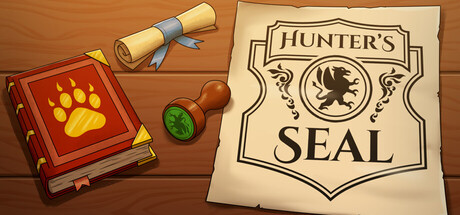
Hunter's Seal capsule

Hunter's Seal

Manage the front desk of a fantasy hunters guild. Identify monsters, verify hunters, and authorize them! The guild's reputation is in your hands.

$6.99Mostly Positive(16)
SimulationPoint & ClickPuzzle
Drix DevMar 10, 2026

Hunter's Seal scores 73/100 — better than 51% of Simulation capsules (n=5,188).

Mostly Positive (16 reviews) · $6.99 · Released Mar 10, 2026 · By Drix Dev

Quick text summary

Hunter's Seal scored 73/100 on Steam Analyzer — Good for a Simulation capsule. Top priority fix: [composition] Create a single dominant focal point by enlarging and centering either the shield crest or red book to immediately signal identity at tiny size, while de-emphasizing supporting objects to secondary positions.

Capsule scores by dimension

  • Genre Clarity: 7/10 — Fantasy management sim clearly signaled. The Hunter's Seal shield logo, guild aesthetics, monster identification book, and authoritative desk setup immediately communicate a fantasy guild management experience. At tiny size, the red book with paw icon and shield crest remain readable enough to suggest fantasy bureaucracy, though the specific management simulation angle is only clear to players familiar with the genre.
  • Title Readability: 8/10 — Strong serif logo, readable at all sizes. The 'HUNTER'S SEAL' text uses a clean serif font on a cream parchment background with ornamental shield framing, providing excellent contrast and clear letterforms. At small and tiny sizes, the logo maintains legibility due to the controlled background and strong dark-on-light contrast, though some ornamental border details become less distinct.
  • Contrast & Color: 8/10 — Warm wood tones pop against dark background. The warm amber and brown wood grain of the desk surface creates strong value separation against Steam's dark #1b2838 background, with the cream parchment shield providing a bright focal point that draws immediate attention. The red book with golden paw glows warmly and reads clearly even at tiny size due to saturated color and strong edge definition.
  • Uniqueness & Polish: 7/10 — Cohesive fantasy guild aesthetic, slightly generic. The composition feels intentionally crafted with period-appropriate guild imagery—the shield emblem, leather-bound ledger, scroll, and wooden desk establish a consistent thematic identity. However, the visual approach is somewhat predictable for fantasy management games and lacks a distinctive mechanical or narrative hook that sets it apart from other guild-themed sims.
  • Brand Consistency: 7/10 — Consistent fantasy guild visual identity. The Hunter's Seal shield with eagle motif, warm wood and parchment color palette, and vintage administrative aesthetic appear cohesive across the visible design elements. The iconic shield crest and warm earth-tone palette provide recognizable identity markers that could distinguish the game in visual memory, though the overall style is within fantasy simulation conventions.
  • Composition: 7/10 — Balanced but slightly scattered elements. The three-object composition—red book (left), scroll (top), and shield parchment (right-center)—creates a triangular balance that guides the eye across the wooden desk surface without a single dominant focal point. At small and tiny sizes, the shield crest and book are the clearest anchors, but the scattered arrangement means important identity relies on recognizing multiple objects rather than a cohesive hero image.

What works

  • Warm, vibrant color palette. The golden-amber wood tones and saturated red book create strong pop against Steam's dark background and maintain clarity even at thumbnail size.
  • Clear thematic coherence. Every object—ledger, scroll, seal, desk—reinforces the fantasy guild administrative identity without visual confusion or mixed messaging.
  • Readable serif logo design. The 'HUNTER'S SEAL' text and shield emblem maintain legibility across all viewing sizes due to controlled parchment background and strong typography.

What hurts the capsule

  • Scattered focal points. The three distinct objects create equal visual weight rather than a single clear primary subject, diffusing attention at tiny sizes where one anchor would be stronger.
  • Generic fantasy simulation aesthetic. While competent, the guild desk setup relies on familiar fantasy tropes without distinctive visual hooks that communicate the unique management mechanics or core gameplay loop.
  • Composition lacks clear hierarchy. At small and tiny sizes, the viewer must process multiple objects to understand the game's identity rather than grasping it instantly from a single dominant element or silhouette.

Priority fixes

  1. [composition] Create a single dominant focal point by enlarging and centering either the shield crest or red book to immediately signal identity at tiny size, while de-emphasizing supporting objects to secondary positions.
  2. [uniqueness_polish] Add a subtle mechanical visual element (e.g., a hunter figure being examined, a monster illustration peeking from a report) to hint at the verification/identification gameplay loop rather than generic guild imagery.
  3. [genre_clarity] Introduce a recognizable monster or hunter character silhouette to make the 'identify creatures and verify hunters' mechanic visually evident at all sizes without requiring familiarity with the game.

Store copy priority fixes

  1. [feature_communication] Add a sentence explicitly mentioning multiple endings after the Choices Matter section: e.g., 'Your decisions ripple through the story with multiple possible endings based on your choices as guildmaster.' This directly addresses a key tag and selling point currently missing.
  2. [uniqueness] Clarify what makes monster identification and hunter evaluation mechanically distinct—mention ambiguity or competing clues that force real judgment rather than simple pattern matching, differentiating this from generic matching sims.
  3. [audience_targeting] Add one sentence early in the detailed description reassuring casual/puzzle-focused players: e.g., 'No time pressure, just careful observation and difficult choices' to signal accessibility and target audience fit.
  4. [feature_communication] Expand the progression/scaling section: briefly explain how many hunts players will face, how long a playthrough is, and what 'everyday' difficulty growth looks like to set realistic expectations.

Related guides

Steam app ID: 3955230 · Tags: Simulation, Point & Click, Puzzle, Choices Matter, 2D