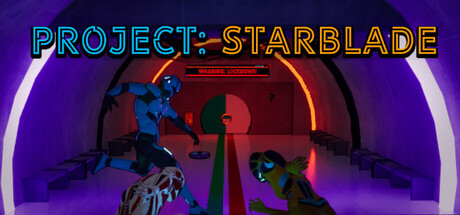
Project Starblade scores 73/100 — better than 61% of Exploration capsules (n=4,872).

Quick text summary

Project Starblade scored 73/100 on Steam Analyzer — Good for a Exploration capsule. Top priority fix: [genre_clarity] Incorporate a visible protagonist or character silhouette to better communicate the first-person platformer identity and psychological thriller tone—currently reads as pure FPS.

Capsule scores by dimension

  • Genre Clarity: 7/10 — First-person action clear, psychology subdued. The first-person perspective with weapon silhouettes and sci-fi environment clearly communicate action gameplay. The neon purple and red color scheme suggests sci-fi thriller tone, but the psychological platformer aspect is not visually obvious at tiny size. At TINY size, the FPS framing and glowing weapons dominate perception, making it read as straightforward action rather than psychological.
  • Title Readability: 8/10 — Strong title contrast, minor tiny blur. PROJECT: STARBLADE uses cyan and orange text with strong separation against the dark purple background, creating clear readability at full and small sizes. The dual-color split (cyan left, orange right) is distinctive and maintains legibility down to small scale. At TINY size, the title remains readable though individual letterforms blur slightly—acceptable given the overall contrast holds.
  • Contrast & Color: 8/10 — Excellent value separation, neon pop. The cyan and orange neon outlines create strong visual pop against the dark #1b2838 background, with the bright glowing edges providing clear silhouette definition. The purple interior space and red focal elements maintain mid-tone variation without muddiness. Even in grayscale mental test, the bright neon elements separate cleanly from darker surroundings, supporting quick recognition at TINY size.
  • Uniqueness & Polish: 7/10 — Polished sci-fi aesthetic, somewhat familiar. The neon-lined first-person sci-fi chamber communicates premium craft with clean lighting and cohesive color grading. The art direction feels intentional and distinct from generic shooter templates. However, the neon sci-fi lab aesthetic is increasingly common in indie action games, limiting standout uniqueness despite solid execution.
  • Brand Consistency: 7/10 — Coherent sci-fi identity, limited iconic elements. The capsule establishes a consistent cyberpunk-lab aesthetic with neon framing, controlled color palette, and sleek design that likely matches the game's visual language. The cyan-orange color split could become a recognizable identity signal, but there are no distinctive character, symbol, or motif elements visible that scream 'Starblade' uniquely. Consistency is strong but memorability depends on broader branding context.
  • Composition: 7/10 — Clear center focus, safe layout. The composition uses a strong central focal point with the glowing red portal and weapons creating a clear hierarchy. The neon frame guides the eye inward effectively, and title placement top-center avoids edge hazards. At SMALL and TINY sizes, the core elements maintain clarity, though some peripheral weapon details lose definition—acceptable as they are secondary supporting elements.

What works

  • Neon color contrast pops immediately. The cyan and orange neon outlines provide excellent value separation against the dark Steam background, making the capsule noticeable in quick scroll.
  • Title placement and legibility strong. PROJECT: STARBLADE uses clear dual-color typography positioned safely at top with maintained readability across all viewing sizes including TINY.
  • Professional sci-fi art direction. Cohesive lighting, controlled color palette, and clean rendering communicate premium craft and intentional aesthetic design.

What hurts the capsule

  • Psychological platformer element invisible. The capsule communicates first-person action effectively but gives no visual hint of the psychological or platformer dimensions, potentially misleading about core gameplay.
  • Generic neon sci-fi lab trope. The aesthetic relies on increasingly familiar cyberpunk-lab imagery that doesn't strongly differentiate from other action sci-fi games in the crowded space.
  • No distinctive character or motif present. The capsule shows environment and weapons but lacks a recognizable protagonist, iconic symbol, or unique visual signature to cement brand memory.

Priority fixes

  1. [genre_clarity] Incorporate a visible protagonist or character silhouette to better communicate the first-person platformer identity and psychological thriller tone—currently reads as pure FPS.
  2. [uniqueness_polish] Add a distinctive visual element or symbol unique to Project Starblade's narrative identity (e.g., lab insignia, test chamber marker) to elevate memorability beyond generic sci-fi template.
  3. [brand_consistency] Establish one visual anchor (iconic weapon design, character trait, or symbol) that becomes recognizable across screenshots and marketing to strengthen brand recognition.

Store copy priority fixes

  1. [hook_strength] Fix the typo 'at as it seems' to 'is not as it seems' to restore credibility and polish in the short description.
  2. [feature_communication] Add 1-2 sentences to the detailed description explaining the core gameplay loop—e.g., 'Navigate first-person platforming challenges, solve environmental puzzles, and uncover the truth about Fathom Laboratories' true purpose' to give players a mental model of what they'll do.
  3. [uniqueness] Specify what 'psychological' gameplay means in concrete terms—e.g., perception-based mechanics, narrative twists that challenge assumptions, or unreliable environments—to differentiate from standard puzzle-platformers.
  4. [genre_clarity] Either explain what the 'Strategy' tag means or remove it from the tags if it does not apply to core gameplay; as written, it creates confusion.

Related guides

Steam app ID: 3993470 · Tags: Exploration, 3D Platformer, Puzzle Platformer, Puzzle, PvE