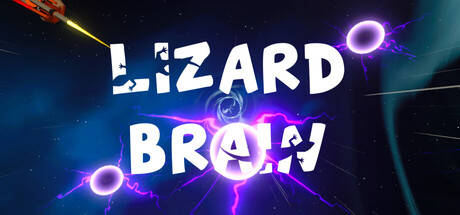
Lizard Brain scores 60/100 — better than 0% of Indie capsules (n=11,449).

Quick text summary

Lizard Brain scored 60/100 on Steam Analyzer — Solid for a Indie capsule. Top priority fix: [genre_clarity] Introduce visual element representing memory, maze navigation, or invisible mechanics—consider silhouette of a lizard, maze path, or faded ghost icon that hints at the core puzzle mechanic.

Capsule scores by dimension

  • Genre Clarity: 5/10 — Unclear action vs puzzle identity. The bright purple energy effects and neon glow suggest an action or sci-fi game, but the title alone provides no visual cues about the memory/puzzle maze mechanic described. At tiny size, the glowing orbs and lightning read as generic action rather than a puzzle-driven gameplay loop, creating misalignment between visual promise and actual game type.
  • Title Readability: 8/10 — Strong legibility with minor concerns. The bold white "LIZARD BRAIN" text is clearly readable at full and small sizes with good stroke weight and letter spacing. At tiny size (120x45), the text remains legible though detail is lost, and the subtitle completely collapses into illegibility. The placement avoids major texture interference, supporting strong readability at functional scales.
  • Contrast & Color: 7/10 — Good pop with energetic purple accents. White title text creates strong value separation against the dark blue-teal background, and the neon purple glowing orbs provide saturated focal points that stand out in grayscale. The energy effects around the text add visual pop without overwhelming the title, though the mid-tone blue gradient consumes much of the field and could compress at tiny sizes.
  • Uniqueness & Polish: 5/10 — Competent but generic energy effects. The neon purple lighting and glowing orbs are stylistically coherent and well-executed, but they feel like a standard sci-fi/action template rather than a distinctive visual identity tied to the game's actual mechanic. There is no visual storytelling that hints at memory puzzles, maze navigation, or the unique selling point of invisible traps, reducing memorability and differentiation in a crowded genre.
  • Brand Consistency: 5/10 — No distinctive identity markers present. The capsule does not establish a recognizable character, symbol, or signature palette that would be unique to Lizard Brain across other marketing materials. The purple neon aesthetic is trendy but generic, offering no internal brand cues that would make this capsule memorable or distinguishable from other indie action games using similar visual language.
  • Composition: 6/10 — Centered hierarchy with balanced layout. The title is centrally placed with the glowing orbs framing the text and creating a clear focal point, establishing reasonable hierarchy. At small size, the composition holds coherence, but the scattered energy effects and lack of depth layering (foreground, midground, background distinction) create a somewhat flat, texture-heavy feel that fills space without guiding the eye through clear priorities.

What works

  • Clear readable title at small sizes. Bold white text with good stroke weight maintains legibility from full header down to small capsule view without significant degradation.
  • Strong contrast against dark Steam background. White title and saturated purple accents create immediate visual separation and pop in quick-scroll browsing contexts.
  • Polished glow and lighting effects. The neon orbs and energy lines are rendered cleanly with consistent saturation and smooth gradients that feel intentional and craft-focused.

What hurts the capsule

  • No visual connection to core gameplay. The sci-fi action aesthetic does not communicate the memory puzzle or maze mechanic, creating misalignment between visual messaging and actual game experience.
  • Generic neon template feel. Purple glowing effects are overused across indie action and sci-fi games, offering no distinctive brand identity or recognition hook.
  • Subtitle completely illegible at tiny size. Secondary text becomes unreadable below small capsule size, losing any supporting message that could reinforce genre or unique selling point.
  • Flat composition without depth layering. Energy effects and background gradient feel scattered across a single plane rather than establishing clear foreground-midground-background hierarchy.

Priority fixes

  1. [genre_clarity] Introduce visual element representing memory, maze navigation, or invisible mechanics—consider silhouette of a lizard, maze path, or faded ghost icon that hints at the core puzzle mechanic.
  2. [uniqueness_polish] Replace generic neon template with a visual style or motif that is distinctive to Lizard Brain and hints at the game's unique identity, not just action aesthetics.
  3. [composition] Establish clear depth layering by repositioning elements into distinct foreground (title), midground (primary visual), and background (glow/effects) to improve hierarchy and focus at small sizes.

Store copy priority fixes

  1. [hook_strength] Replace 'Lizard Brain is a game that challenges...' with an action-forward opening like 'Memorize the maze or die. Navigate lethal paths before they vanish from sight' to create urgency and specificity.
  2. [uniqueness] Add a sentence explaining what makes the modifier system or memory mechanic unique—e.g., 'Every challenge you choose permanently reshapes the difficulty curve of the run ahead' or similar specificity.
  3. [tone_match] Remove or rewrite the 'reptile dysfunction' pun; replace it with a line that reinforces the atmospheric mood, such as 'Trust your instincts and see if you have what it takes to survive.'

Related guides

Steam app ID: 3996950 · Tags: Indie, Casual, Puzzle, Strategy, Logic